Ethiopia's Prime Minister Meles Zenawi, September 17, 2011
Ethiopian Prime Minister Meles Zenawi has died at the age of 57, after months of speculation about his health.
State television announced his death Tuesday, saying he died from a sudden infection late Monday at a hospital abroad.
Speaking with VOA Somali Service, government spokesman Bereket Simon would not say where Meles died, or disclose the illness that led to his hospitalization.
"The prime minister had been sick for quite a while," he said. "And he was attending medical support in, somewhere in, ah, abroad. And he had some chance in recuperating. But ultimately some infection happened to him and doctors couldn't control that infection."
Meles had not been seen in public for nearly two months before his death.
Spokesman Bereket said Deputy Prime Minister Hailemariam Desalegn will serve as acting prime minister.
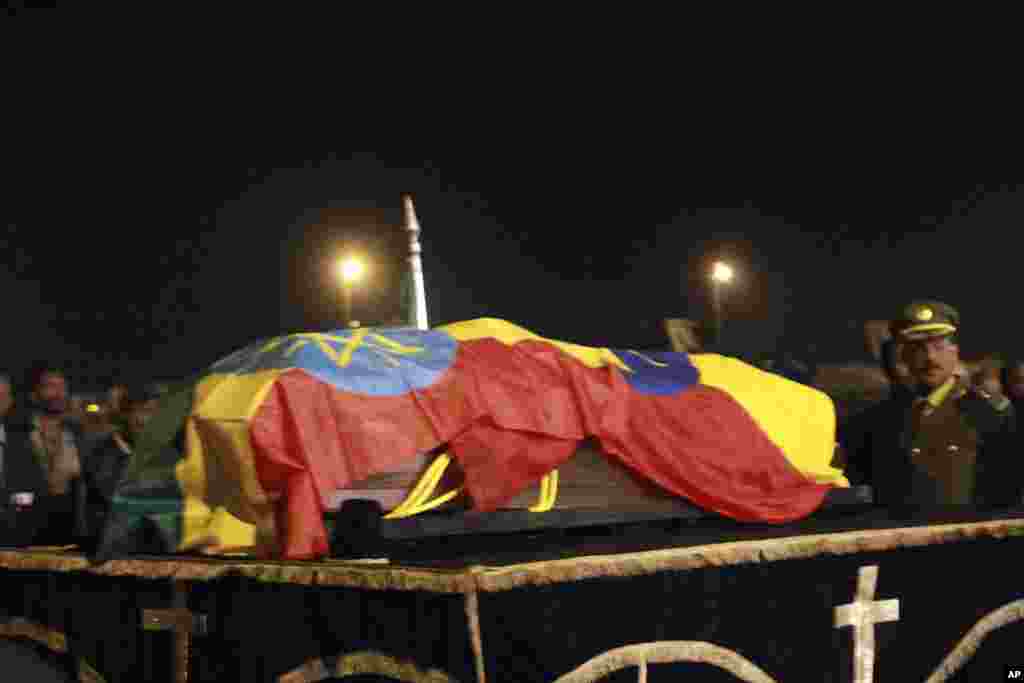
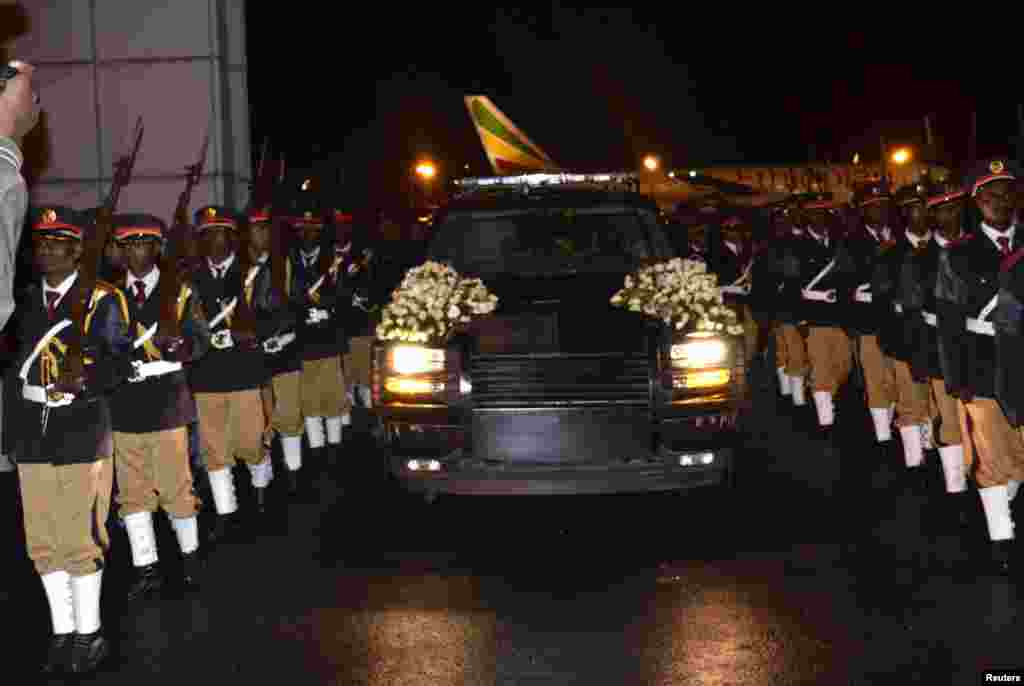
He said Meles' body will arrive Tuesday in Ethiopia, and officials are making plans for the funeral.
Meles Zenawi
Meles Zenawi
Born May 8, 1955 in Adwa, northern Ethiopia
Suspended studies in 1974 to join Tigrai Peoples Liberation Front, TPLF
Chairman of TPLF and Ethiopian Peoples Revolutionary Democratic Front since 1989
Led EPRDF rebels to seize power in 1991 and became president
Prime minister since being elected in 1995
Serves as African Union spokesperson on climate change
Praised for helping lift Ethiopia out of poverty after civil war
Criticized for silencing all forms of dissent
Known as ally with U.S. against terrorism
Prime Minister Meles ruled his country for more than 20 years, after the rebel alliance he led, the EPRDF (Ethiopian People's Revolutionary Democratic Front), seized power in 1991.
Meles earned praise abroad for improvements in the economy, education and health care. But human rights groups sharply criticized him for various abuses, including restrictions on independent media.
Under Meles, Ethiopia fought a border war with Eritrea and sent troops to Somalia to fight Islamist militants.
Ethiopia and Eritrea fought from 1998 to 2000 in a conflict that killed more than 70,000 people. Tension between the two countries remained high.
Meles was also known as an ally to the United States against terrorism.
In 2006, Ethiopian troops entered Somalia to fight Islamist militants allegedly armed and trained by the Eritrean government. Ethiopian forces returned to Somalia last year in a multi-nation offensive against militant group al-Shabab.
Meles' most serious political challenge came in the 2005 elections, when opposition parties said the government rigged to results to cheat them of victory. Nearly 200 people died in post-election violence and protests.
In the most recent elections in 2010, the EPRDF and its allies took all but one seat in parliament, sparking new accusations of fraud.
The criticism increased in recent years as Ethiopian courts jailed journalists and political activists under an anti-terrorism law that rights groups said was overly vague and broad.
Meles was born in the northern Ethiopian town of Adwa in 1955. He attended Addis Ababa University for two years before joining the Tigrayan Peoples' Liberation Front, or TPLF, one of several groups that was fighting the government of Mengistu Hailemariam. The TPLF later became the core group within the EPRDF.
After taking power in 1991, Meles served as president for four years before assuming the prime minister's post in 1995.
Photo Gallery: Meles Zenawi
Ethiopian Leader Meles Dies at 57
1/19The casket containing the body of Prime Minister Meles Zenawi arrives at the Addis Ababa International Airport, Ethiopia, August 22, 2012.
Ethiopia is mourning the death of Prime Minister Meles Zenawi at the age of 57. Meles died late August 22 of an unspecified infection while seeking treatment outside the country.
Show moreShow less
2/19The body of Ethiopia's Prime Minister Meles Zenawi is escorted upon arrival in Ethiopia's capital Addis Ababa early August 22, 2012.
Ethiopia is mourning the death of Prime Minister Meles Zenawi at the age of 57. Meles died late August 22 of an unspecified infection while seeking treatment outside the country.
Show moreShow less
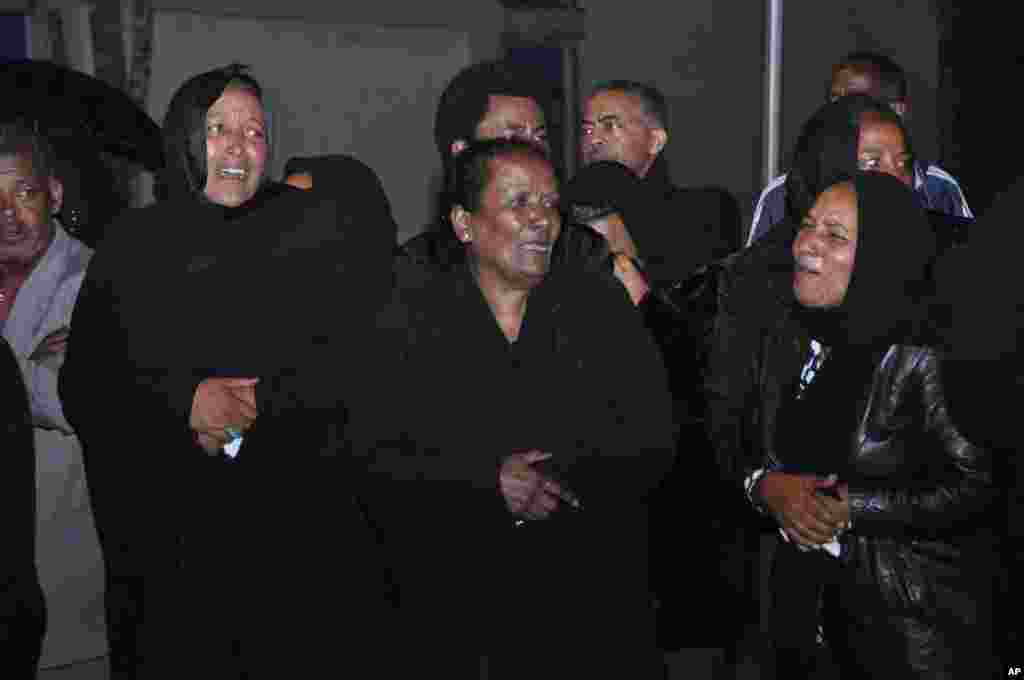
3/19Ethiopian women in black gather to mourn as the body of the late Prime Minister Meles Zenawi arrived in Addis Ababa, August 22, 2012.
Ethiopia is mourning the death of Prime Minister Meles Zenawi at the age of 57. Meles died late August 22 of an unspecified infection while seeking treatment outside the country.
Show moreShow less
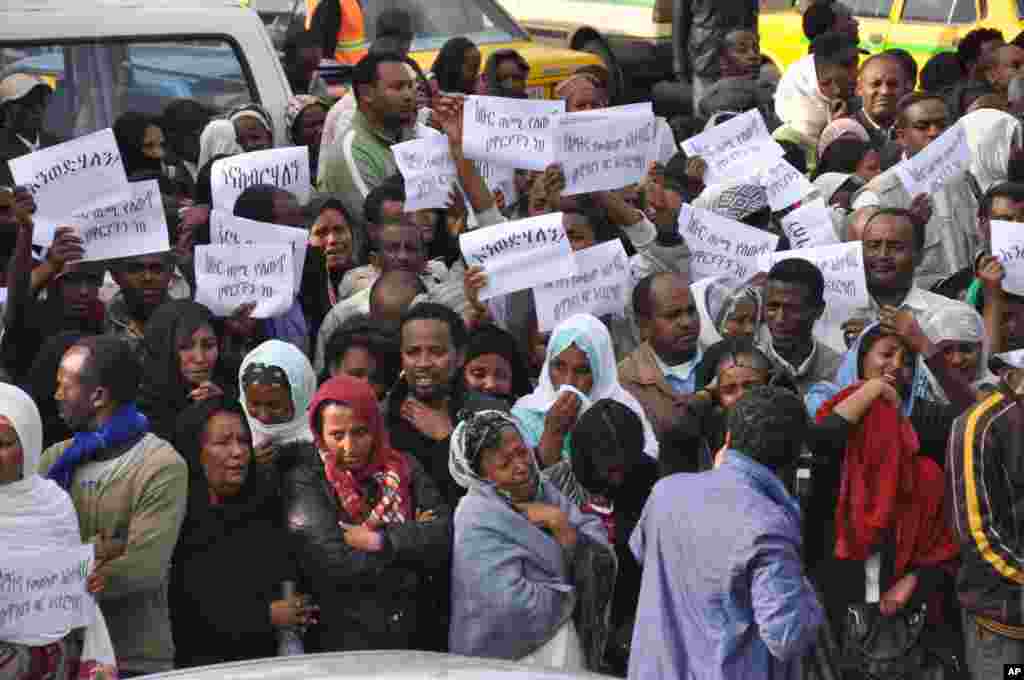
4/19Ethiopians carry posters in Amharic reading "Meles We Love You" as they gather to mourn as the body of the late Prime Minister Meles Zenawi arrived in Addis Ababa, August 22, 2012.
Ethiopia is mourning the death of Prime Minister Meles Zenawi at the age of 57. Meles died late August 22 of an unspecified infection while seeking treatment outside the country.
Show moreShow less
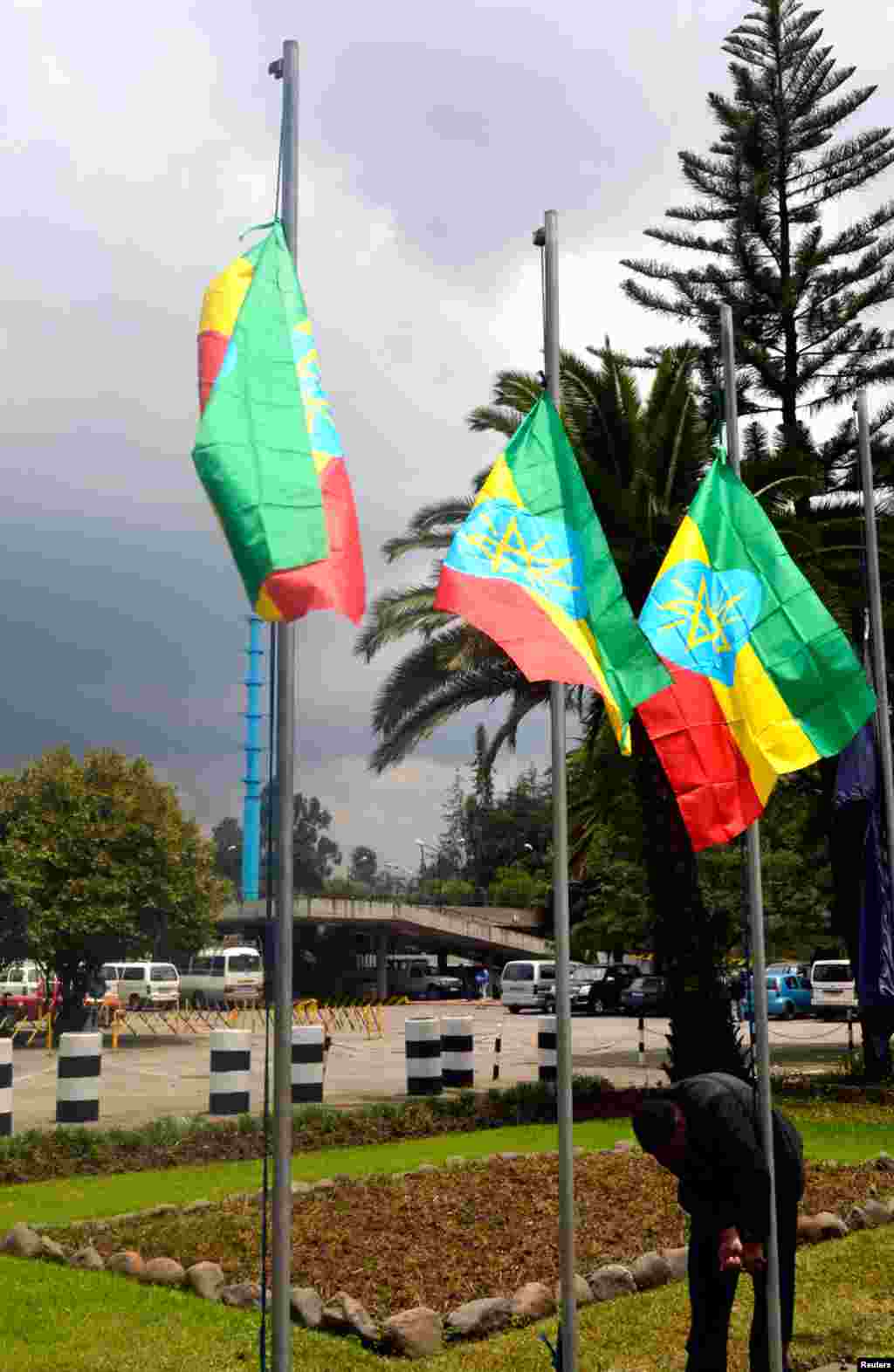
5/19Ethiopian national flags fly at half mast in Addis Ababa, August 21, 2012.
Ethiopia is mourning the death of Prime Minister Meles Zenawi at the age of 57. Meles died late August 22 of an unspecified infection while seeking treatment outside the country.
Show moreShow less
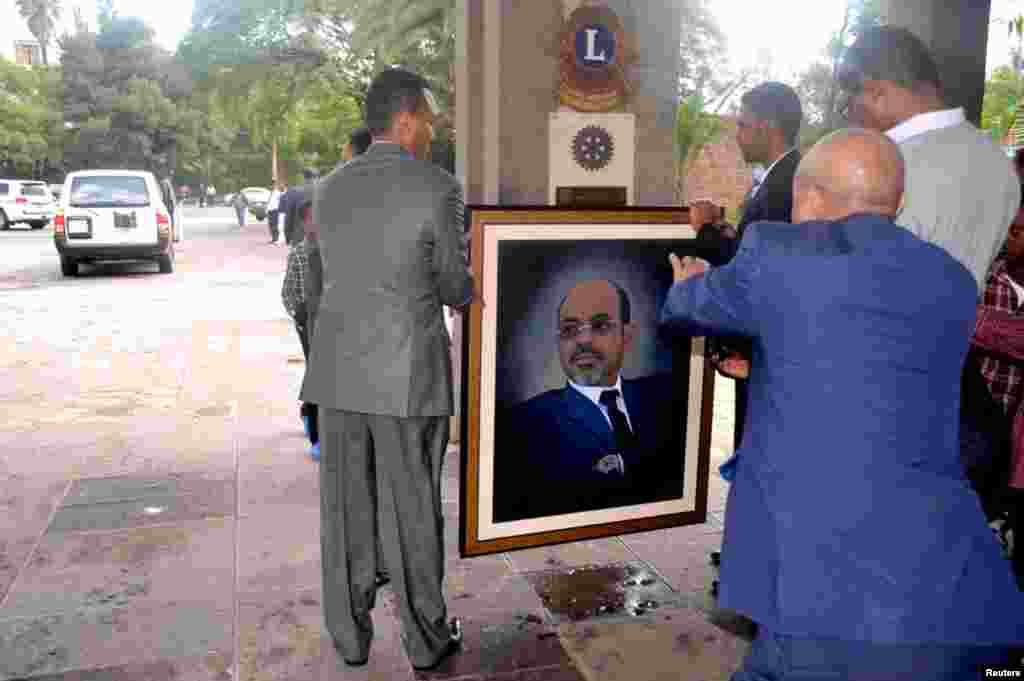
6/19Officials move a portrait of Meles shortly after the announcement of his death in Addis Ababa, August 21, 2012.
Ethiopia is mourning the death of Prime Minister Meles Zenawi at the age of 57. Meles died late August 22 of an unspecified infection while seeking treatment outside the country.
Show moreShow less
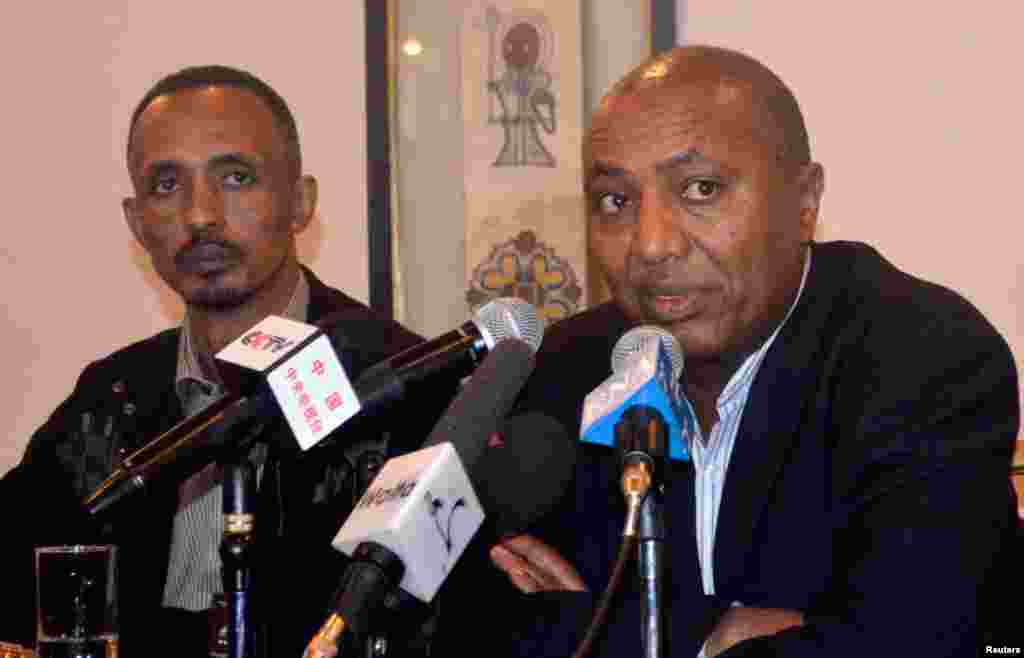
7/19Ethiopian government spokesman Bereket Simon (R) makes the official announcement of Meles' death in Addis Ababa, August 21, 2012.
Ethiopia is mourning the death of Prime Minister Meles Zenawi at the age of 57. Meles died late August 22 of an unspecified infection while seeking treatment outside the country.
Show moreShow less
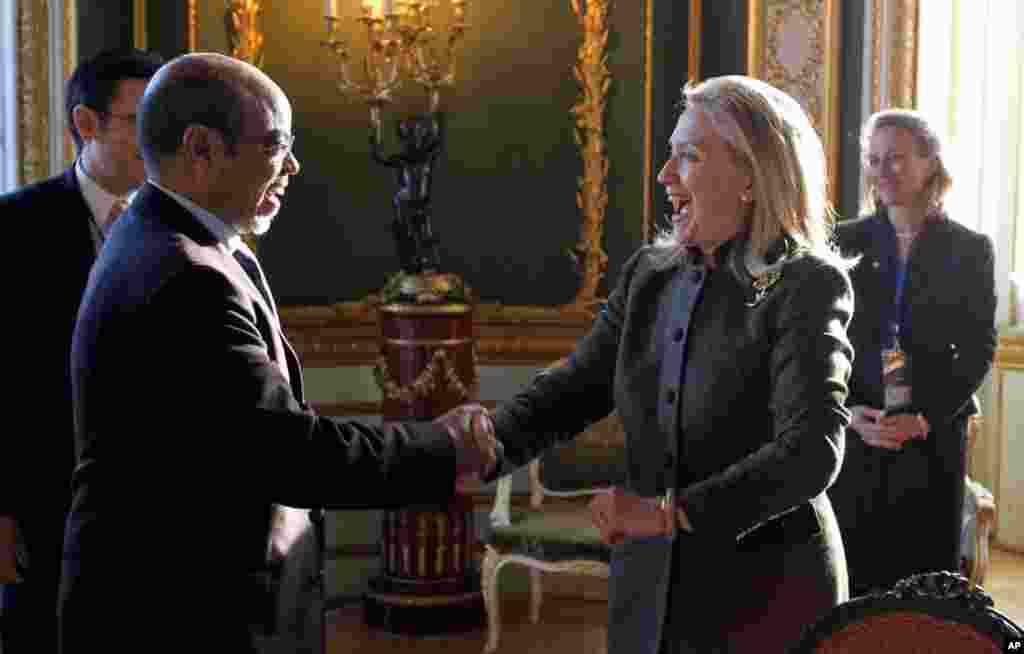
8/19U.S. Secretary of State Hillary Clinton meets with Meles at the London Conference on Somalia, February 23, 2012.
Ethiopia is mourning the death of Prime Minister Meles Zenawi at the age of 57. Meles died late August 22 of an unspecified infection while seeking treatment outside the country.
Show moreShow less
9/19The late Ethiopian Prime Minister Meles Zenawi arrives with his wife Azeb Mesfi for the 18th African Union Summit in Addis Ababa, January 29, 2012.
Ethiopia is mourning the death of Prime Minister Meles Zenawi at the age of 57. Meles died late August 22 of an unspecified infection while seeking treatment outside the country.
Show moreShow less
10/19Meles speaks to reporters after meeting with Egyptian Prime Minister Essam Sharaf in Cairo, Egypt, September 17, 2011.
Ethiopia is mourning the death of Prime Minister Meles Zenawi at the age of 57. Meles died late August 22 of an unspecified infection while seeking treatment outside the country.
Show moreShow less
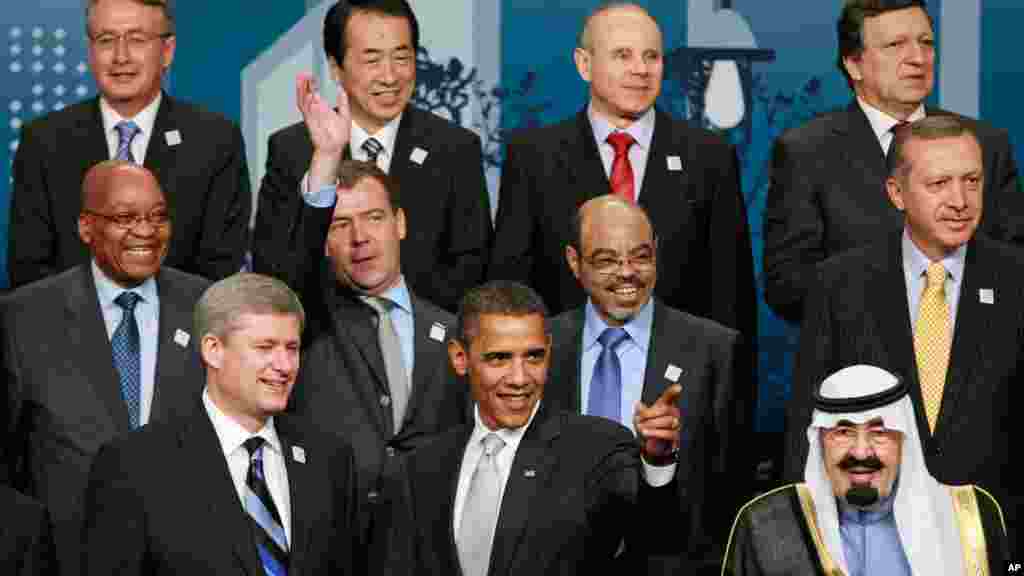
11/19Meles and other world leaders pose during a group photo at the G20 summit in Toronto, Canada, June 27, 2010.
Ethiopia is mourning the death of Prime Minister Meles Zenawi at the age of 57. Meles died late August 22 of an unspecified infection while seeking treatment outside the country.
Show moreShow less
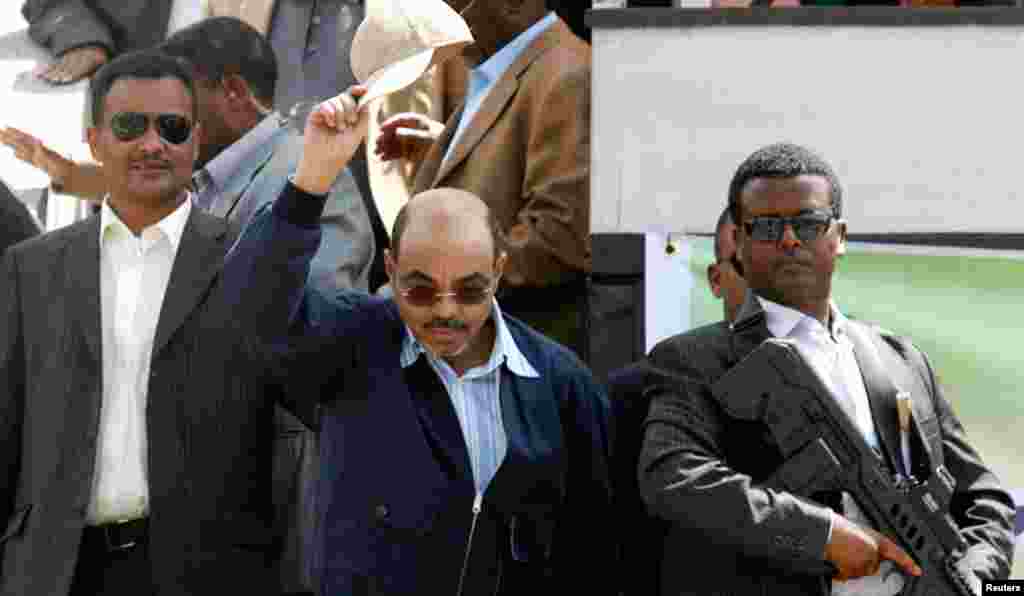
12/19Meles lifts his cap to salute supporters of the EPRDF party at the Meskel Square in Addis Ababa, May 25, 2010.
Ethiopia is mourning the death of Prime Minister Meles Zenawi at the age of 57. Meles died late August 22 of an unspecified infection while seeking treatment outside the country.
Show moreShow less
13/19A poster featuring the prime minister displayed in downtown Addis Ababa, Ethiopia, May 2010.
Ethiopia is mourning the death of Prime Minister Meles Zenawi at the age of 57. Meles died late August 22 of an unspecified infection while seeking treatment outside the country.
Show moreShow less
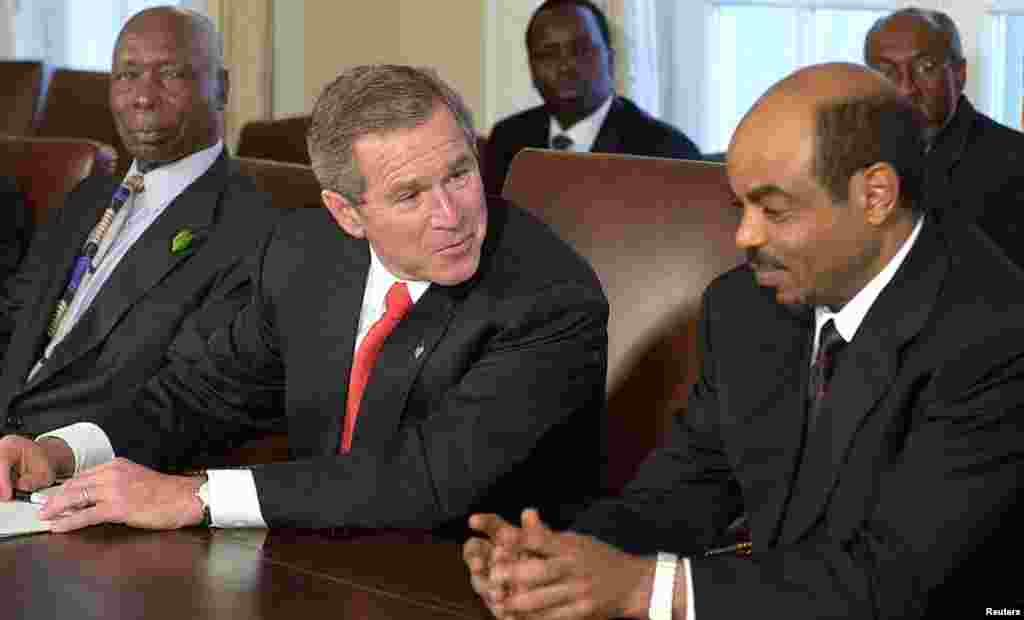
14/19U.S. President George W. Bush chats with Meles during a meeting with Kenyan President Daniel Arap Moi for talks on combatting international terrorism, the White House, Washington, December 5, 2002.
Ethiopia is mourning the death of Prime Minister Meles Zenawi at the age of 57. Meles died late August 22 of an unspecified infection while seeking treatment outside the country.
Show moreShow less
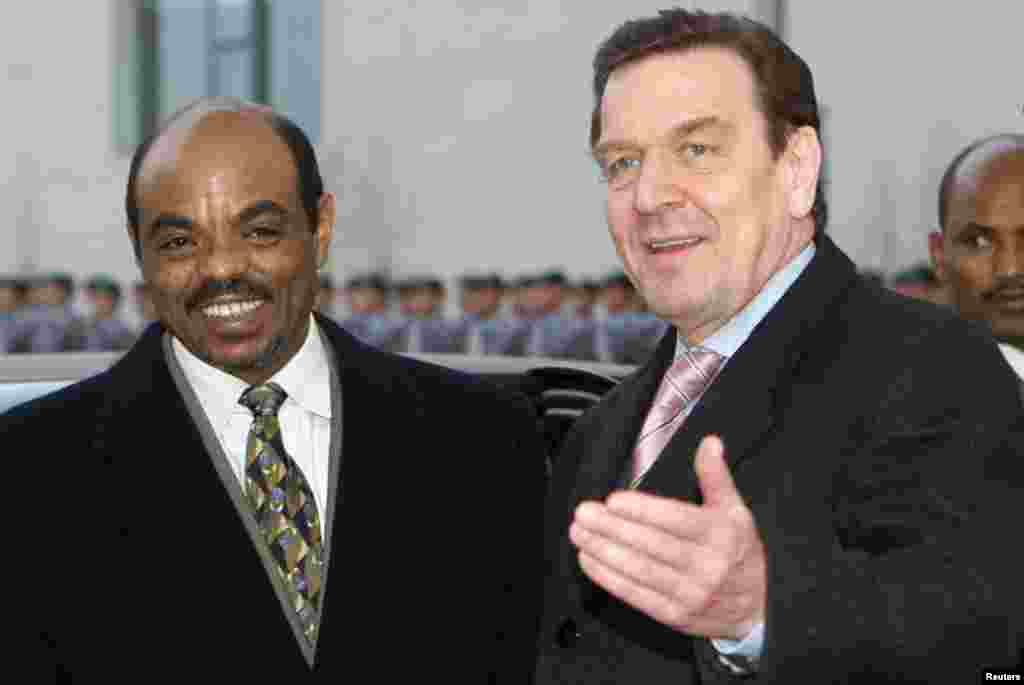
15/19German Chancellor Gerhard Schroeder welcomes Meles to Berlin, Germany, February 5, 2002.
Ethiopia is mourning the death of Prime Minister Meles Zenawi at the age of 57. Meles died late August 22 of an unspecified infection while seeking treatment outside the country.
Show moreShow less
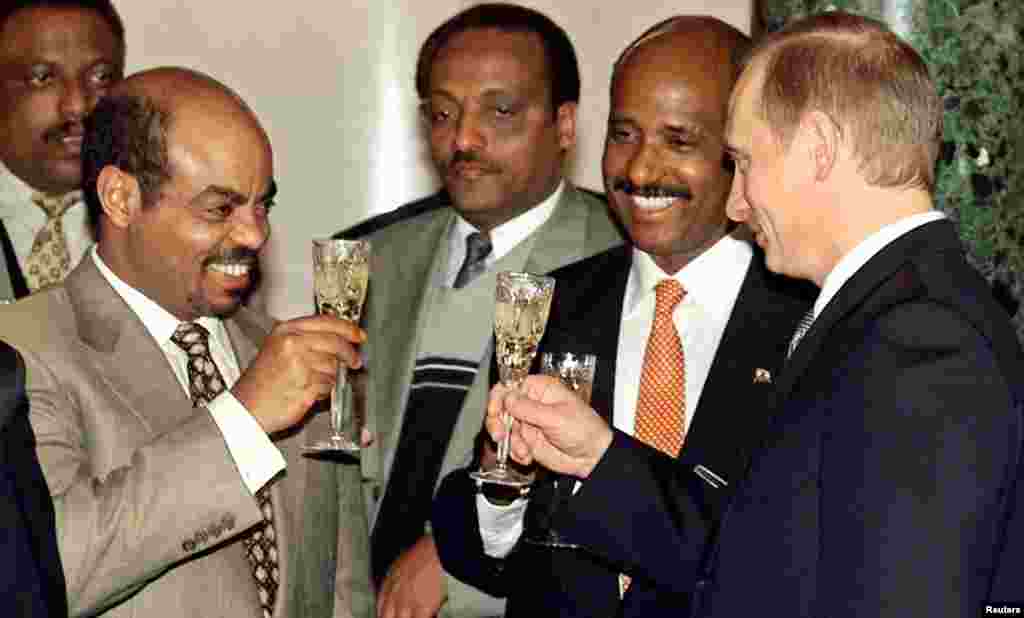
16/19Meles and Russian President Vladimir Putin meet in Moscow, Russia, December 3, 2001.
Ethiopia is mourning the death of Prime Minister Meles Zenawi at the age of 57. Meles died late August 22 of an unspecified infection while seeking treatment outside the country.
Show moreShow less
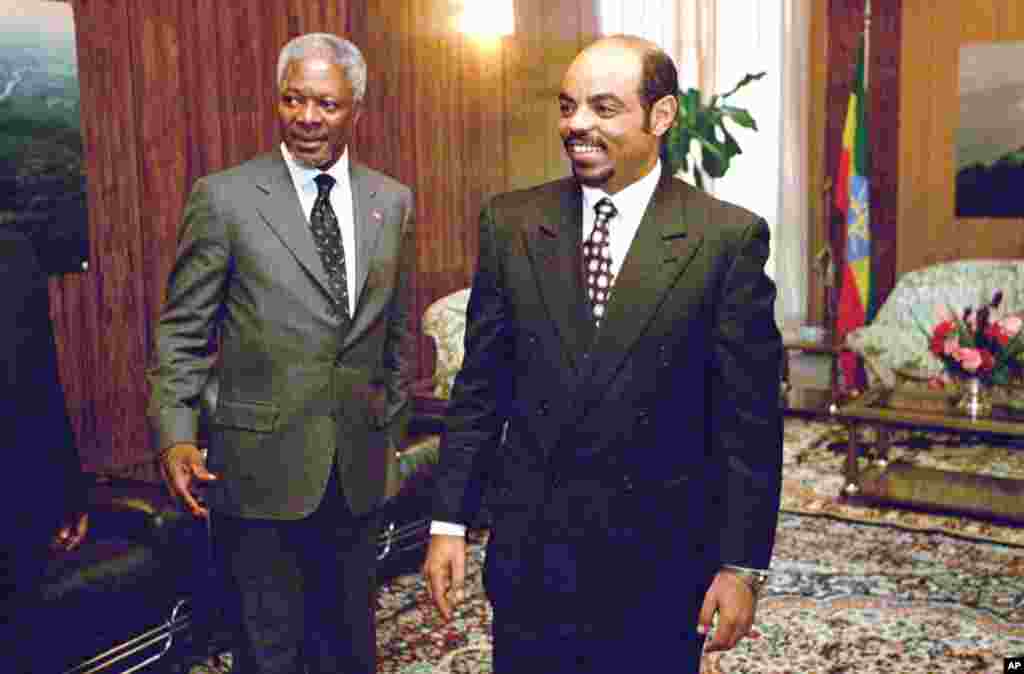
17/19UN Secretary General Kofi Annan with Meles before their meeting in the office of the prime minister in Addis Ababa, Ethiopia, April 30, 1998.
Ethiopia is mourning the death of Prime Minister Meles Zenawi at the age of 57. Meles died late August 22 of an unspecified infection while seeking treatment outside the country.
Show moreShow less
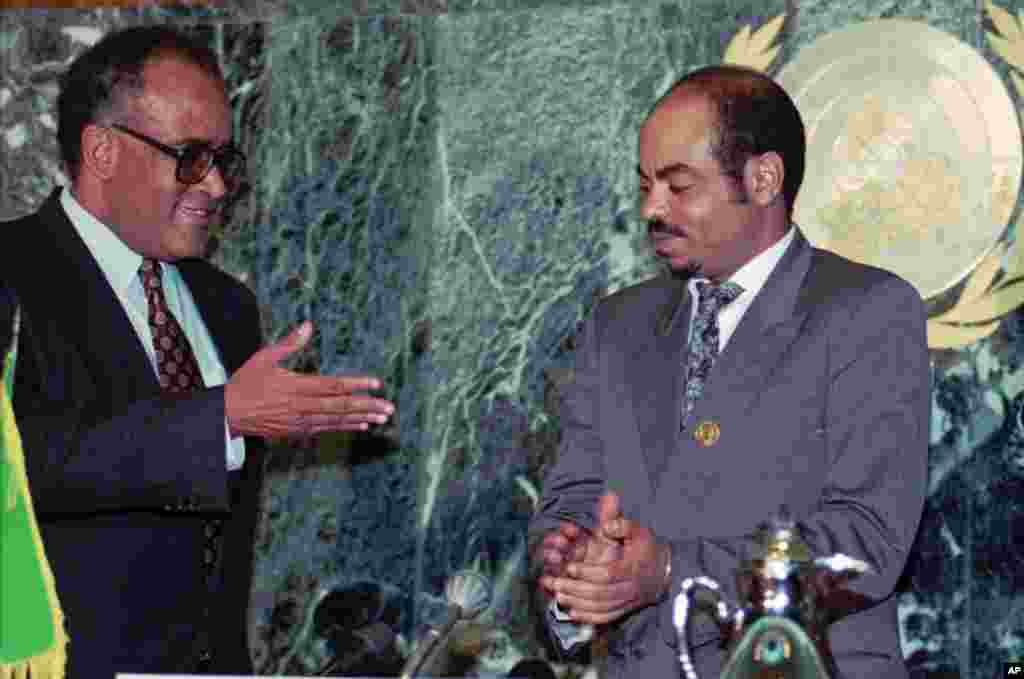
18/19Salim Ahmed Salim, Secretary General of the Organization of African Unity, meets with Meles in Addis Ababa, June 28, 1995.
Ethiopia is mourning the death of Prime Minister Meles Zenawi at the age of 57. Meles died late August 22 of an unspecified infection while seeking treatment outside the country.
Show moreShow less
19/19Meles accompanies Palestinian leader Yasser Arafat as he arrives at Addis Ababa's African Hall to attend a meeting, June 26, 1995.
Ethiopia is mourning the death of Prime Minister Meles Zenawi at the age of 57. Meles died late August 22 of an unspecified infection while seeking treatment outside the country.
Show moreShow less
Previous slide
Next slide
Some information for this report was provided by AP and Reuters.
The Voice of America provides news and information in more than 40 languages to an estimated weekly audience of over 326 million people. Stories with the VOA News byline are the work of multiple VOA journalists and may contain information from wire service reports.