


PARIS — Markets were up slightly Tuesday, after European Union finance ministers threw a lifeline to troubled Spanish banks by agreeing to the terms of a bailout. The ministers are back in Brussels later this month to finalize the deal.
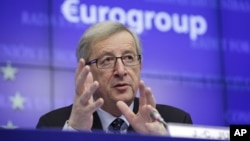
Spanish banks are expected to get a first installment of aid, worth nearly $37 billion, by the end of the month. At an early Tuesday news conference Luxembourg Prime Minister Jean-Claude Juncker, who heads the eurogroup of finance ministers, said more aid will follow later in the year.
But Juncker said the money comes with a catch - Spanish banks must meet certain conditions and overall supervision of Spain's financial sector must be strengthened.
"We are convinced that this conditionality will succeed in addressing the remaining weakness in the Spanish banking sector," he said.
The finance ministers also gave Spain a one-year extension to meet the eurozone's three percent budget deficit limit. Madrid now has until 2014 to meet that target.
"This was based on the positive assessment by the [EU] Commission on effective action taken and the significantly worsening situation in Spain and its impact on the budgetary situation," Juncker said. "We expect Spain to take all necessary measures to meet the new 2014 deadline."
After Greece, Portugal and Ireland, Spain is now the biggest worry for the 17-nation eurozone. Besides its banking problems, the eurozone's fourth largest economy is struggling with high unemployment and a recession.
Spanish Economy Minister Luis de Guindos was upbeat about the decisions reached for his country. He called the agreement positive for Spain's financial system. And he said Spain must fulfill the three percent budget deficit target by the 2014 deadline.
The two-day finance meeting began with ministers from just the euro currency nations before expanding to include all 27 European Union ministers on Tuesday. They are tasked to fill in the blanks of decisions EU leaders made last month to tackle the eurozone crisis and strengthen the economic union.
New measures include creating a banking union and giving the European Central Bank a supervisory role over euro-area banks.
On another troubled economy - Greece - the finance ministers have decided to wait for the conclusions of international debt inspectors before responding to a request by Athens to renegotiate its bailout agreements.
The ministers also appointed Juncker for another term as euro group leader, although he says he will step down early.
Spanish banks are expected to get a first installment of aid, worth nearly $37 billion, by the end of the month. At an early Tuesday news conference Luxembourg Prime Minister Jean-Claude Juncker, who heads the eurogroup of finance ministers, said more aid will follow later in the year.
But Juncker said the money comes with a catch - Spanish banks must meet certain conditions and overall supervision of Spain's financial sector must be strengthened.
"We are convinced that this conditionality will succeed in addressing the remaining weakness in the Spanish banking sector," he said.
The finance ministers also gave Spain a one-year extension to meet the eurozone's three percent budget deficit limit. Madrid now has until 2014 to meet that target.
"This was based on the positive assessment by the [EU] Commission on effective action taken and the significantly worsening situation in Spain and its impact on the budgetary situation," Juncker said. "We expect Spain to take all necessary measures to meet the new 2014 deadline."
After Greece, Portugal and Ireland, Spain is now the biggest worry for the 17-nation eurozone. Besides its banking problems, the eurozone's fourth largest economy is struggling with high unemployment and a recession.
Spanish Economy Minister Luis de Guindos was upbeat about the decisions reached for his country. He called the agreement positive for Spain's financial system. And he said Spain must fulfill the three percent budget deficit target by the 2014 deadline.
The two-day finance meeting began with ministers from just the euro currency nations before expanding to include all 27 European Union ministers on Tuesday. They are tasked to fill in the blanks of decisions EU leaders made last month to tackle the eurozone crisis and strengthen the economic union.
New measures include creating a banking union and giving the European Central Bank a supervisory role over euro-area banks.
On another troubled economy - Greece - the finance ministers have decided to wait for the conclusions of international debt inspectors before responding to a request by Athens to renegotiate its bailout agreements.
The ministers also appointed Juncker for another term as euro group leader, although he says he will step down early.