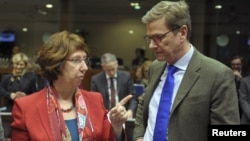
European Union foreign policy chief Catherine Ashton talks with German Foreign Minister Guido Westerwelle at the start of a European Union foreign ministers meeting at the EU Council in Brussels, December 10, 2012.
Several key European countries are trying to rally international support for Syria's newly formed opposition coalition.
European Union foreign ministers met Monday with new Syrian opposition leader Mouaz al-Khatib in Brussels.
Afterward, German Foreign Minister Guido Westerwelle said al-Khatib's coalition deserves more support.
"It is the right timing to upgrade the political recognition of the Syrian National Coalition today. I think it is the best timing. We used the momentum we have at the moment on the ground and we think it will be an important measure to promote the process of erosion in the regime of Assad," said Westerwelle.
Fighting Continues in Syria
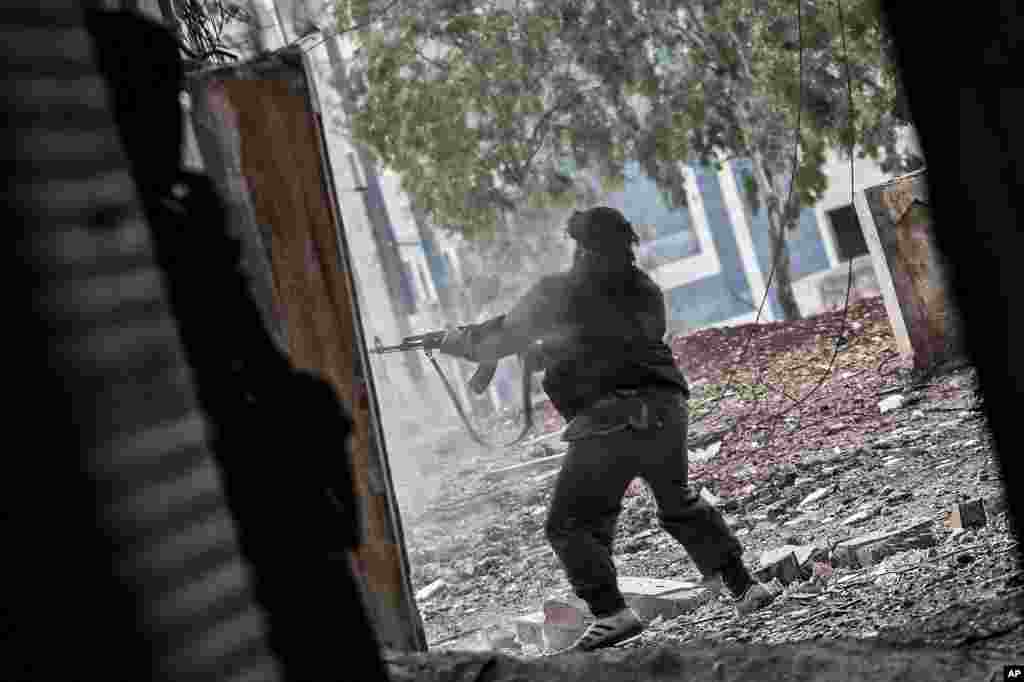
1/10A Free Syrian Army fighter aims his weapon during heavy clashes with government forces in Aleppo, Syria, December 11, 2012.
Show moreShow less
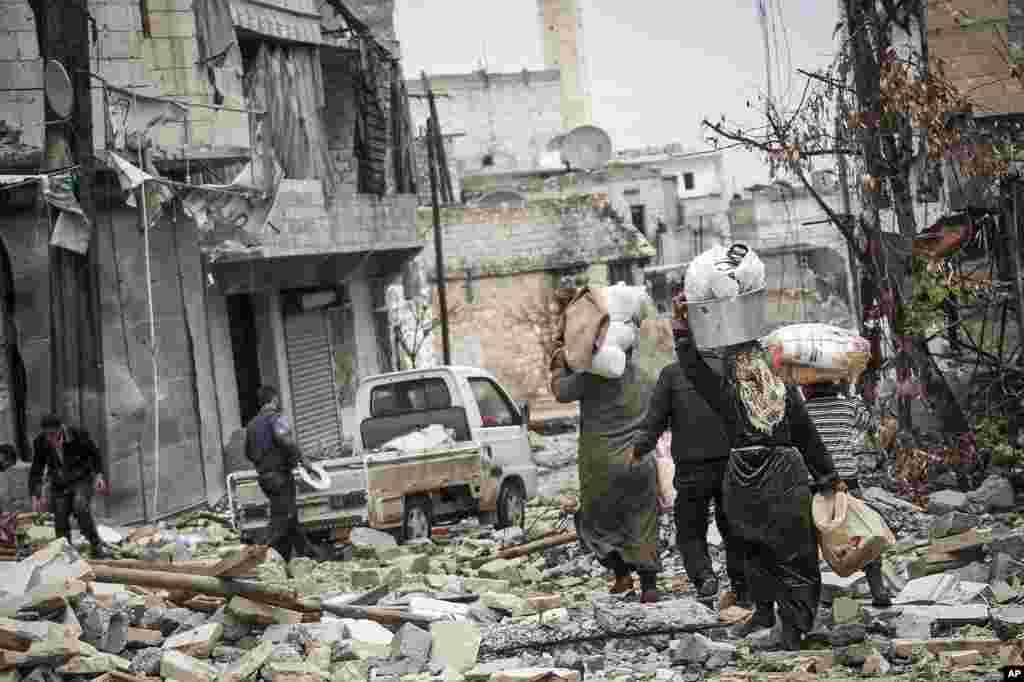
2/10Syrian residents carry their belongings after their homes were damaged due to fighting between Free Syrian Army fighters and government forces in Aleppo, Syria, December 11, 2012.
Show moreShow less
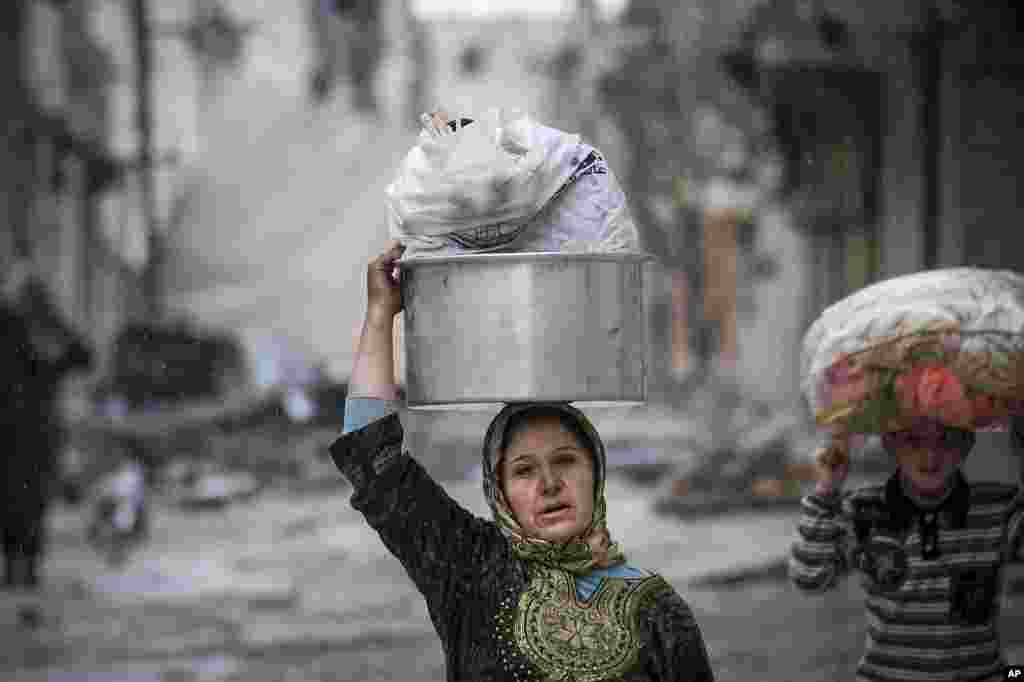
3/10A woman and girl carry their belongings after their home was damaged in fighting between Free Syrian Army fighters and government forces in Aleppo, Syria, December 11, 2012.
Show moreShow less
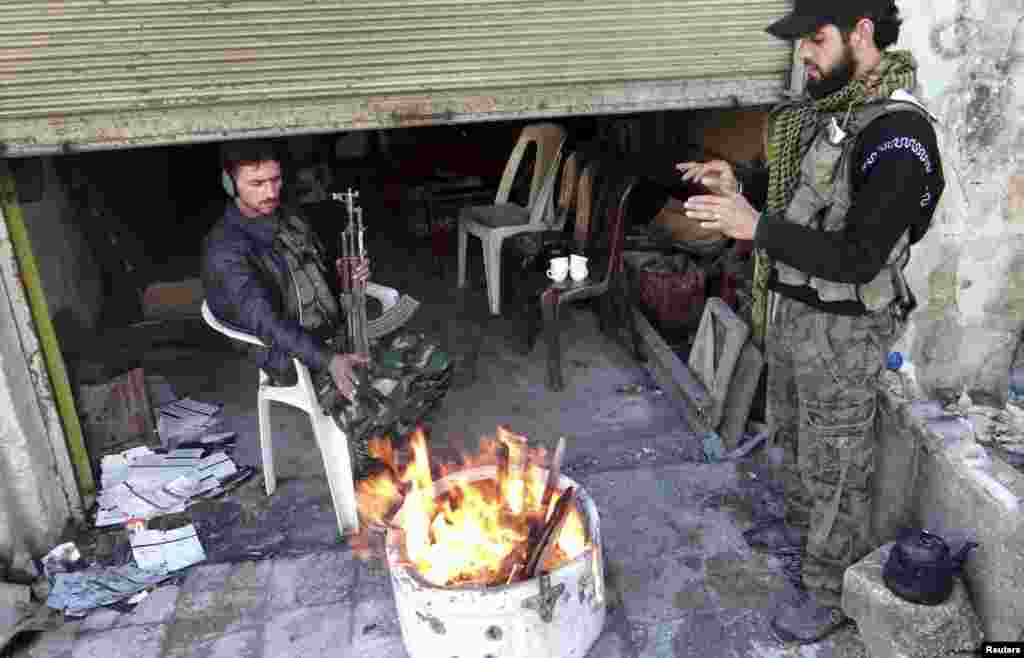
4/10Free Syrian Army fighters warm themselves by a fire in Aleppo's al-Amereya district, December 11, 2012.
Show moreShow less
5/10Free Syrian Army fighters look for government forces during heavy clashes in Aleppo, Syria, December 11, 2012.
Show moreShow less
6/10This image taken from video obtained from the Shaam News Network shows what was said to be heavy shelling by warplanes near Damascus, Syria, December 10, 2012.
Show moreShow less
7/10Hoàng tử William của Anh sử dụng gậy cricket đánh một quả bóng trong khi tham dự một sự kiện quảng bá cho giải Cricket World Cup sắp tới tại Christchurch, New Zealand
Show moreShow less
8/10People wait in line to buy bread at a bakery in Aleppo, Syria, December 9, 2012.
Show moreShow less
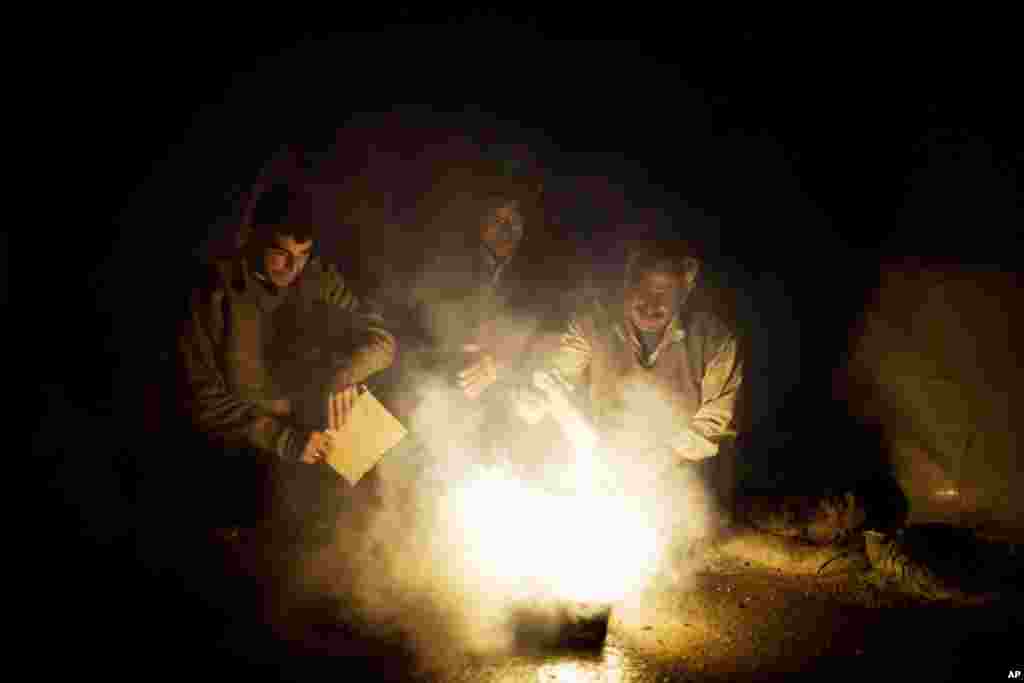
9/10Men use a fire to boil water near their tent at a refugee camp near the Turkish border, in Azaz, Syria, December 9, 2012.
Show moreShow less
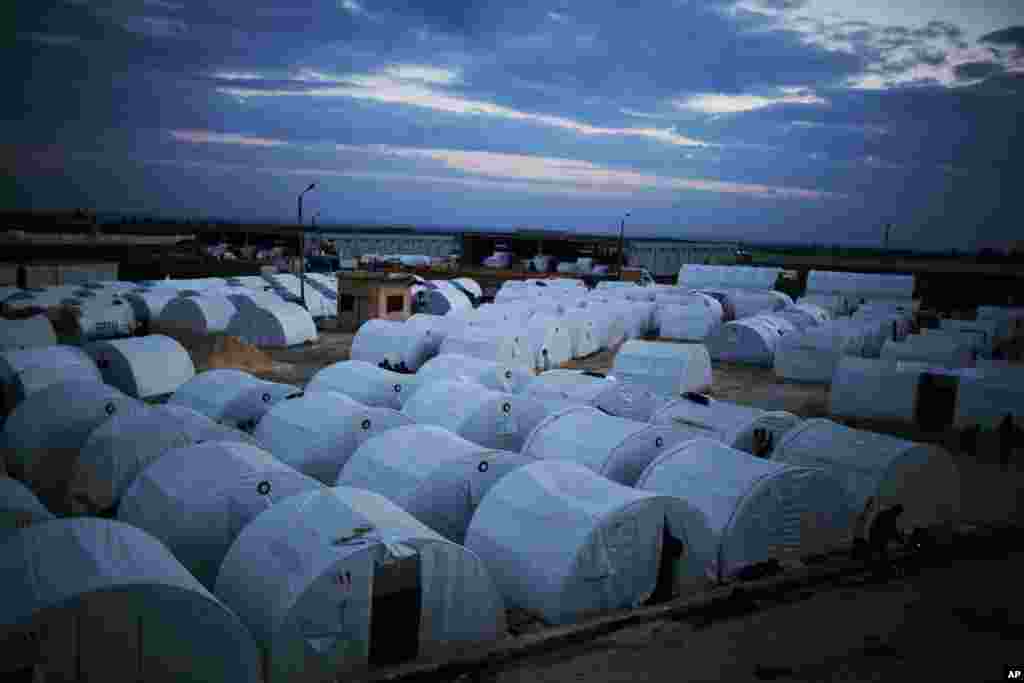
10/10General view of a refugee camp near the Turkish border, in Azaz, Syria, December 9, 2012.
Show moreShow less
Previous slide
Next slide
Despite broad support for the ouster of Syrian President Bashar al-Assad, some European nations have been hesitant to fully embrace the newly formed opposition coalition.
British Foreign Minister William Hague expressed hope that will soon change.
"He [i.e., Syrian National Coalition leader Mouaz al-Khatib] has been able to give some very clear assurances about the inclusivity of the National Coalition -- about the inclusion of Kurdish people, of Christian people in Syria, about the determination to represent all the people of Syria. Of course, the United Kingdom has already recognized them as the sole legitimate representatives of the Syrian people. I hope that him coming here today will encourage other European nations to do the same," said Hague.
U.S. Assistance for Syria
U.S. Assistance for Syria
$200 million in humanitarian aid
-Helps 4 million people in Syria and 460,000 Syrian refugees
-Provides food, water, medical and relief supplies
$50 million to assist unarmed opposition groups
-Supports civil society groups and local councils
-Supports independent media projects, training for citizen journalists
-Facilitates linkages between elements to support democratic transition planning
Source: State Department
Many of the EU nations, along with the United States, will gather later this week in Morocco for a Friends of Syria meeting aimed at regime change.
While Germany and Britain expressed optimism going forward, EU foreign affairs chief Catherine Ashton cautioned Syria needs a political solution to the violence between the Syrian regime and opponents bent on overthrowing it.
"It's important that there has to be a political process alongside everything else, you know you have to get from here to the position where you have an inclusive, chosen government in Syria that the people can all feel proud of. And that's really important so you do need a political process," said Ashton.
Earlier Monday, European Commission President Jose Manuel Barroso called the situation in Syria "a stain on the world's conscience," adding "the international community has a moral duty to address it."
Barroso made the comments in Oslo, Norway, at a ceremony awarding this year's Nobel Peace Prize to the European Union.
Russia on Monday repeated its objection to any outside interference in a Syrian transition process. A Russian Foreign Ministry statement called for an immediate end to the fighting in Syria, but cautioned any decisions about political reforms should be made by Syrians themselves.
Moscow's position remains at odds with the United States, which has been calling for Assad to quit and begin a transition to a democratic government.
Fighting between rebels and government forces has already claimed more than 40,000 lives, with no let-up in sight.
Video posted on the Internet Monday claimed to show more government airstrikes in a town near Homs and explosions in Deir al-Zour. Activists said government warplanes bombed the Damascus suburb of Daraya, while rebels and government forces clashed in other areas near the capital.
There also are indications the rebels are continuing to gain ground.
Video posted to the Internet showed what were claimed to be soldiers with the Free Syrian Army near the northern city of Aleppo riding down a road in a captured tank.
The Voice of America provides news and information in more than 40 languages to an estimated weekly audience of over 326 million people. Stories with the VOA News byline are the work of multiple VOA journalists and may contain information from wire service reports.