


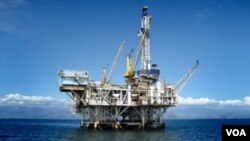
Europe is a step closer toward curbing corruption in extraction industries in developing countries. A European Parliamentary committee has approved proposed legislation that would require European companies to publish payments they make to governments. It’s similar to a law already in effect in the U.S.
The watchdog group – Global Witness – says many developing countries suffer from “the resource curse.” Despite being rich in oil, gas, timber or minerals, citizens in those countries often fail to see any benefits when those resources are extracted and sold.
Brendan O’Donnell, head of the group’s oil campaign, said the legislation would shed light the extraction industry.
“This is the first big step in getting a really good piece of European legislation that will enable citizens to be able to see how much companies are paying to governments for natural resources in their countries.”
The legislation is similar to a law that took effect in the United States in August. The Securities and Exchange Commission published new rules as part of the Dodd-Frank Wall Street Reform and Consumer Protection Act.
“Extractive companies would have to report what they pay on an annual basis in their stock exchange listings and in their annual reports exactly what they’ve been paying to governments for natural resources like oil, gas and minerals on a project-by-project basis. Now that’s really important because projects really define what a deal is. It’s really important for citizens to be able to track the payments at that level,” he said.
O’Donnell said when the financial figures are lumped together, it’s very difficult to “follow the money” and determine how much is funneled to social, health and education programs, for example.
“Transparency now varies. Very, very few companies report on that sort of basis. There are companies that do it, but on the whole it’s not mandatory. It’s not required,” he said.
He said it’s difficult to put an exact figure on the financial rewards of the extraction industry, but he describes them as huge.
“Oil, gas and minerals from Africa were worth about seven times the value of international aid to the continent in 2010. So you can imagine if Africans were to be able to mobilize that sort of revenue -- and make sure that revenue goes into building schools, hospitals, infrastructure – that’s a massive amount of money. It dwarfs the aid budget, “he said.
Global witness estimates that since Nigeria’s oil boom began in the 1960s, the country has lost about $400 billion to corruption.
“These are big figures in countries which have very large populations of people who live [on] under a dollar a day. It’s absolutely crucial if countries are going to develop, if citizens are going to escape poverty, that these sorts of resources are used for their benefit,” said O’Donnell.
The European legislation on extraction industries will be discussed and debated by country ministers. There could be revisions and amendments before a final vote by the European Parliament is taken by the end of the year.
The watchdog group – Global Witness – says many developing countries suffer from “the resource curse.” Despite being rich in oil, gas, timber or minerals, citizens in those countries often fail to see any benefits when those resources are extracted and sold.
Brendan O’Donnell, head of the group’s oil campaign, said the legislation would shed light the extraction industry.
“This is the first big step in getting a really good piece of European legislation that will enable citizens to be able to see how much companies are paying to governments for natural resources in their countries.”
The legislation is similar to a law that took effect in the United States in August. The Securities and Exchange Commission published new rules as part of the Dodd-Frank Wall Street Reform and Consumer Protection Act.
“Extractive companies would have to report what they pay on an annual basis in their stock exchange listings and in their annual reports exactly what they’ve been paying to governments for natural resources like oil, gas and minerals on a project-by-project basis. Now that’s really important because projects really define what a deal is. It’s really important for citizens to be able to track the payments at that level,” he said.
O’Donnell said when the financial figures are lumped together, it’s very difficult to “follow the money” and determine how much is funneled to social, health and education programs, for example.
“Transparency now varies. Very, very few companies report on that sort of basis. There are companies that do it, but on the whole it’s not mandatory. It’s not required,” he said.
He said it’s difficult to put an exact figure on the financial rewards of the extraction industry, but he describes them as huge.
“Oil, gas and minerals from Africa were worth about seven times the value of international aid to the continent in 2010. So you can imagine if Africans were to be able to mobilize that sort of revenue -- and make sure that revenue goes into building schools, hospitals, infrastructure – that’s a massive amount of money. It dwarfs the aid budget, “he said.
Global witness estimates that since Nigeria’s oil boom began in the 1960s, the country has lost about $400 billion to corruption.
“These are big figures in countries which have very large populations of people who live [on] under a dollar a day. It’s absolutely crucial if countries are going to develop, if citizens are going to escape poverty, that these sorts of resources are used for their benefit,” said O’Donnell.
The European legislation on extraction industries will be discussed and debated by country ministers. There could be revisions and amendments before a final vote by the European Parliament is taken by the end of the year.