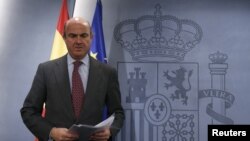
Spanish Economy Minister Luis de Guindos stands before a news conference after the weekly cabinet meeting in Moncloa Palace, in Madrid, Spain, November 15, 2012.
Europe's euro currency bloc says it has fallen into its second recession in three years.
The 17-nation eurozone said Thursday its economy contracted one-tenth of a percent in the July-to-September period, following a drop of two-tenths of one percent in the previous three months. That meets the common definition of a recession - two straight quarters of declining growth.
The eurozone's earlier recession in 2008 and 2009 was triggered largely by the collapse of Lehman Brothers, the now-defunct American investment bank.
The current recession, though, has been centered in Europe itself. It has been marked by the currency bloc's uneven response to its governmental debt crisis over the last three years, record unemployment and bailouts to debt-ridden governments in Greece, Ireland and Portugal.
Anti-Austerity Protests Across Europe
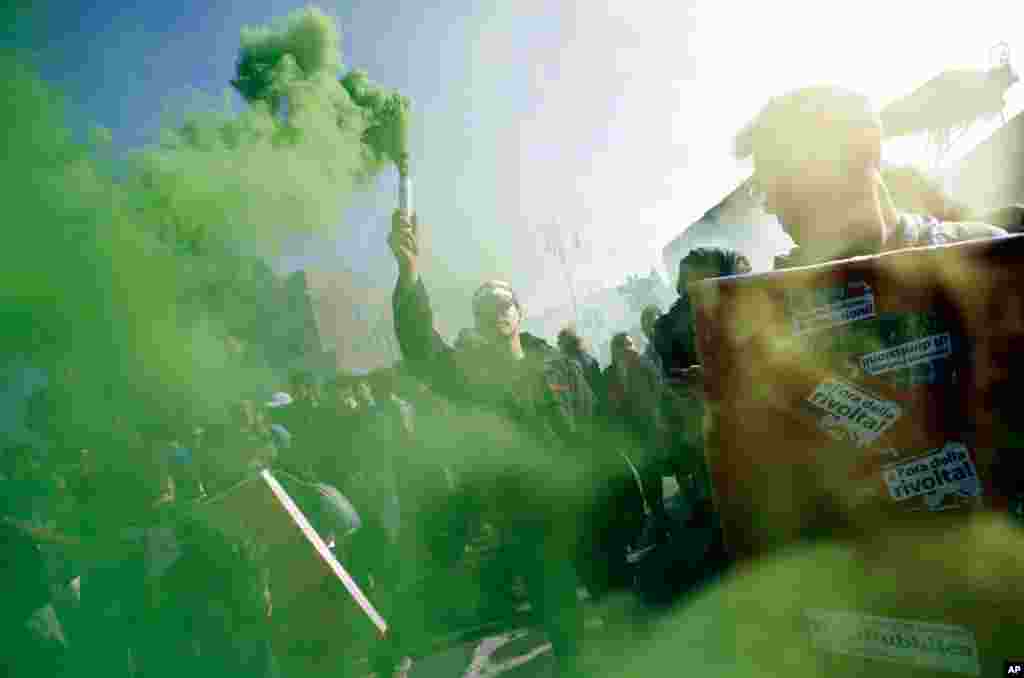
1/10A student holds a lighted torch during a demonstration against austerity measures in downtown Rome, November 14, 2012.
Show moreShow less
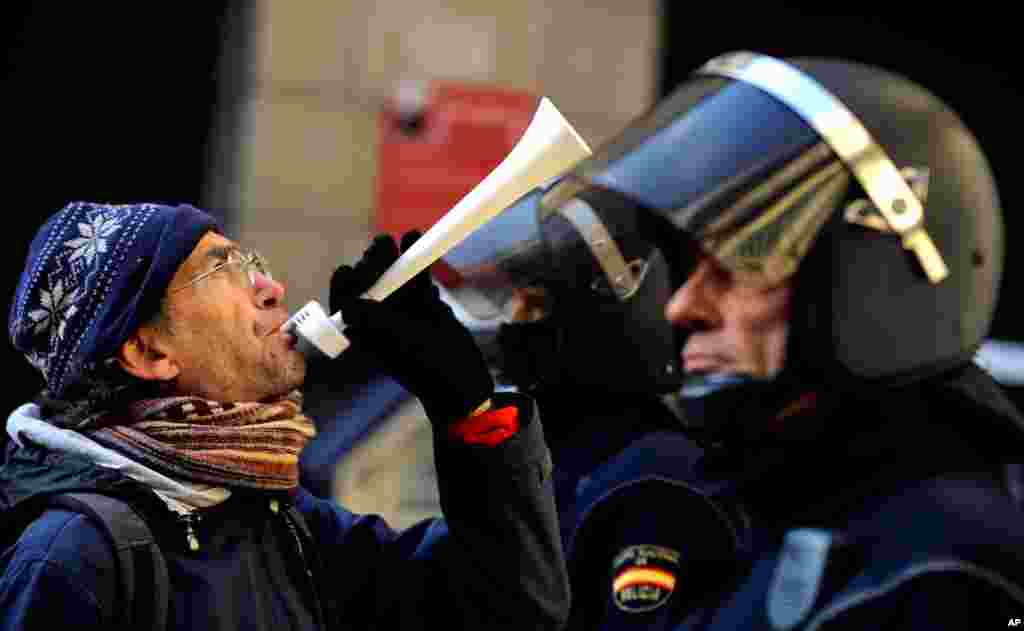
2/10A demonstrator blows a horn in front of Spanish riot police during a strike against government austerity measures in Pamplona, Spain, November 14, 2012.
Show moreShow less
3/10Workers from Telefonica phone company take part in a demonstration against the dismissals at their company in Barcelona, Spain, November 13, 2012.
Show moreShow less
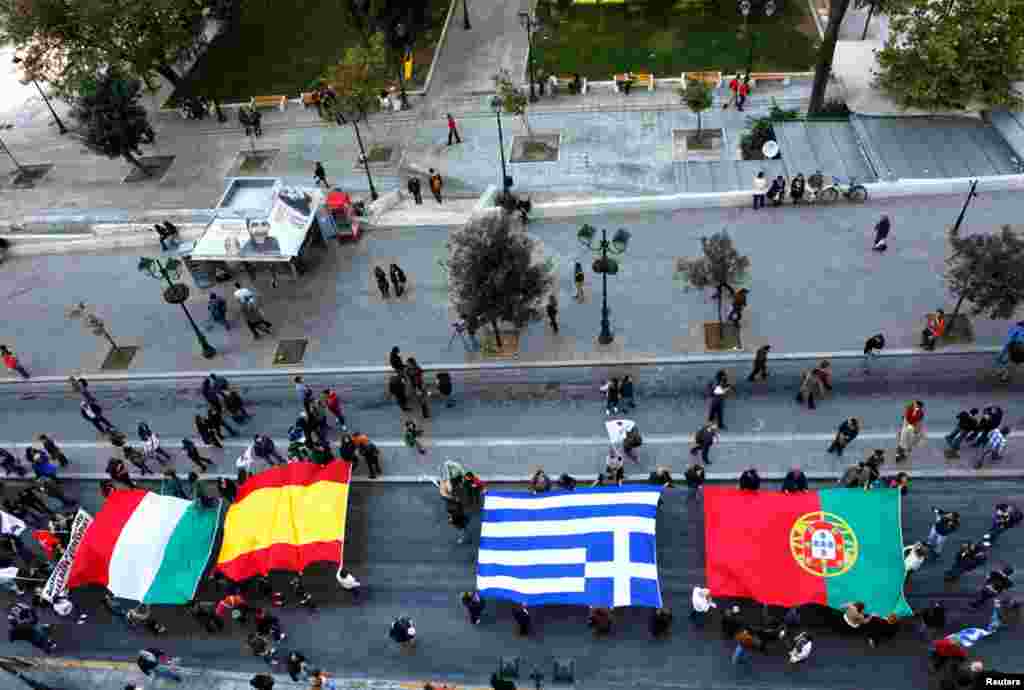
4/10Protesters march through Syntagma square in Athens with flags of Italy, Spain, Greece and Portugal, November 14, 2012.
Show moreShow less
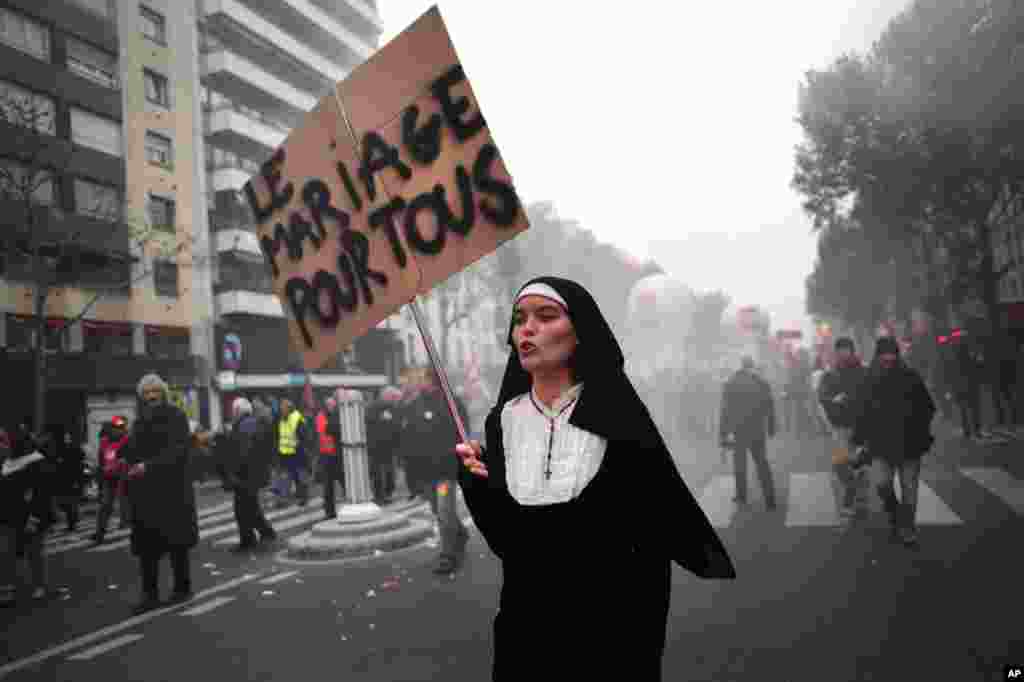
5/10A woman dressed as a nun holds a board reading "marriage for everybody" as part of a demonstration against austerity in Paris, November 14, 2012.
Show moreShow less
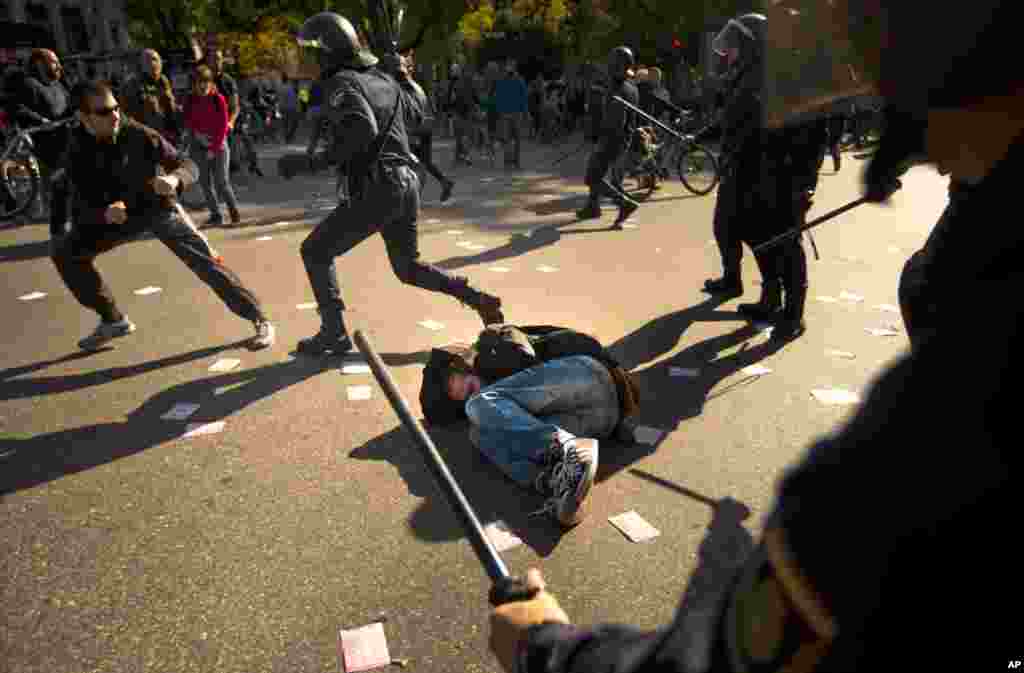
6/10A protestor lies on the ground during clashes with riot police in Madrid, Spain, November 14, 2012.
Show moreShow less
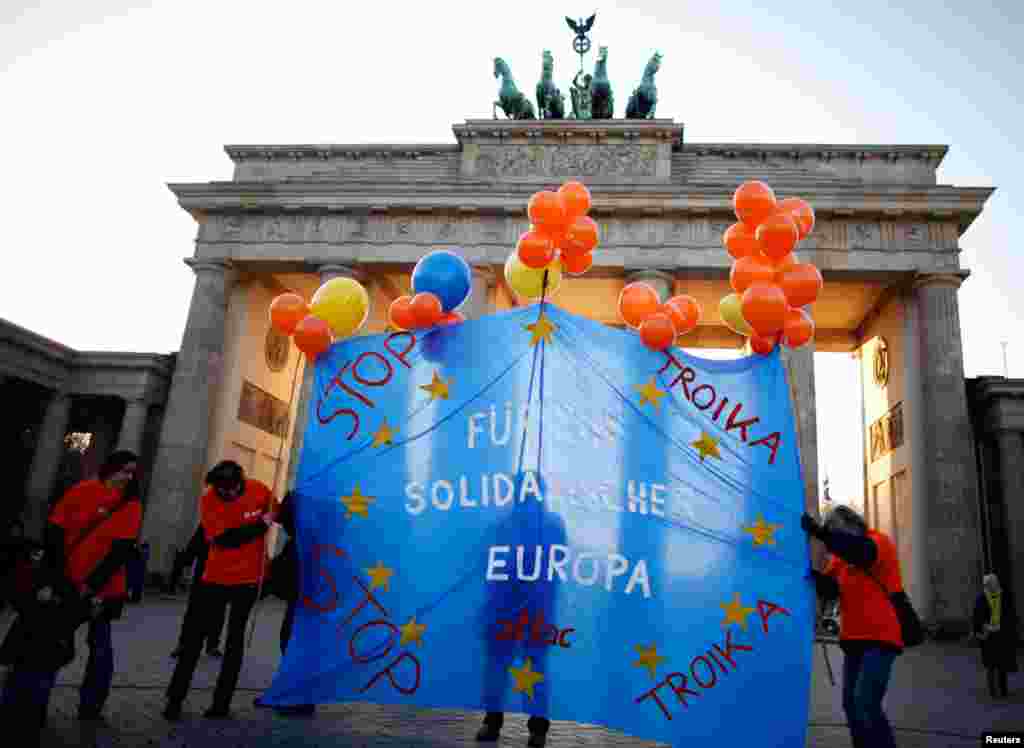
7/10Demonstrators hold a banner reading 'For solidarity in Europe' in front of the Brandenburg Gate in Berlin, November 14, 2012.
Show moreShow less
8/10A protester covers her head in a plastic bag, meant to show that austerity measures are suffocating Greeks, outside Parliament in Athens, November 14, 2012.
Show moreShow less
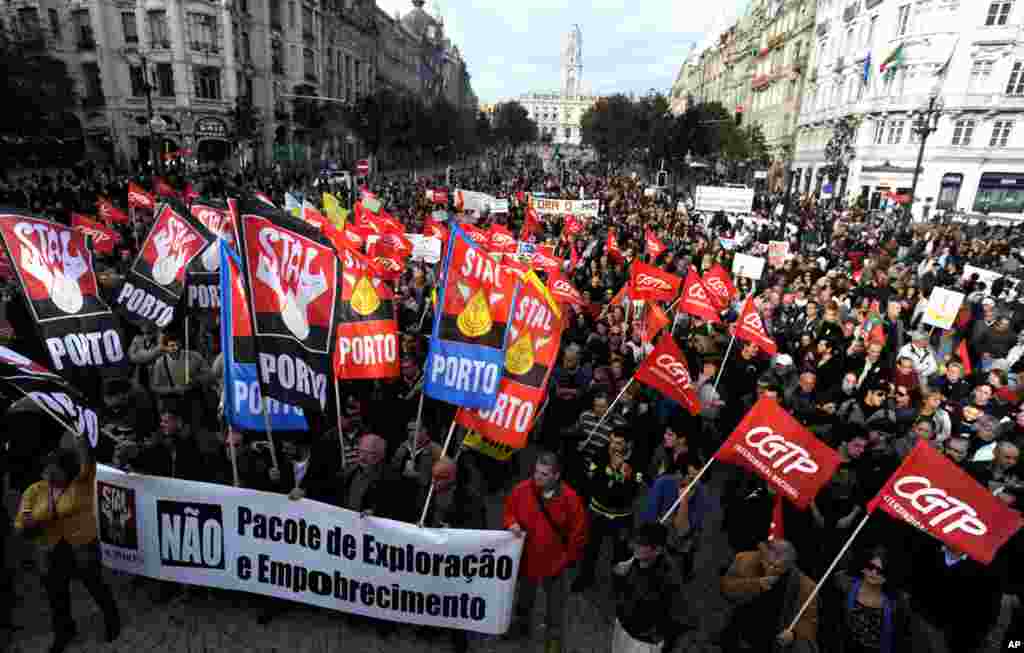
9/10Demonstrators march in Porto, Portugal, November 14, 2012.
Show moreShow less
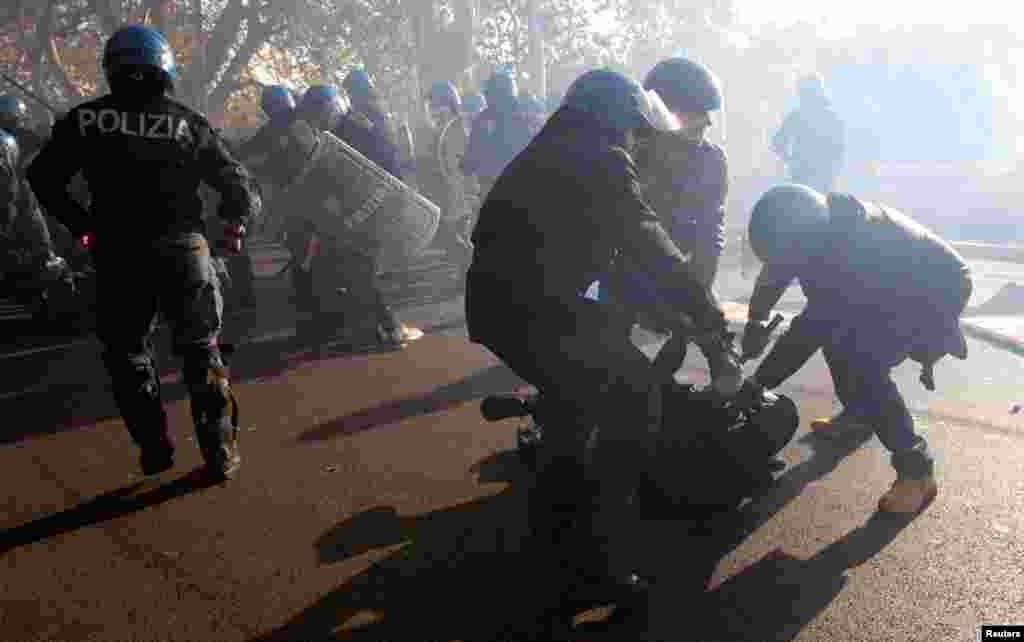
10/10Riot police clash with students in downtown Rome, November 14, 2012.
Show moreShow less
Previous slide
Next slide
Germany and France, the eurozone's two biggest economies, advanced slightly in the third quarter, both up two-tenths of one percent. But the economies in Italy, Spain and the Netherlands all contracted.
Debt-ridden eurozone governments have imposed sharp austerity plans to curb their deficits, but the spending cuts have stagnated economic growth. Workers throughout the eurozone's southern tier of countries have taken to the streets in protest of their governments' actions, but European leaders have been resolute in carrying out their plans to control their debt.
Forecasters are predicting that the eurozone economy will advance very slightly next year, barely above stagnation.
The Voice of America provides news and information in more than 40 languages to an estimated weekly audience of over 326 million people. Stories with the VOA News byline are the work of multiple VOA journalists and may contain information from wire service reports.