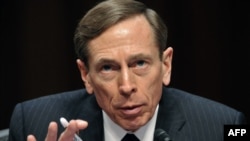
Resigned CIA Director David Petraeus (Jan 2012 photo)
Former CIA Director David Petraeus will testify before a congressional committee this week about the deadly September 11 attack on the U.S. consulate in Benghazi, Libya.
Petraeus will appear before the House Intelligence Committee in a closed door session on Friday, exactly one week after he resigned after an FBI investigation uncovered his extramarital affair with his biographer, Paula Broadwell, and raised concerns about a possible breach of national security.
David Petraeus Bio
David Petraeus
Resigned from CIA on November 9, 2012
Senate confirmed him as CIA director in 2011
Appointed head of U.S. Central Command in 2008, oversaw military operations in Afghanistan
Commanded U.S. troops in Iraq in 2007
Commanded 101st Airborne Division during the 2003 invasion of Iraq
Graduated from West Point in 1974
Petraeus will discuss his trip to Libya to investigate the attack, which led to deaths of U.S. Ambassador Christopher Stevens and three other diplomatic officials. He has also agreed to appear before the Senate Select Intelligence Committee; the chairman of the panel, Senator Diane Feinstein, says his testimony has not been scheduled.
Petraeus was scheduled to testify this week before the Senate committee before he abruptly resigned. Acting CIA Director Michael Morell will testify in Petraeus's place before the Senate committee Thursday, along with national intelligence director James Clapper.
Security concerns
Many lawmakers have raised concerns about whether there was adequate security at the consulate, and if the Obama administration attempted to conceal information to avoid any embarrassment before the November 6 presidential election.
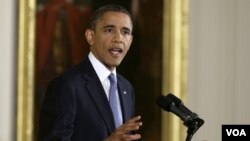
President Barack Obama at White House news conference Nov. 14, 2012
President Barack Obama addressed the September attack during his press conference Wednesday. The president angrily spoke out against what he termed "outrageous" criticism by Republican lawmakers against the U.S. ambassador to the United Nations, Susan Rice, who has come under fire over comments she made following the attack.
Rice appeared on several Sunday morning network public affairs shows and said the attack grew out of a spontaneous protest over an anti-Muslim film produced in the U.S. Information later surfaced that the attack was instead planned by al-Qaida.
The White House says Rice based her comments on information provided to her by the intelligence community.
Obama said she has done "exemplary" work representing U.S. interests with skill. The president did not say if he planned to pick her to replace Hillary Clinton as U.S. secretary of state.
The Voice of America provides news and information in more than 40 languages to an estimated weekly audience of over 326 million people. Stories with the VOA News byline are the work of multiple VOA journalists and may contain information from wire service reports.