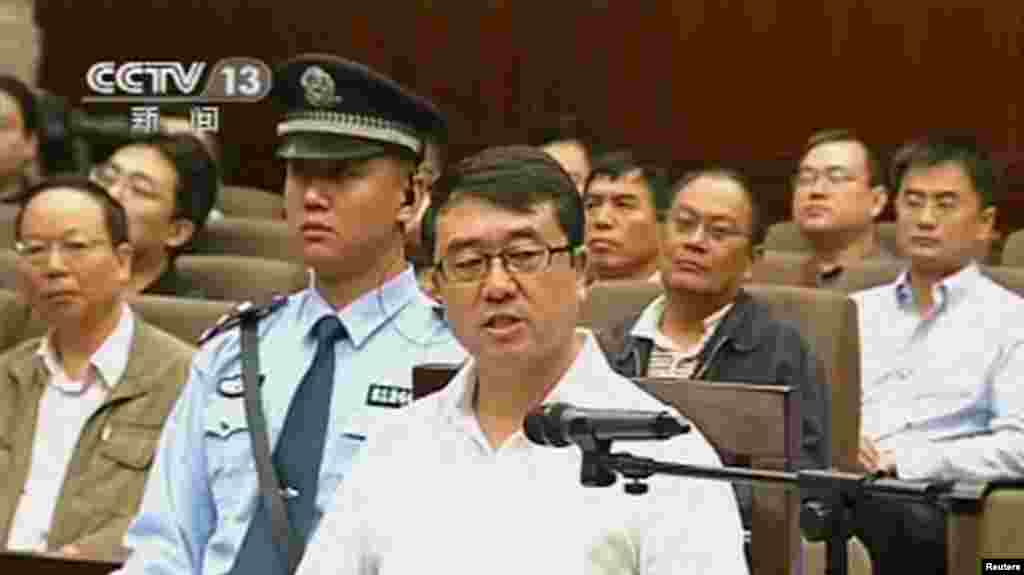
A former Chinese police chief at the center of a major Communist Party political scandal has been charged with defection, taking bribes, and abuse of power.
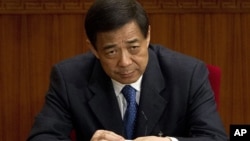
But experts are split on what the charges against Wang Lijun mean for Bo Xilai, the once-powerful ex-party boss whose career has seemingly been shattered by the crisis.
The incident began in February, when Wang fled to the U.S. consulate in Chongqing to inform American diplomats that Bo's wife, Gu Kailai, was involved in the murder of a British businessman.
Where's Bo?
China Scandal - Timeline
Timeline of the Bo Xilai Scandal
February 2: Bo's key ally and Chongqing police chief, Wang Lijun, is demoted.
February 6: Wang visits U.S. consulate in Chengdu, reportedly to seek asylum.
March 2: Xinhua reports Wang is under investigation.
March 9: Bo defends himself and his wife, Gu Kailai, at a press conference.
March 15: Bo dismissed as Chongqing party chief.
March 26: Britain asks China to investigate November death of Briton Neil Heywood in Chongqing.
April 10: Bo suspended from Politburo and top Communist Party posts. China announces Gu is being investigated for Heywood's death.
July 26: Gu charged with Heywood's murder.
August 10: Four Chinese police go on trial for allegedly helping cover up the Heywood murder.
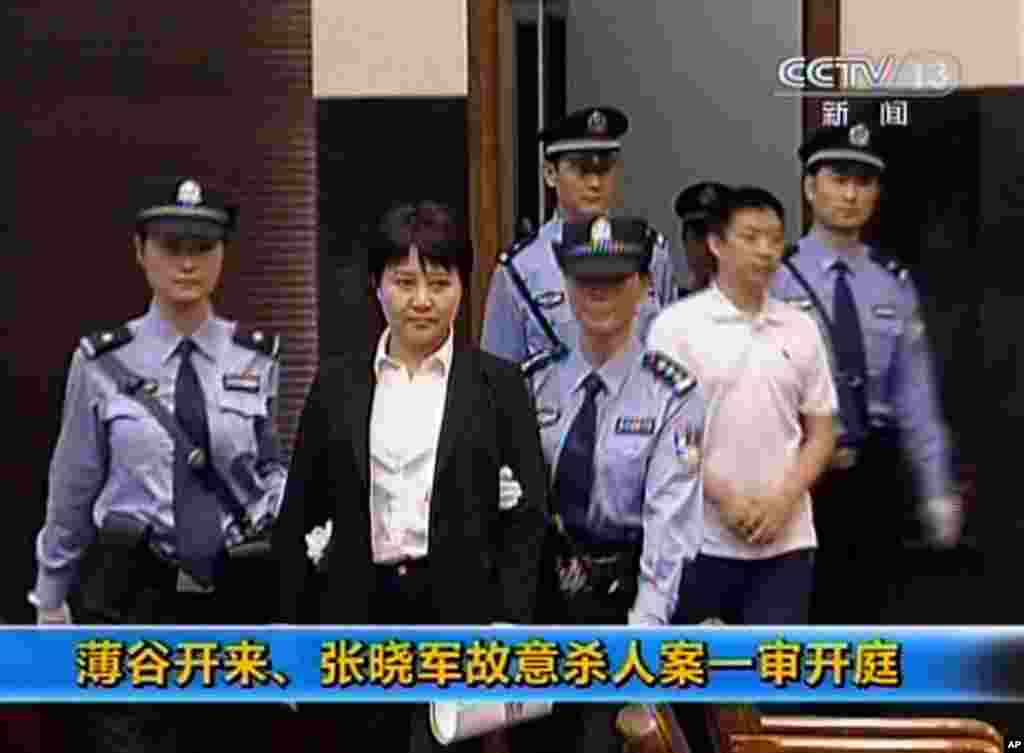
August 20: Gu given suspended death sentence after confessing to Heywood's murder.
September 18: Two day trial of Wang for defection and abuse of power ends without him contesting the charges.
But while Bo's wife was convicted last month for the murder, Bo himself has not been heard from. Although he was stripped of his party posts and placed under investigation for unspecified "disciplinary violations," it is not clear whether he will face criminal charges.
Some analysts expect the party to be lenient with Bo, pointing out that his name was not even mentioned during Gu's tightly orchestrated murder case or in the official charges against Wang. They say this suggests he will not be accused of direct involvement in the crime.
But Bonnie Glaser, a China analyst with the Washington-based Center for Strategic and International Studies, says the silence about Bo could also mean Beijing has not yet made a decision on his future.
"Bo Xilai's fate has not yet been determined," says Glaser. "It remains to be seen whether Bo Xilai will be charged, whether he will be charged in public, or whether he will just be dealt with through the parallel party system, and it is my guess that it will be the latter."
Glaser points to the case of former Chinese premier Zhao Ziyang, who fell out of favor with the party following the Tiananmen Square protests. Zhao was dealt with internally and spent the rest of his life under house arrest. Glaser says Bo could receive the same fate.
Possible punishment
It is also unclear as to when Beijing will make any announcement regarding possible punishment for Bo. Glaser says it is in the interest of the Communist Party to wrap up the embarrassing scandal before a sensitive leadership transition later this year.
"I think these are issues that the Chinese leadership would like to get out of the way prior to the opening of the 18th Party Congress, which now is likely to be in mid-October." she says, adding: "I think they will probably do so."
Others are not so sure. International Studies Chairman Baogang He of Australia's Deakin University says he does not expect to hear much news on Bo's fate before the leadership transition.
"They do have an incentive to try Bo Xilai before the 18th Party Congress," he says. "But it is probably unlikely."
He adds that it is unlikely that Bo's trial would be conducted in private, saying this could undermine public confidence in China's legal system.
Although there are more questions than answers surrounding the whole scandal, Chinese state media - when they have spoken on the sensitive topic - have put a positive spin on the controversy.
An editorial in the Communist Party-controlled Global Times newspaper said Thursday that the charges against Wang show a "certainty of justice," and declared that "the stir has already passed."
China's Bo Xilai Scandal
1/12In this photo released by the Jinan Intermediate People's Court, Bo Xilai is handcuffed and held by police officers as he stands at the court in Jinan, in eastern China's Shandong province, Sept. 22, 2013.
Show moreShow less
2/12A minivan believed to be carrying Bo Xilai arrives at the Jinan Intermediate People's Court ahead of the fifth day of Bo's trial, August 26, 2013.
Show moreShow less
3/12In this image taken from video, Bo Xilai addresses a court at Jinan Intermediate People's Court in eastern China's Shandong province, Aug. 24, 2013.
Show moreShow less
4/12A woman protests outside the Jinan Intermediate People's Court, eastern China's Shandong province, August 21, 2013.
Show moreShow less
5/12Gu Kailai, wife of Bo Xilai, is seen in a still image taken from an August 10, 2013 video provided by the Jinan Intermediate People's Court.
Show moreShow less
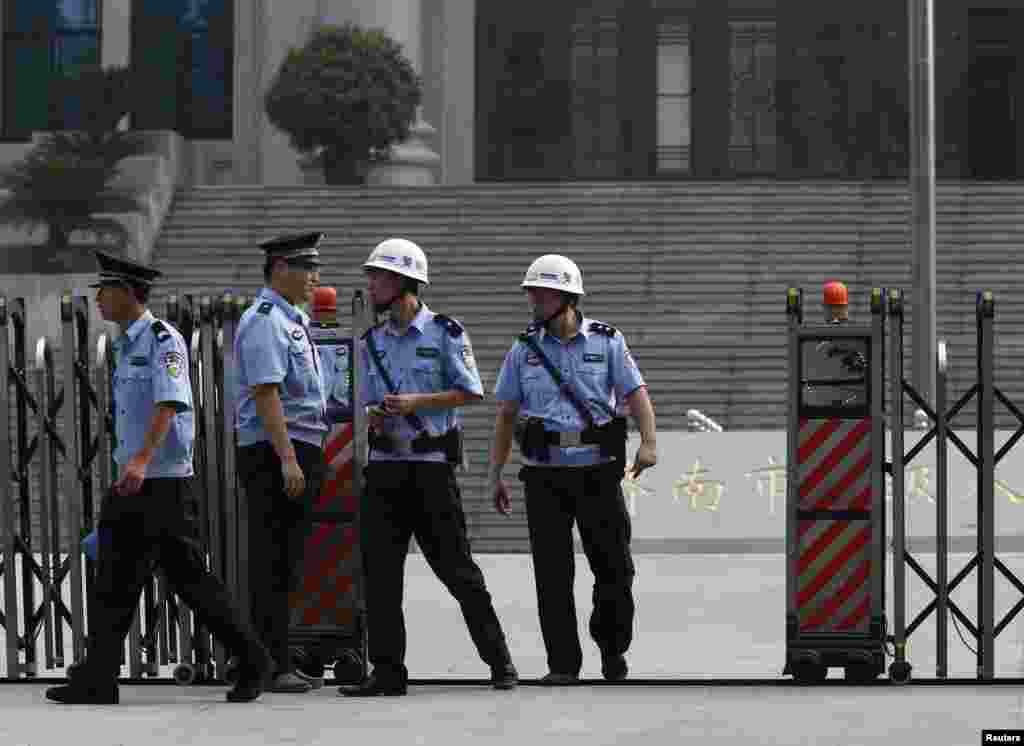
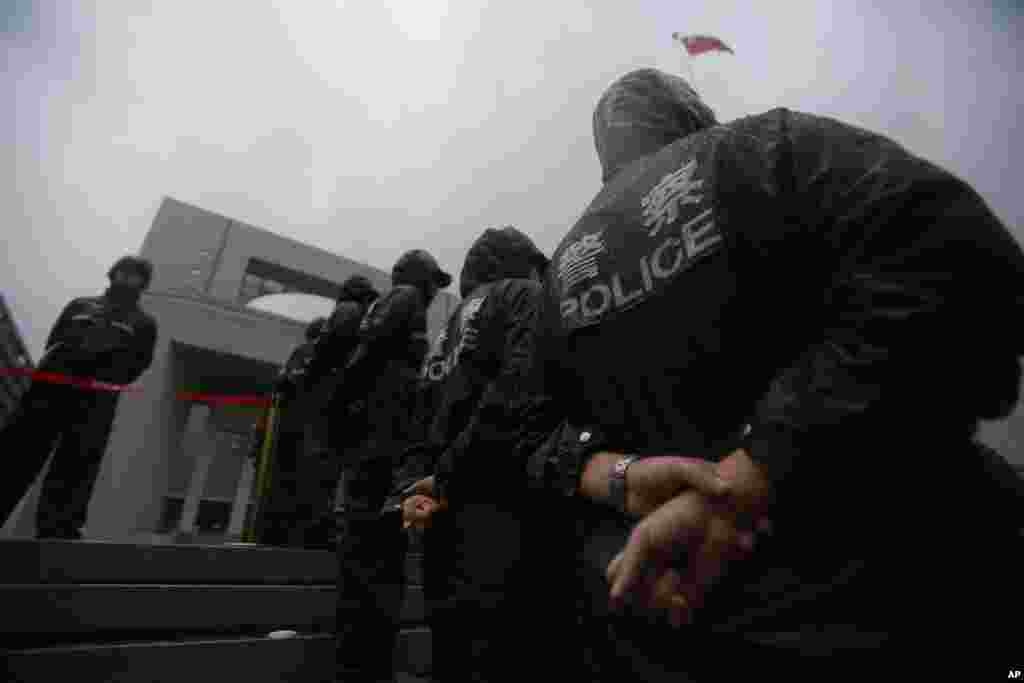
6/12Policemen are seen at a court building where the trial for Bo Xilai was held in Jinan, Shandong province.
Show moreShow less
7/12Former police chief Wang Lijun speaks during a court hearing in Chengdu, China, in this still image taken from CCTV video, Sept. 18, 2012.
Show moreShow less
8/12This video image taken from CCTV shows Gu Kailai, wife of Bo Xilai, being taken into the Intermediate People's Court in the eastern Chinese city Hefei, August 9, 2012.
Show moreShow less
9/12Police officers stand guard at the Hefei City Intermediate People's Court for the murder trial of Gu Kailai, Anhui Province, China, August 9, 2012.
Show moreShow less
10/12A combonation photo showing Neil Heywood and Gu Kailai.
Show moreShow less
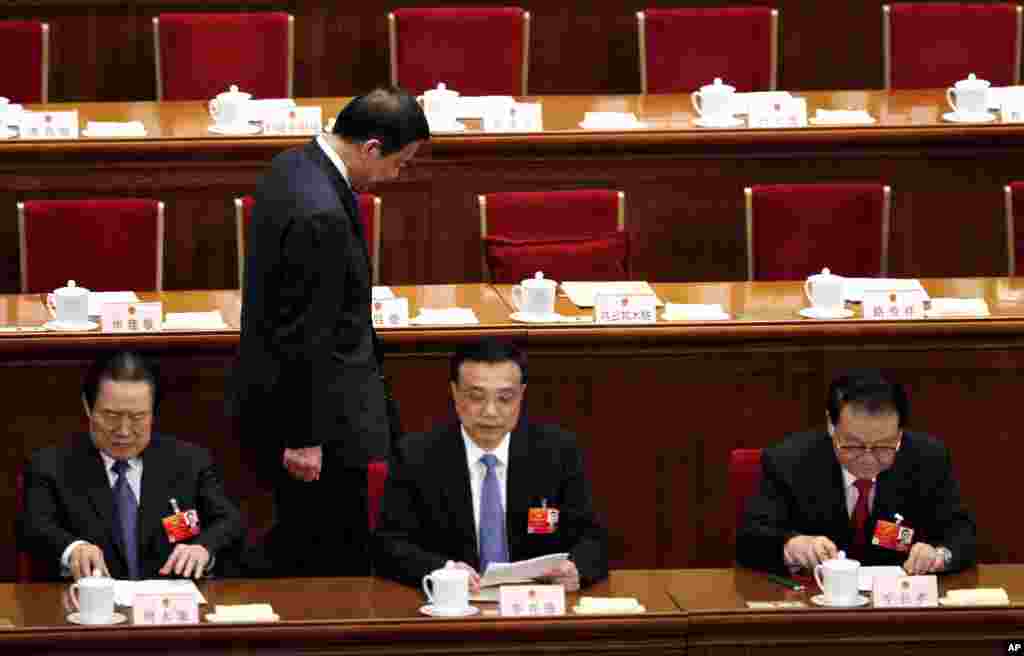
11/12Bo Xilai, walks past Communist Party leaders at the National People's Congress in Beijing, March 9, 2012.
Show moreShow less
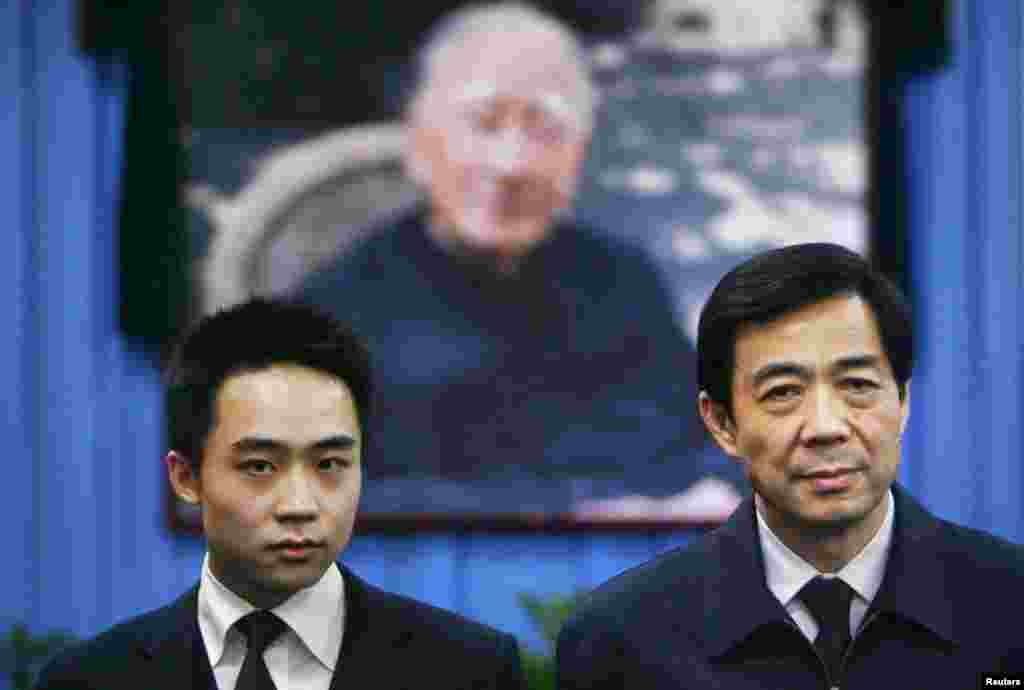
12/12Bo Xilai, right and his son, Bo Guagua, 2007.
The Voice of America provides news and information in more than 40 languages to an estimated weekly audience of over 326 million people. Stories with the VOA News byline are the work of multiple VOA journalists and may contain information from wire service reports.