



DAKAR — A journalists' group says the small West African country of Gambia ranks 13th worst in the world for the number of journalists who have fled into exile. Journalists and press freedom experts say this flight of professionals who would keep a critical eye on government puts all citizens in danger.
It is six years this week since the disappearance of Gambian journalist Chief Ebrima Manneh. Then, as now, it was common for journalists in the West African country of some 1.7 million people to be harassed, arrested, or worse. Just in the past two weeks at least two journalists in Gambia were arrested over their coverage of court proceedings.
When practicing journalism becomes life-threatening, many are forced to flee - like Dakar-based Ebrima Sillah, who was working as a journalist in Gambia when he narrowly escaped an arson attack on his home in 2004. Another journalist, Buya Jammeh, went into hiding in June 2009, when he heard the authorities were searching for him during a sweep of media arrests. He eventually fled to Senegal and now lives in Dakar.
The Committee to Protect Journalists (CPJ) released a report this month saying 17 journalists have fled Gambia in the past decade, more than in any other West African country, though greater numbers of journalists have fled Rwanda, Eritrea, Zimbabwe, Somalia and Ethiopia.
Tom Rhodes is East Africa consultant with the Committee to Protect Journalists. He says in some cases fewer reports of abuse against journalists might mean simply fewer journalists.
"You don't see that many reports [about abuses of the press] coming out these days about Rwanda, for example," said Rhodes. "But that's because basically all the critical journalists from that country fled. The same thing is now happening in Ethiopia; we have only one or two critical voices left within the country. The rest are either state-sponsored or practice self-censorship."
Rhodes said in these conditions abusive governments go completely unchecked.
"So we're getting into a very dangerous atmosphere where we're going to basically allow these governments to totally censor the press, and we won't be criticizing [these governments] simply because the critical press is not there anymore," Rhodes added.
The Gambian journalists in Dakar say repression by Gambian President Yahya Jammeh has a profound and lasting impact: it silences people.
"Civil society in The Gambia is a toothless bulldog," said Buya Jammeh, the journalist who fled to Senegal in 2009. "The government, having instilled this fear in the citizenry, it has caused people to censor themselves [to avoid harassment or persecution]. Most of them are compromising their principles as civil society leaders and organizations."
Gambian journalist Ebrima Sillah said that civil society, even opposition leaders, measure their words so carefully for fear of imprisonment that the truth is rarely exposed.
Even if journalists were left to do their job properly, Sillah says, no one would talk, given the fear President Jammeh has instilled in the people.
Journalist Buya Jammeh collaborates with colleagues in and outside Gambia to cover the news there. But he laments the flight of journalists from his home country.
"Unfortunately all those who are willing to do it the right way, without fear or favor, are the very people who end up being victims of harassment or persecution," Jammeh noted. "The government doesn't want professional journalists who will do their job in the right manner."
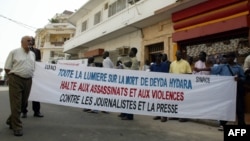
The International Federation of Journalists continues to seek answers on the July 6, 2006 disappearance of Chief Ebrima Manneh, as well as the circumstances behind the 2004 killing of Gambian journalist Deyda Hydara.
"The worst thing in this type of situation is to forget," said Gabriel Baglo who is the International Federation of Journalists' Dakar-based Africa director. "We will not forget Chief Ebrima Manneh. Our campaign will continue until we achieve what we want to achieve, that is knowing exactly what happened to Chief Ebrima Manneh and to see light shed on the killing of Deyda Hydara."
Baglo said the federation has yet to get a response after it called on the authorities in both Gambia and the United States in early June to address reports that Chief Ebrima Manneh was in the United States.
It is six years this week since the disappearance of Gambian journalist Chief Ebrima Manneh. Then, as now, it was common for journalists in the West African country of some 1.7 million people to be harassed, arrested, or worse. Just in the past two weeks at least two journalists in Gambia were arrested over their coverage of court proceedings.
When practicing journalism becomes life-threatening, many are forced to flee - like Dakar-based Ebrima Sillah, who was working as a journalist in Gambia when he narrowly escaped an arson attack on his home in 2004. Another journalist, Buya Jammeh, went into hiding in June 2009, when he heard the authorities were searching for him during a sweep of media arrests. He eventually fled to Senegal and now lives in Dakar.
The Committee to Protect Journalists (CPJ) released a report this month saying 17 journalists have fled Gambia in the past decade, more than in any other West African country, though greater numbers of journalists have fled Rwanda, Eritrea, Zimbabwe, Somalia and Ethiopia.
Tom Rhodes is East Africa consultant with the Committee to Protect Journalists. He says in some cases fewer reports of abuse against journalists might mean simply fewer journalists.
"You don't see that many reports [about abuses of the press] coming out these days about Rwanda, for example," said Rhodes. "But that's because basically all the critical journalists from that country fled. The same thing is now happening in Ethiopia; we have only one or two critical voices left within the country. The rest are either state-sponsored or practice self-censorship."
Rhodes said in these conditions abusive governments go completely unchecked.
"So we're getting into a very dangerous atmosphere where we're going to basically allow these governments to totally censor the press, and we won't be criticizing [these governments] simply because the critical press is not there anymore," Rhodes added.
The Gambian journalists in Dakar say repression by Gambian President Yahya Jammeh has a profound and lasting impact: it silences people.
"Civil society in The Gambia is a toothless bulldog," said Buya Jammeh, the journalist who fled to Senegal in 2009. "The government, having instilled this fear in the citizenry, it has caused people to censor themselves [to avoid harassment or persecution]. Most of them are compromising their principles as civil society leaders and organizations."
Gambian journalist Ebrima Sillah said that civil society, even opposition leaders, measure their words so carefully for fear of imprisonment that the truth is rarely exposed.
Even if journalists were left to do their job properly, Sillah says, no one would talk, given the fear President Jammeh has instilled in the people.
Journalist Buya Jammeh collaborates with colleagues in and outside Gambia to cover the news there. But he laments the flight of journalists from his home country.
"Unfortunately all those who are willing to do it the right way, without fear or favor, are the very people who end up being victims of harassment or persecution," Jammeh noted. "The government doesn't want professional journalists who will do their job in the right manner."
The International Federation of Journalists continues to seek answers on the July 6, 2006 disappearance of Chief Ebrima Manneh, as well as the circumstances behind the 2004 killing of Gambian journalist Deyda Hydara.
"The worst thing in this type of situation is to forget," said Gabriel Baglo who is the International Federation of Journalists' Dakar-based Africa director. "We will not forget Chief Ebrima Manneh. Our campaign will continue until we achieve what we want to achieve, that is knowing exactly what happened to Chief Ebrima Manneh and to see light shed on the killing of Deyda Hydara."
Baglo said the federation has yet to get a response after it called on the authorities in both Gambia and the United States in early June to address reports that Chief Ebrima Manneh was in the United States.