


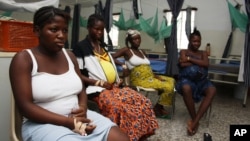
Wednesday is World Population Day, and the United Nations Population Fund says reproductive health is crucial for development.
Dr. Dhammika Perera, senior technical advisor for global reproductive health programs at the International Rescue Committee (IRC), said his organization believes that giving women in conflict areas access to family planning is the key to reducing maternal mortality.
“Right now, the estimate this year is that 222 million women in developing countries need, but cannot get access to, modern contraceptive methods, and we firmly believe that, if they are going to expand family planning access with the aim to cut down maternal deaths or pregnancy-related deaths, the target should be giving these women access to these methods,” he said.
Citing numerous studies, the IRC said women in crisis zones are more likely to die in childbirth than those in poor, but stable, countries.
“In these settings, health facilities are often destroyed or abandoned, supply routes are cut and violence impedes access to clinics,” it said in a press release.
Perera said, while it is true that many women in conflict areas may be more concerned with daily survival, it is also true that agreeing on the number of children to have may help avert hunger and poverty.
“If women and men could decide on the number of children they need, or the number of children they can support, that, in the long term, would lead to the aversion of situations where there is hunger, where there is poverty,” said Perera.
He said, if women could space their pregnancies by two years, evidence shows that it could reduce child deaths under five by 10 to 15 percent.
“So, that’s why we try to give couples the knowledge and the access to the contraceptive method that they can choose for themselves and control the family size, according to what they know is sustainable, and that, in the long term, prevent these issues of having to worry about food, worry about livelihood, and child education, and providing health care for children,” he said.
Perera said there is a range of modern contraceptive methods available for women in challenging environments where they are most at risk of complications and death from unintended pregnancies. These, he said, include pills, injections, implants and IUDs.
He said the IRC is always considerate of the cultural sensitivities in the regions in which the group works.
“We make it a point to work not just on providing women access or focusing only on women, we work with community leaders, we work with religious leaders and we engage men in a big way. Almost always, we work with the ministries of health and, through collaboration with the government, we get information about what is accepted and what is not, and then we adapt our program accordingly,” Perera said.
Dr. Dhammika Perera, senior technical advisor for global reproductive health programs at the International Rescue Committee (IRC), said his organization believes that giving women in conflict areas access to family planning is the key to reducing maternal mortality.
“Right now, the estimate this year is that 222 million women in developing countries need, but cannot get access to, modern contraceptive methods, and we firmly believe that, if they are going to expand family planning access with the aim to cut down maternal deaths or pregnancy-related deaths, the target should be giving these women access to these methods,” he said.
Citing numerous studies, the IRC said women in crisis zones are more likely to die in childbirth than those in poor, but stable, countries.
“In these settings, health facilities are often destroyed or abandoned, supply routes are cut and violence impedes access to clinics,” it said in a press release.
Perera said, while it is true that many women in conflict areas may be more concerned with daily survival, it is also true that agreeing on the number of children to have may help avert hunger and poverty.
“If women and men could decide on the number of children they need, or the number of children they can support, that, in the long term, would lead to the aversion of situations where there is hunger, where there is poverty,” said Perera.
He said, if women could space their pregnancies by two years, evidence shows that it could reduce child deaths under five by 10 to 15 percent.
“So, that’s why we try to give couples the knowledge and the access to the contraceptive method that they can choose for themselves and control the family size, according to what they know is sustainable, and that, in the long term, prevent these issues of having to worry about food, worry about livelihood, and child education, and providing health care for children,” he said.


Perera said there is a range of modern contraceptive methods available for women in challenging environments where they are most at risk of complications and death from unintended pregnancies. These, he said, include pills, injections, implants and IUDs.
He said the IRC is always considerate of the cultural sensitivities in the regions in which the group works.
“We make it a point to work not just on providing women access or focusing only on women, we work with community leaders, we work with religious leaders and we engage men in a big way. Almost always, we work with the ministries of health and, through collaboration with the government, we get information about what is accepted and what is not, and then we adapt our program accordingly,” Perera said.