


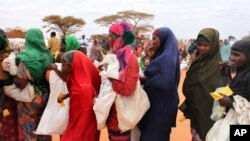
NAIROBI — A year ago, United Nations officials declared famine in two regions of southern Somalia: Bakool and Lower Shabelle. Overwhelming support from the international community, together with favorable rains, helped improve food security in some parts of the country, saving millions of Somalis. But the crisis is far from over.
One of the reasons famine was declared in parts of Somalia last July was the malnutrition rate among children exceeded 30 percent. Tens of thousands of people died in south central Somalia alone.
The U.N.'s Humanitarian Coordinator for Somalia Mark Bowden says Somalia has moved from that situation and during the last six months the worst of the famine conditions have been dealt with.
However, Bowden says in parts of southern Somalia people still need emergency assistance and one in five children is still suffering from acute malnutrition.
"Some 2.5 million people are in need, critical in need of humanitarian emergency assistance and then we estimate another 1.3 million need continuous longer term support to help them maintain their livelihoods," Bowden added.
At this time of the year last year, the situation was dire inside Somalia with no aid assistance reaching the needy people and the effects of four consecutive years of drought and two decades of war visible everywhere.
Thousands of Somalis trekked vast distances in search of water, food, and medical supplies.
Maulid Warfa, a Somali aid worker and also emergency coordinator for the U.N. Children's agency UNICEF, said there is now a reduction of the number of people seeking assistance and there is a strong need to sustain the level of intervention currently in place.
"We do not have people dying in the number they were dying before," said Warfa. "The malnutrition rate has been reduced at least by half, a lot of people were provided with food rations several, actually many of them have recovered. The situation has significantly improved not to level we want and the worrying we have now is if we do not sustain the current level of intervention the situation might deteriorate."
Warfa also says accessibility has improved in some parts of the country and also level of services provided to the people has increased.
The U.N.'s Mark Bowden said the cycle of humanitarian crisis facing Somalia must be broken.
"We also need to start this year jointly with donors and government donors to ensure that recovery is taking place so that we ensure people don't lurch from crisis to crisis depending on the weather conditions and we really take this opportunity to build back and their livelihoods," he said.
According to Bowden, no matter how much food aid is brought into Somalia, the major part of breaking the cycle of very long term humanitarian crisis is to bring a lasting and durable peace to the war-torn country.
One of the reasons famine was declared in parts of Somalia last July was the malnutrition rate among children exceeded 30 percent. Tens of thousands of people died in south central Somalia alone.
The U.N.'s Humanitarian Coordinator for Somalia Mark Bowden says Somalia has moved from that situation and during the last six months the worst of the famine conditions have been dealt with.
However, Bowden says in parts of southern Somalia people still need emergency assistance and one in five children is still suffering from acute malnutrition.
"Some 2.5 million people are in need, critical in need of humanitarian emergency assistance and then we estimate another 1.3 million need continuous longer term support to help them maintain their livelihoods," Bowden added.
At this time of the year last year, the situation was dire inside Somalia with no aid assistance reaching the needy people and the effects of four consecutive years of drought and two decades of war visible everywhere.
Thousands of Somalis trekked vast distances in search of water, food, and medical supplies.
Maulid Warfa, a Somali aid worker and also emergency coordinator for the U.N. Children's agency UNICEF, said there is now a reduction of the number of people seeking assistance and there is a strong need to sustain the level of intervention currently in place.
"We do not have people dying in the number they were dying before," said Warfa. "The malnutrition rate has been reduced at least by half, a lot of people were provided with food rations several, actually many of them have recovered. The situation has significantly improved not to level we want and the worrying we have now is if we do not sustain the current level of intervention the situation might deteriorate."
Warfa also says accessibility has improved in some parts of the country and also level of services provided to the people has increased.
The U.N.'s Mark Bowden said the cycle of humanitarian crisis facing Somalia must be broken.
"We also need to start this year jointly with donors and government donors to ensure that recovery is taking place so that we ensure people don't lurch from crisis to crisis depending on the weather conditions and we really take this opportunity to build back and their livelihoods," he said.
According to Bowden, no matter how much food aid is brought into Somalia, the major part of breaking the cycle of very long term humanitarian crisis is to bring a lasting and durable peace to the war-torn country.