An eerie silence has descended over this northeastern Japanese city. Tens of thousands have evacuated their homes a day after one of the worst-ever recorded earthquakes and subsequent tsunami, which swallowed coastal villages.
The greatest fear here, right now, stems not from the continuing aftershocks and the ongoing tsunami warnings, but rather a silent and invisible potential killer.
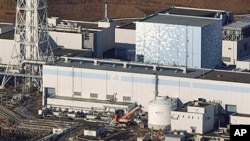
One or more nuclear reactors in Fukushima may be close to, or have suffered a meltdown. A reactor wall has apparently collapsed at one reactor, injuring four people there Saturday afternoon.
This is, after all, the country said to suffer a "nuclear allergy" from its experience, at the close of World War II, of having uranium and plutonium bombs dropped on Hiroshima and Nagasaki.
The trauma of nuclear defeat left a scar salved with the moral high ground of pacifism and Japan disavowing itself of any development of nuclear weaponry.
But when it has come to electrical power generation, Japan has taken a different path, embracing atomic power as a way to compensate for a paucity of natural resources needed to generate ample energy for its post-war economic recovery.
The nuclear energy industry helped propel Japan to becoming the world's second largest economy (it only recent slipped to third place, behind the United States and China).
Japan built more than 50 such power plants, despite concerns among some Japanese that nuclear reactors and earthquake fault lines were not a comfortable combination.
Now the sum of all those fears is a distinct reality. While residents evacuate, battalions of rescue workers, both domestic and foreign are heading for Fukushima.
This city, despite the ominous nuclear threat, is the staging ground for what will likely prove to be one of the largest-ever search and rescue efforts in human history.
Fukushima is the closest significant airport still open to the worst-hit areas.
The tsunami along the coast, 30 kilometers east, swallowed entire communities - many already severely damaged by Friday's magnitude 8.9 quake - in a few minutes. The devastation was recorded on video by military and media helicopter crews who hovered above the unbelievable scene, helpless to intervene.
More than 50 countries have already pledged aid to Japan. Most will fly into Fukushima and fan out towards the north and east for a search and recovery operation likely to go on for weeks.
Many of the bodies, washed out to sea, will never be found. Some survivors will be severely traumatized, injured and hungry. A lucky few are certain to be pried loose beneath collapsed buildings. It is a drama we have viewed over the years in such diverse places as Mexico, Turkey, Indonesia, China and, just weeks ago, New Zealand.
In the days ahead, we will bring you glimpses of this tragedy from on location. Usually, the reporter's eye is supposed to be unblinking and the prose without passion. But certainly, this time the eye will glisten with tears as we collectively mourn the lost ones, and then shed more tears as we share the happiness when some of the survivors are reunited with loved ones.