


Outrage over reports of mass killings and continued shelling in Syria has led to plenty of tough talk about the worsening situation there. But hopes for any peaceful resolution seems increasingly distant.
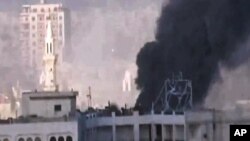
On the latest amateur video from Syria can be heard the sound of artillery allegedly falling again on the central city of Homs.
In the the town of Qusair, there is alarm after the discovery of 12 bodies - workers from a fertilizer plant shot dead after their bus was forced to stop at a checkpoint.
Aaron David Miller is a distinguished scholar at the Washington-based Woodrow Wilson Center. He says the violence will likely get worse.
"You have all of the ingredients of continued conflict - sectarian killing, primarily government directed, but all kinds of possibilities for individual retribution," said Miller.
Miller says the situation on the ground is as complex and as messy as any produced by the Arab Spring uprisings last year. And he says it is clear sanctions will do little to impress the government of President Basher al-Assad.
"I just don't believe that short of a major military intervention you're going to have much success in the short term," he said.
Syrian children play in the Lebanese village of Irsal, after fleeing the shelling and violence in Homs.
Accounts like this woman's feed the calls for intervention.
She says the Shabiha - pro-government militiamen - knocked on their doors before Friday prayers only to start shooting from the roof. She asks, how were we supposed to stay?
Miller says as the world learns more about the violence and the alleged atrocities, the United States may feel compelled to act, though he warns military intervention could make it even more difficult to restore order.
And from the U.S. perspective, there are other complications.
Richard Murphy is the former U.S. ambassador to Syria:
"There is the basic acknowledgment that we don't understand the conflicting forces within Syria," said Murphy.
Finally, there is the U.S. public, which has watched the country's drawn-out military operations in Iraq and Afghanistan and may not have the appetite for yet another deployment.
A recent survey by the Pew Research Center in the U.S. found 25 percent of Americans think Washington should intervene, while more than 60 percent say they are against any military intervention.
On the latest amateur video from Syria can be heard the sound of artillery allegedly falling again on the central city of Homs.
In the the town of Qusair, there is alarm after the discovery of 12 bodies - workers from a fertilizer plant shot dead after their bus was forced to stop at a checkpoint.
Aaron David Miller is a distinguished scholar at the Washington-based Woodrow Wilson Center. He says the violence will likely get worse.
"You have all of the ingredients of continued conflict - sectarian killing, primarily government directed, but all kinds of possibilities for individual retribution," said Miller.
Miller says the situation on the ground is as complex and as messy as any produced by the Arab Spring uprisings last year. And he says it is clear sanctions will do little to impress the government of President Basher al-Assad.
"I just don't believe that short of a major military intervention you're going to have much success in the short term," he said.
Syrian children play in the Lebanese village of Irsal, after fleeing the shelling and violence in Homs.
Accounts like this woman's feed the calls for intervention.
She says the Shabiha - pro-government militiamen - knocked on their doors before Friday prayers only to start shooting from the roof. She asks, how were we supposed to stay?
Miller says as the world learns more about the violence and the alleged atrocities, the United States may feel compelled to act, though he warns military intervention could make it even more difficult to restore order.
And from the U.S. perspective, there are other complications.
Richard Murphy is the former U.S. ambassador to Syria:
"There is the basic acknowledgment that we don't understand the conflicting forces within Syria," said Murphy.
Finally, there is the U.S. public, which has watched the country's drawn-out military operations in Iraq and Afghanistan and may not have the appetite for yet another deployment.
A recent survey by the Pew Research Center in the U.S. found 25 percent of Americans think Washington should intervene, while more than 60 percent say they are against any military intervention.