


PARIS, France - France's new president, Francois Hollande, is heading to the United States (Friday) just days after taking office. The G8 and NATO summits will offer a glimpse of France's foreign policy under its new leader.
Francois Hollande took office this week, promising to unify France and help fix its economic problems. His gender-balanced leftist Cabinet sat down to work on Thursday, but President Hollande's first actions are taking place overseas - not at home.
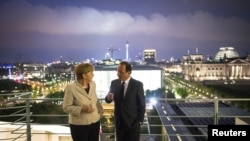
Hours after his swearing-in ceremony, Hollande was in Berlin, holding his first talks with German Chancellor Angela Merkel, France's most important European partner. Despite their talk of unity, there are big differences.
Hollande champions growth along with austerity measures to tackle Europe's debt crisis. Merkel is a budget stickler.
But Hollande appears to be scoring points. In an interview with American news channel CNBC a day after meeting him, Merkel signaled she too is open to stimulus measures - notably for debt-strapped Greece.
Hollande faces another diplomatic test in the United States, where he holds talks Friday with President Barack Obama. He also will attend Group of 8 and NATO summits that will offer world leaders a chance to meet the Socialist president who is little known outside of France.
Analysts say low-key Hollande will offer a style change from his hard-charging predecessor, Nicolas Sarkozy. In France, Sarkozy earned the nickname of "Sarko the American," who liked soft drinks and hamburgers. The former French leader was at the forefront of efforts to tackle Europe's debt crisis and the NATO campaign in Libya.
But in substance, political scientist Bruno Cautres does not expect a radical foreign policy shift under France's new president.
"There are some historical trends in the French foreign policy," said Cautres. "I cannot see any big change in that. The Franco-American relations is still going to be a very good and very important ... the French policies in the Middle East are there for a long time. France always has asked for an official status and recognition of Palestine. Afghanistan - it is quasi-over."
At the NATO summit in Chicago, Hollande will have to defend France's early troop pullout from Afghanistan. But that decision was already made by Sarkozy. And Hollande's pro-growth strategies for Europe are likely to be welcomed by Washington, which is pushing similar measures.
Francois Hollande took office this week, promising to unify France and help fix its economic problems. His gender-balanced leftist Cabinet sat down to work on Thursday, but President Hollande's first actions are taking place overseas - not at home.
Hours after his swearing-in ceremony, Hollande was in Berlin, holding his first talks with German Chancellor Angela Merkel, France's most important European partner. Despite their talk of unity, there are big differences.
Hollande champions growth along with austerity measures to tackle Europe's debt crisis. Merkel is a budget stickler.
But Hollande appears to be scoring points. In an interview with American news channel CNBC a day after meeting him, Merkel signaled she too is open to stimulus measures - notably for debt-strapped Greece.
Hollande faces another diplomatic test in the United States, where he holds talks Friday with President Barack Obama. He also will attend Group of 8 and NATO summits that will offer world leaders a chance to meet the Socialist president who is little known outside of France.
Analysts say low-key Hollande will offer a style change from his hard-charging predecessor, Nicolas Sarkozy. In France, Sarkozy earned the nickname of "Sarko the American," who liked soft drinks and hamburgers. The former French leader was at the forefront of efforts to tackle Europe's debt crisis and the NATO campaign in Libya.
But in substance, political scientist Bruno Cautres does not expect a radical foreign policy shift under France's new president.
"There are some historical trends in the French foreign policy," said Cautres. "I cannot see any big change in that. The Franco-American relations is still going to be a very good and very important ... the French policies in the Middle East are there for a long time. France always has asked for an official status and recognition of Palestine. Afghanistan - it is quasi-over."
At the NATO summit in Chicago, Hollande will have to defend France's early troop pullout from Afghanistan. But that decision was already made by Sarkozy. And Hollande's pro-growth strategies for Europe are likely to be welcomed by Washington, which is pushing similar measures.