



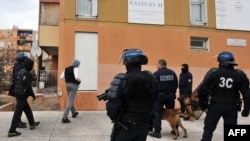
Drug and gang violence in Marseille, France's second-largest city, has gotten so out of control that one local politician has called for the army to be sent in to restore order.
Marseille is France's oldest city, and its poorest. A quarter of the population lives below the poverty line, and 18 percent are without jobs. In some parts of the city, youth unemployment is as high as 50 percent. Youth crime is soaring, too.
"Right now in Marseille, it is like Chicago in 1930; gangs, violence, drugs," said businessman Mohamed Ziani grew up in the Mediterranean port city and has watched it change. At the crossroads of trade, from Italy to the east and Spain to the west, much of the drug traffic in Europe comes through Marseille.
Today, drugs are dealt openly in many of the high-rise housing developments that dot the city. And guns are cheap, raising rivalries to a deadly level. This year, 21 people have been killed in a brutal drug-trade turf war.
As he drives by the high-rise blocks, police officer Kamel Bassaa points to flowers on several street corners, tributes to young lives lost.
Bassaa says every street, every place in the city, has a story of violence to tell. In his words, often stupid, unnecessary violence.
Bassaa recognizes two teenagers on a scooter patrolling the area to warn dealers if the police come near. Bassaa notes that the local kids are hooked on American gangster movies, and for American-style violence he says he would like an American-style solution.
"Zero tolerance, like in New York," Bassaa adds. "And more police on the street."
Off-duty, Bassaa runs a voluntary organization, trying to keep the kids off the streets and out of jail. Roughly 23 percent of youngsters in Marseille quit school.
The Second Chance School offers young adults another way.
Cynthia Martinez, 18, left school at 16 because she did not like the teachers, and said there was more fighting than learning in her class. Now she is catching up on missed lessons and training to be a sports teacher.
Businessmen like Ziani are also doing their part. Ziani runs an agency that finds jobs for handicapped workers.
"This area is not just about the violence, it is not just about drugs, it is not just the projects," said Ziani. "You have people who open businesses, you have people who get up early in the morning to go to the factory. The majority works."
Ziani is keen to show Marseille's youth there is a way out. But the fact remains there are few jobs for anyone with an address in the housing projects.
Saida Hidri lives in one of the projects high above the city and works with people from immigrant communities. Hidri has watched many of her young neighbors fall into crime as a way of making easy money, sometimes $300 to $500 a day.
Hidri says they think they can build their lives with money from crime. But when they try to quit the gang, it is too late, Hidri says. They know the network, they know the people, so they are trapped adds Hidri. Those who want to leave are killed, and their families are targets, too. Everyone lives in fear, says Hidri.
Local Senator Samia Ghali, who grew up in the projects, caused nationwide controversy recently when she called for the army to step in.
What bothered people the most, Ghali says, is not that people are dying, but that she dared talk about it.
Ghali got the French government to take notice, an 200 extra police were brought in and a new police department created for the region. The government is also creating jobs program in the worst-hit areas. Like many others, Ziani says that is not enough.
"We need more police, especially in this area," said Ziani. "We need police, we need money, and we need jobs too. Because when you don't have a job, what is the future for you?"
Local officials say for many young people, the future is being a dealer at 16, dead in a gun battle at 20. That is what they want to change.
Marseille is France's oldest city, and its poorest. A quarter of the population lives below the poverty line, and 18 percent are without jobs. In some parts of the city, youth unemployment is as high as 50 percent. Youth crime is soaring, too.
"Right now in Marseille, it is like Chicago in 1930; gangs, violence, drugs," said businessman Mohamed Ziani grew up in the Mediterranean port city and has watched it change. At the crossroads of trade, from Italy to the east and Spain to the west, much of the drug traffic in Europe comes through Marseille.
Today, drugs are dealt openly in many of the high-rise housing developments that dot the city. And guns are cheap, raising rivalries to a deadly level. This year, 21 people have been killed in a brutal drug-trade turf war.
As he drives by the high-rise blocks, police officer Kamel Bassaa points to flowers on several street corners, tributes to young lives lost.
Bassaa says every street, every place in the city, has a story of violence to tell. In his words, often stupid, unnecessary violence.
Bassaa recognizes two teenagers on a scooter patrolling the area to warn dealers if the police come near. Bassaa notes that the local kids are hooked on American gangster movies, and for American-style violence he says he would like an American-style solution.
"Zero tolerance, like in New York," Bassaa adds. "And more police on the street."
Off-duty, Bassaa runs a voluntary organization, trying to keep the kids off the streets and out of jail. Roughly 23 percent of youngsters in Marseille quit school.
The Second Chance School offers young adults another way.
Cynthia Martinez, 18, left school at 16 because she did not like the teachers, and said there was more fighting than learning in her class. Now she is catching up on missed lessons and training to be a sports teacher.
Businessmen like Ziani are also doing their part. Ziani runs an agency that finds jobs for handicapped workers.
"This area is not just about the violence, it is not just about drugs, it is not just the projects," said Ziani. "You have people who open businesses, you have people who get up early in the morning to go to the factory. The majority works."
Ziani is keen to show Marseille's youth there is a way out. But the fact remains there are few jobs for anyone with an address in the housing projects.
Saida Hidri lives in one of the projects high above the city and works with people from immigrant communities. Hidri has watched many of her young neighbors fall into crime as a way of making easy money, sometimes $300 to $500 a day.
Hidri says they think they can build their lives with money from crime. But when they try to quit the gang, it is too late, Hidri says. They know the network, they know the people, so they are trapped adds Hidri. Those who want to leave are killed, and their families are targets, too. Everyone lives in fear, says Hidri.
Local Senator Samia Ghali, who grew up in the projects, caused nationwide controversy recently when she called for the army to step in.
What bothered people the most, Ghali says, is not that people are dying, but that she dared talk about it.
Ghali got the French government to take notice, an 200 extra police were brought in and a new police department created for the region. The government is also creating jobs program in the worst-hit areas. Like many others, Ziani says that is not enough.
"We need more police, especially in this area," said Ziani. "We need police, we need money, and we need jobs too. Because when you don't have a job, what is the future for you?"
Local officials say for many young people, the future is being a dealer at 16, dead in a gun battle at 20. That is what they want to change.