



News / Asia

Fuel Rods at Japanese Plant Were Exposed

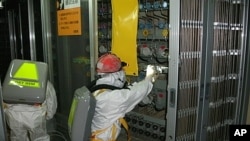
Workers wearing protective suits check the status of the water level indicator at the fuel area inside the crippled Fukushima Daiichi Nuclear Power Plant Number 1 reactor in Fukushima Prefecture May 10, 2011.
TEXT SIZE - +

Operators of Japan's crippled Fukushima nuclear power plant say water levels in the plant's number-one reactor are lower than originally thought.  

Tokyo Electric Power Company (TEPCO) said Thursday the problem became evident when workers finally were able to enter the building and adjust water gauges in the unit. The company previously thought the water was about one meter below the top of the nuclear fuel rods. Instead, it is actually below the rods - leaving them completely exposed.

A company manager told reporters that fuel pellets probably melted and fell, creating a hole at the bottom of the reactor vessel.

But officials say temperatures in the unit indicate the fuel is still being cooled.  They say this shows that efforts to prevent it from overheating are working.

The Fukushima plant was crippled and shut down improperly after the massive earthquake and tsunami that hit northeastern Japan two months ago.

TEPCO also said that workers on Wednesday discovered a new leak of highly radioactive water into the ocean next to the plant. They said the source of the water was found and the leak was sealed.

Radiation given off by the plant's damaged fuel rods has been largely contained by large concrete cases that surround the reactors, though some radiation has escaped into the atmosphere.

Prime Minister Naoto Kan's cabinet on Thursday postponed a final decision on a plan to help TEPCO compensate individuals and businesses for financial losses suffered because of the nuclear disaster.  Kan said he wanted to continue discussing the plan Friday.

Some information for this report was provided by AP, AFP and Reuters.

You May Like

Experts Weigh In on Challenges of Closing Guantanamo Prison

Former chief military prosecutor at Guantanamo delivers petition to White House with more than 370,000 signatures, demanding facility be closed down immediately More

Karzai to Discuss Enhancing Defense Ties with India

Afghanistan looking for more military aid as it prepares for withdrawal of NATO forces by next year More

India, China Pledge to Overcome Border Tensions

Indian prime minister and Chinese premier attempt to move past tense standoff in the Himalayas during Delhi talks More

Burmese President Opens US Visit with VOA Town Hall Meeting

Ahead of his meeting with President Obama Monday, Thein Sein answered questions on human rights and economic development in his country More

This forum has been closed.
Comments
     
There are no comments in this forum. Be first and add one

Featured Videos

Your JavaScript is turned off or you have an old version of Adobe's Flash Player. Get the latest Flash player.
Video

Video US Oil Surge Could Impact Mideast Geopolitics

The United States will account for a third of new oil supplies over the next five years, and will become energy self-sufficient in 20 years, according to a new report by the Paris-based International Energy Agency (IEA). Although U.S. oil imports from Arab Gulf countries increased last year, analysts predict the U.S. will lose its dependence on Middle East imports, which is expected to have a huge impact on international relations and the balance of power. VOA's Henry Ridgewell reports.