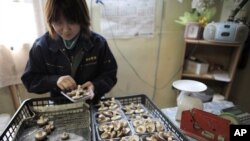
With the crisis at the Fukushima Daiichi nuclear power plant set to continue through most of this year, many people in the region are worried about the long-term impact on the Fukushima brand. Nowhere can this be felt more than in the prefecture's agricultural industry, but farmers are fighting back.
On a weekday afternoon in central Tokyo a politician is on the microphone appealing to the public. But, she is not asking for votes.
Emi Kaneko, a member of the ruling Democratic Party from Fukushima, is asking people to trust in her prefecture's farmers and their vegetables.
Damage control
Ever since the Fukushima Daiichi nuclear plant began throwing radioactive particles into the surrounding environment, produce from the prefecture's farmers has disappeared from store shelves and some countries have banned imports of it.
Sadayasu Ab, an official in Minimisoma, a village that sits 25 kilometers from the plant, says this constitutes a fourth disaster for the region.
Abe says they have been hit by an earthquake, tsunami, nuclear accident and now rumors and worry about agricultural products. He has heard some people saying they do not want to buy food with the Fukushima name.
The Japanese government has restricted the sale of some vegetables from towns near the plant, but it says much of the prefecture's produce is safe.
Publicity campaign
To drive home that message, people like Yoko Nozaki, from Fukushima's Iwaki City, came to Tokyo.
Nozaki says she is there with farmers to convince shoppers that food from Iwaki is safe. Stalls are selling tomatoes, leeks, garlic cloves and other items at discounted prices and people are buying.
Within a few hours, many of the vegetables are sold out. Housewife Yoko Noumi is heading home with a bag of tomatoes.
Noumi says she heard on television that the produce was safe to eat, so she decided to buy some to support the farmers.
The government's agriculture bans also cover some towns outside of Fukushima, but the neighboring prefectures have not seen their images tarnished in the same way.
Long term impact
Tokyo is the first stop on a multi-city tour for the farmers, but the public relations effort can only go so far. It is not likely to have much effect beyond Japan's borders.
Kazuichi Ishii, an official with Iwaki City, says when people around the world hear the name Fukushima, they group it with Chernobyl and Three Mile Island, the sites of the two other major nuclear accidents. And he does not see this changing, as long as the nuclear crisis continues to make headlines.
Tokyo Electric Power says it does not expect to have the plant fully under control for six to nine months, so the headlines are not likely to stop anytime soon.
Fukushima Farmers Worry About Region's Brand