



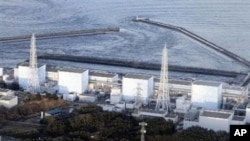
The operator of Japan's Fukushima Daiichi nuclear power plant says it will take between six to nine months to bring the reactors at the complex fully under control. A two-step plan published Sunday outlines a number of tasks and risks that remain, but doesn't provide an estimate for when thousands of evacuees can return home.
The plan is divided into two stages, and has as its goal the removal of the fuel rods from the reactors and and from the spent fuel pools at the plant.
It was unveiled by Tokyo Electric Power Chairman Tsuneihisa Katsumata.
Katsumata says during the first stage of the project the company will achieve stable cooling at the reactors and spent fuel pools, secure enough space to store highly contaminated water, and reduce the output of radiation. That will take around three months.
The second stage is expected to take another three to six months. During this period, the company expects to bring the water temperature in the reactors fully under control.
Tokyo Electric is currently engaged in a delicate balancing act. It is trying to pump in just enough water to keep the temperature of the reactors stable but not enough to cause excessive leakage or a hydrogen explosion.
Leaks are a continuing headache for the company. Water collecting in the basement of the plant is highly radioactive and needs to be removed so that repair work can take place.
Tokyo Electric said it plans to seal a waste treatment building so it can be used as a temporary water tank. While that is done, it will install water treatment equipment so the water can be reused in cooling operations.
The second stage of the plan also calls for a protective shell to be erected around the reactors to guard against damage from typhoons that typically hit Japan in September and October.
Tokyo Electric expects to eventually build a hard shell that will protect the surrounding area during the decommissioning of the plant.
The company says it will work with government authorities to increase monitoring of long-life radioactive particles in the area. But the plan does not address when residents might be able to move back into evacuated communities near the plant.
At the news conference, Tokyo Electric Power's chairman Katsumata said the company had no estimate of when residents might return.