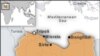




Libya's ousted leader, Moammar Gadhafi, was buried before dawn Tuesday in a secret desert location five days after he was captured, killed and his slowly decomposing body put on public display in a meat locker in the city of Misrata.
Officials from the Misrata military council said Gadhafi, his slain son Mutassim and former defense minister Abu Bakr Younis were buried together after a brief ceremony attended by a handful of people, including three relatives of the dead.
Muslim clerics loyal to the ousted leader were ordered to pray over the bodies, which had been wrapped in white shrouds.
Libya's National Transitional Council is under intense international pressure to investigate the circumstances of Gadhafi's death. The Associated Press quotes an NTC statement issued late Tuesday as saying its leaders "disapprove" of any prisoners being hurt or killed.
The NTC added that "regardless of the hatred Libyans held for Gadhafi...we did not want to end this tyrant's life before he was brought to court." It was the first time the new leadership has spoken out against Gadhafi's killing.
On Sunday, Libyan doctors performed an autopsy on Gadhafi's body and said he died of gunshot wounds to the head and abdomen during last week's takeover of Sirte. Cellphone video shows provisional government fighters taunting and abusing a wounded Gadhafi shortly before he died.
Libyan officials said the former leader was shot in a crossfire between his loyalists and provisional government forces. Fighters on the scene have acknowledged beating the ousted leader after his capture.
Peter Bouchaert of the New York-based Human Rights Watch said there are strong indications Gadhafi and Mutassim were "killed while in detention."
Meanwhile, the last top figures of Libya's former government - Gadhafi's son Seif al-Islam and former intelligence chief Abdullah al-Senussi - are reported poised to flee to neighboring Niger. Officials in Niger said Tuesday the two are receiving help from ethnic Tuaregs, a tribe that was among the former leader's strongest supporters.
Separately, Human Rights Watch has asked Libya's new authorities to investigate a possible mass execution of suspected Gadhafi supporters during the battle for Sirte.
The group says it found the bodies of 53 people who appear to have been executed in an area that was controlled by NTC fighters at the apparent time of the deaths about a week earlier.
Some information for this report was provided by AP, AFP and Reuters.