GENEVA —
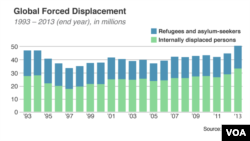
The U.N. refugee agency’s annual Global Trends report says more than 50 million people were forcibly displaced by conflict at the end of last year, the highest number since World War II.
As the world marks World Refugee Day, these staggering figures are nothing to celebrate. Of the more than 50 million people forcibly displaced, the report finds 16.7 million are refugees and more than twice that number, 33.3 million, are people displaced within their own countries.
U.N. High Commissioner for Refugees Antonio Guterres said these growing numbers are a result of the multiplication of new crises. He said the alarming spectacle of seeing millions of people forced to flee for their lives confirms the inability of nations to resolve or prevent conflict.
Refugees Around the World
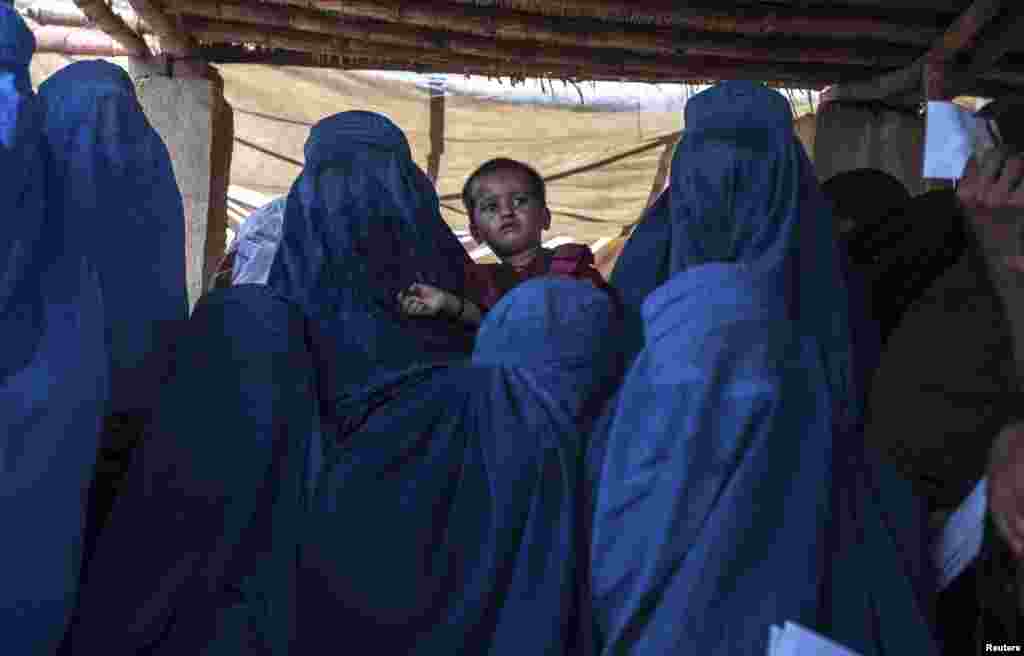
1/10An Afghan woman holds a child as she waits with others to have a medical check-up at a health clinic set up by the UNHCR to mark World Refugee Day in Islamabad, June 20, 2014.
Show moreShow less
2/10An Afghan refugee has her eyes tested at a health clinic set up by the UNHCR to mark World Refugee Day in Islamabad, June 20, 2014.
Show moreShow less
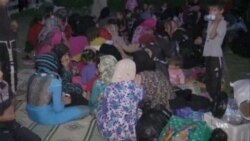
3/10Refugees, who fled the military offensive against the Pakistani militants in North Waziristan, sit on a bed in Bannu, Khyber-Pakhtunkhwa, Pakistan, June 19, 2014.
Show moreShow less
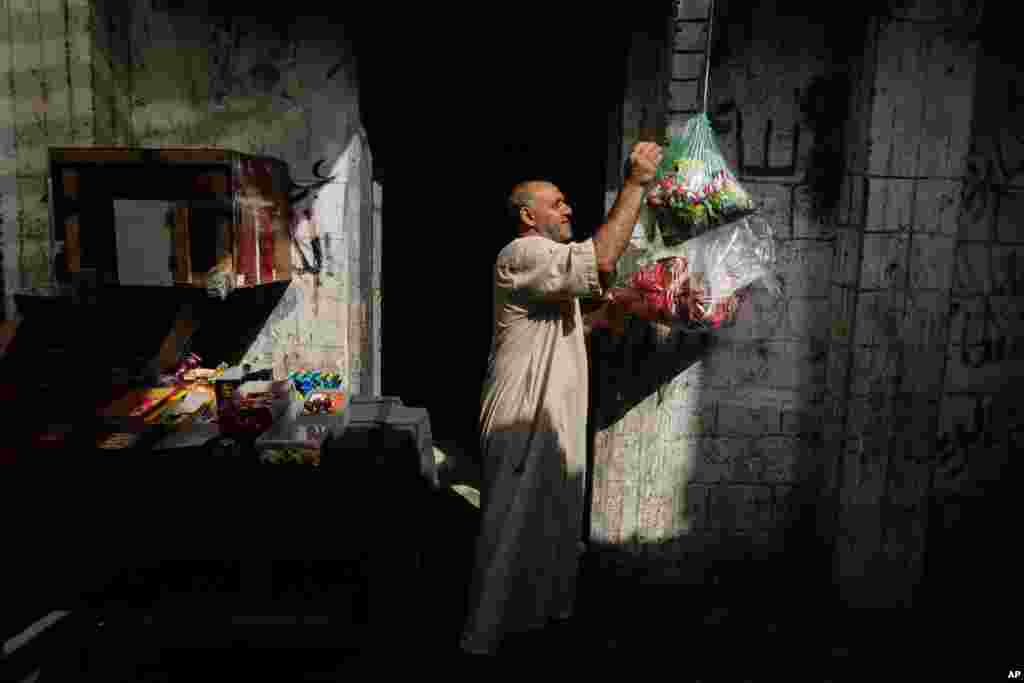
4/10A Palestinian man works at his shop in Al-Shati refugee camp in Gaza City, June 19, 2014.
Show moreShow less
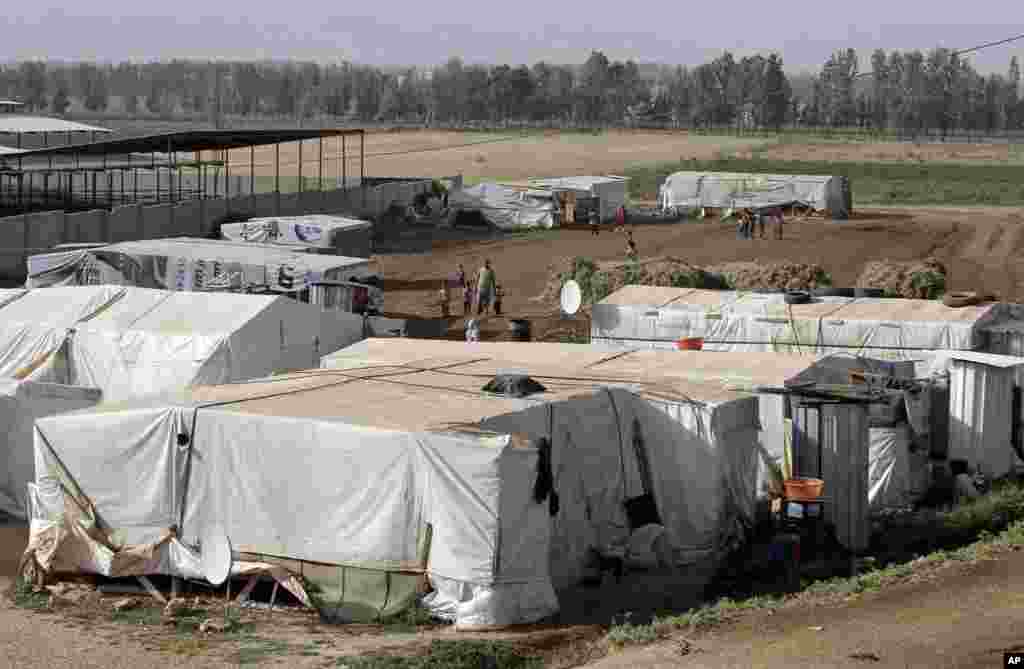
5/10Syrian refugees walk outside their tents, at a Syrian refugee camp in the eastern Lebanese town of Majdal Anjar, Lebanon, June 19, 2014.
Show moreShow less
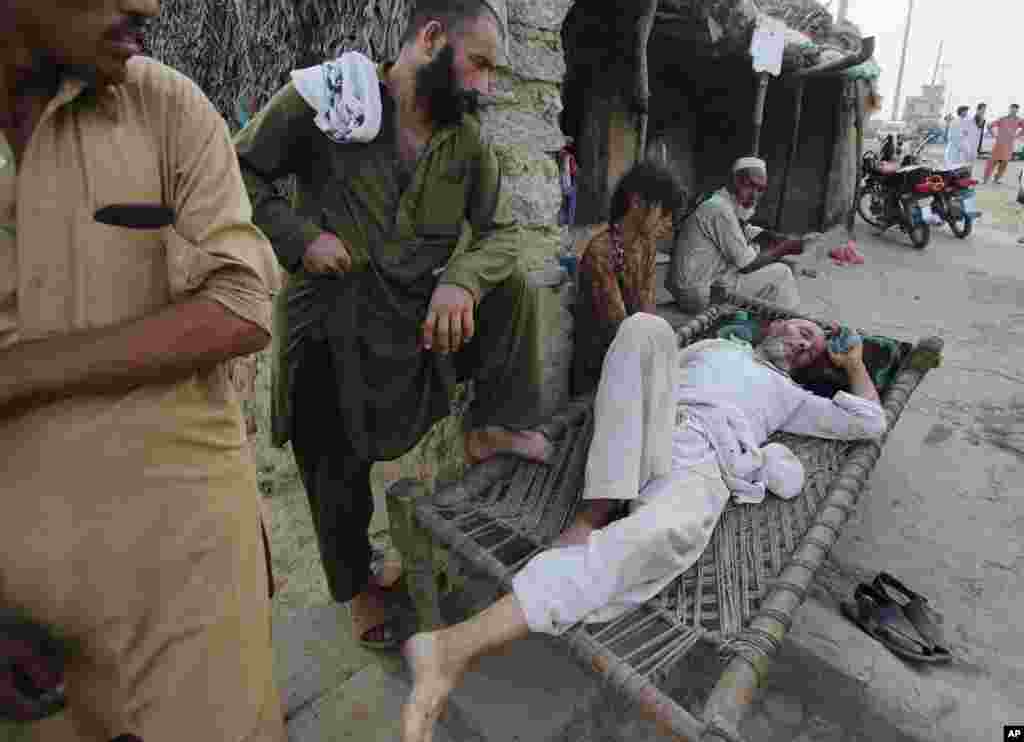
6/10Afghan refugees wait for a transport to carry a sick man to a hospital while standing by him in a refugee camp situated in slums of Islamabad, Pakistan, June 19, 2014.
Show moreShow less
7/10An Eritrean refugee poses for a picture inside her home in Khartoum, Sudan, June 19, 2014.
Show moreShow less
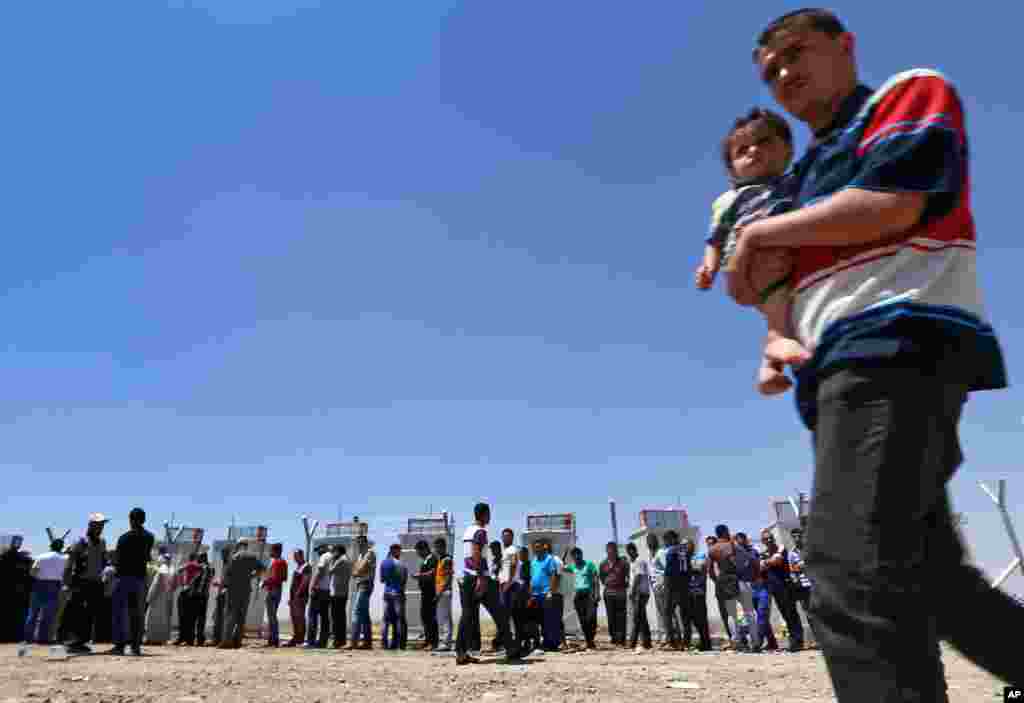
8/10Iraqis who have fled the violence in their hometown of Mosul line up at Khazir refugee camp outside of Irbil, June 16, 2014.
Show moreShow less
9/10Sinnuyar Baekon sits in front of her hut at a refugee camp outside Sittwe, the capital city of the Rakhine state, Myanmar, June 9, 2014.
Show moreShow less
10/10Members of "Clowns Without Borders," perform for children at a Syrian refugee camp in the eastern town of Chtoura, in Bekaa valley, Lebanon, June 6, 2014.
Show moreShow less
Previous slide
Next slide
“All these conflicts are not only creating a dramatic humanitarian situation, but they represent today a major threat to global peace and security-a threat that is felt everywhere. So, solidarity with today’s refugees is not only a matter of generosity, it is, as I usually say more and more a matter of enlightened self-interest,” said Guterres.
The report finds the massive increase in forcible displacement last year was driven mainly by the war in Syria, with 2.5 million Syrian refugees and 6.5 million internally displaced.
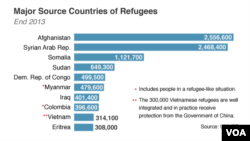
The report said major new displacement also has occurred in Africa, notably in Central African Republic, and South Sudan. Overall, the biggest refugee populations under UNHCR care are Afghans, Syrians and Somalis. They account for more than half of the global refugee total.
Major Source Countries of Refugees
The United Nations notes 50 percent of the world’s displaced are children. The report says more than one million people have sought asylum in 2013, most in developed countries. They include a record 25,300 claims from separated or unaccompanied children.
Though most asylum claims are made in the West, High Commissioner Guterres said the perception that all refugees are fleeing to wealthy northern countries in search of a better life and not for protection is false.
“The truth is that 86 percent of the world refugees live in the developing world. And, again this is the highest percentage since the beginning of the century. It compares to 70 percent only 10 years ago. So, the trend in the world is not only to have more and more refugees, but to have more and more refugees staying in the developing world,” said Guterres.
While the forcible displacement crisis continues to escalate, the UNHCR says its ability to find long-term solutions for these people is waning. It says last year it only succeeded in voluntarily returning 414,600 refugees to their homes of origin - the fourth lowest level of refugee returns in almost a quarter century.