



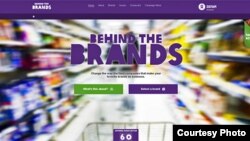
Ten top multinational food corporations have received failing grades for their social and environmental policies in the developing world. That’s according to a new scorecard from the anti-poverty group Oxfam. While each company had made commitments to certain issues, none received a passing grade overall.
Nestle scored high for transparency and water management. Unilever did well for including more small-scale farmers in its supply chain.
These two companies topped the scorecard. But they still got failing grades.
That’s because you have to look at the big picture, says Oxfam’s Chris Jochnick.
“For example, none of the companies have adequate policies on land. And we know that land grabs [are] an increasingly critical issue for poor farmers across the globe and across the developing world," said Jochnick.
Land rights and fairness toward women were two areas where all 10 companies scored low. Factoring in scores on greenhouse gas emissions and worker rights, none received a passing grade, with Associated British Foods at the bottom.
Jochnick says collectively, the 10 companies - including Coca-Cola, Danone, General Mills, Kellogg, Mars, Mondelez and PepsiCo - ring up more than $1 billion a day in sales.
“These brands have an enormous influence, particularly on certain commodities," he said. "And so, if we just look at cocoa, three companies are responsible for 40 percent of the market. That is significant.”
He says the companies should be using their influence to push for change.
In a written response, Associated British Foods said, “The company has worked hard for many years, over a wide geography, at all levels of the supply chain to ensure its suppliers meet the highest ethical standards.” Where problems have been found, they have been dealt with, it says.
Other companies took issue with their grades as well. Unilever said, “the report misses an opportunity to look at the full range of organizations that need to come together” to produce change, from producers, processors and retailers, to civil society and governments.
But Oxfam president Ray Offenheiser says their intention is not simply to heap criticism on the world’s top food makers.
“On the contrary," said Offenheiser. "What we’re trying to do is produce a race to the top, if you will. In other words, encourage the companies to do more of what they’ve been doing.”
Offenheiser says Oxfam shared its findings with the companies before it issued the report and will continue its dialogue with them, updating the scorecard when it believes they have made significant improvements.
Nestle scored high for transparency and water management. Unilever did well for including more small-scale farmers in its supply chain.
These two companies topped the scorecard. But they still got failing grades.
That’s because you have to look at the big picture, says Oxfam’s Chris Jochnick.
“For example, none of the companies have adequate policies on land. And we know that land grabs [are] an increasingly critical issue for poor farmers across the globe and across the developing world," said Jochnick.
Land rights and fairness toward women were two areas where all 10 companies scored low. Factoring in scores on greenhouse gas emissions and worker rights, none received a passing grade, with Associated British Foods at the bottom.
Jochnick says collectively, the 10 companies - including Coca-Cola, Danone, General Mills, Kellogg, Mars, Mondelez and PepsiCo - ring up more than $1 billion a day in sales.
“These brands have an enormous influence, particularly on certain commodities," he said. "And so, if we just look at cocoa, three companies are responsible for 40 percent of the market. That is significant.”
He says the companies should be using their influence to push for change.
In a written response, Associated British Foods said, “The company has worked hard for many years, over a wide geography, at all levels of the supply chain to ensure its suppliers meet the highest ethical standards.” Where problems have been found, they have been dealt with, it says.
Other companies took issue with their grades as well. Unilever said, “the report misses an opportunity to look at the full range of organizations that need to come together” to produce change, from producers, processors and retailers, to civil society and governments.
But Oxfam president Ray Offenheiser says their intention is not simply to heap criticism on the world’s top food makers.
“On the contrary," said Offenheiser. "What we’re trying to do is produce a race to the top, if you will. In other words, encourage the companies to do more of what they’ve been doing.”
Offenheiser says Oxfam shared its findings with the companies before it issued the report and will continue its dialogue with them, updating the scorecard when it believes they have made significant improvements.