



Opposition Nigerian politician Hafsat Baba said Sunday’s suicide bombing in northern Nigeria that killed two and wounded more than 45 underscores the increasingly urgent need to address the cause of the violence. Baba said she believes the causes are socio-economic, including poverty and the rising cost of living.
“So long as the root problem is not addressed, we’re not going to find a solution,” said Baba, who is the national women’s leader for the Action Congress of Nigeria party.
She added the only way to stop the increasing violent attacks in northern Nigeria is to alleviate poverty and address economic problems such as the current fuel shortage.
Although no group has yet claimed responsibility for Sunday’s deadly attack on a church, Baba said the methods match those of Boko Haram, an Islamist terrorist group that has been blamed for 1,400 deaths since beginning its operations in 2009.
According to Baba, if the government worked harder to end corruption and poverty, the ongoing violence against churches, police stations and officials would decrease.
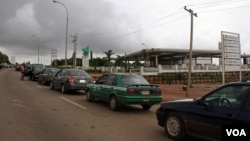
She said the recent fuel shortage, which has meant long lines at the pumps and a 25 percent increase in the average price of gasoline, has currently left the population with higher food and transportation costs.
“Everybody is just crying because there is no fuel in the country,” she said. “Then people are queuing [up] and they have to spend the whole day, the whole night just to get petrol in their vehicles…and you have our children selling petrol in the streets on the black market – rather than going to school.”
“So long as the root problem is not addressed, we’re not going to find a solution,” said Baba, who is the national women’s leader for the Action Congress of Nigeria party.
She added the only way to stop the increasing violent attacks in northern Nigeria is to alleviate poverty and address economic problems such as the current fuel shortage.
Although no group has yet claimed responsibility for Sunday’s deadly attack on a church, Baba said the methods match those of Boko Haram, an Islamist terrorist group that has been blamed for 1,400 deaths since beginning its operations in 2009.
According to Baba, if the government worked harder to end corruption and poverty, the ongoing violence against churches, police stations and officials would decrease.
She said the recent fuel shortage, which has meant long lines at the pumps and a 25 percent increase in the average price of gasoline, has currently left the population with higher food and transportation costs.
“Everybody is just crying because there is no fuel in the country,” she said. “Then people are queuing [up] and they have to spend the whole day, the whole night just to get petrol in their vehicles…and you have our children selling petrol in the streets on the black market – rather than going to school.”
