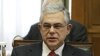



European Commission reversed its previous growth forecast and predicted 0.3 percent economic contraction contrasted with commission's estimate just three months ago that eurozone economies would grow by 0.5 percent this year
Fears of a spreading debt crisis appear to be taking their toll on European economies.
In Brussels, the European Commission reversed its previous growth forecast and predicted Thursday that 2012 will be a year of mild recession, at least in the eurozone - the 17 nations that use the euro currency. The forecast for a 0.3 percent economic contraction contrasted with the commission's estimate just three months ago that eurozone economies would grow by 0.5 percent this year.
Declines in Italy and Spain are the main causes for the eurozone's overall shift into the red, but it is in Greece that the pain of austerity measures has been most keenly felt.
In Greece, so much the focus of attention, it is another day and another protest. This time, it is the health care workers who have walked off the job.
Yannis Haralambopoulos, Head of the workers at Children's Hospital Agia Sofia, in central Athens said, "[We are protesting] for all of these measures that are financial and have led us to this level of no longer having salaries. We simply get a welfare benefit. We cannot live off it."
For all its maneuvering, the government provides little comfort. Finance Minister Evangelos Venizelos put it grimly. Venizelos says, the choice comes down to "either sacrifices with prospects, or complete destruction with no prospects at all." But now there is even more to worry about, recession.
EU Economic and Monetary Affairs Commissioner Olli Rehn says this recession is expected to be mild, and there are signs the Euro area is starting to stabilize. But there are still major problems to overcome.
"We have to see that this is a crisis of confidence and to restore confidence we need to resolve the sovereign debt crisis and at the same time mitigate banking sector fragilities," said Rehn.
Rehn says Europe can pull out of recession fairly soon if national policy-makers take decisive action by finding ways to trim spending while still sparking economic growth.
In the meantime, Rehn and others are pushing for a bigger bailout fund, something that Germany has opposed.
Still, it is of little consolation to many Greeks, and others across Europe, who are starting to worry if and how the paychecks will keep coming.