


Voters in Guinea go to the polls Sunday for a much-delayed second-round of presidential voting that is meant to end nearly two years of military rule.
Less than one month ago, it was all smiles between presidential candidates Cellou Diallo and Alpha Conde as they agreed to include the other in a new government, regardless of who wins Sunday's head-to-head run off.
But campaigning since then has turned violent with Conde supporters saying they were poisoned by Diallo supporters at a political rally. Many Conde supporters did get sick after drinking water at that rally, but the cause of that illness is still under investigation.
Diallo supporters say they were attacked on their way home from a rival rally. Shops owned by members of Diallo's ethnic group were looted. Diallo says ethnic clashes have displaced large numbers of his supporters outside Conakry who will now not be in their constituencies come election day.
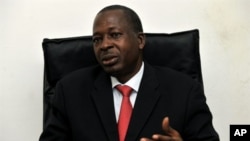
Electoral commission president Siaka Toumany Sangare says special polling stations will be in place Sunday to allow displaced people to vote so long as their name appears on the electoral register.
Military ruler Sekouba Konate's pick of Sangare has helped ease some of the tension surrounding this vote. Sangare is a retired general from Mali who is an electoral advisor to the Francophone.
John Stemalu is observing this election for the Carter Center. He says there is new momentum with Sangare leading the electoral commission - which is known as the CENI.
"And I think that we have now got an agreed date in part because people have confidence in the CENI's restructured arrangement that the parties have endorsed," said Stremlau. "So now the challenge is to get this vote registered so that people know that their views are being respected and adhered to."
Stremlau says observers are hoping Sunday's vote has the same kind of popular engagement and patience exhibited in June's first round of voting.
"That was an inspiring election," he said. "And one gets a little impatient sometimes with the political infighting inside Conakry when the country seems eager to move on to a new era in national development."
U.N. Secretary-General Ban Ki-moon is calling on both candidates to respect the outcome of Sunday's vote, saying those who exploit ethnicity and incite violence must be held accountable. The International Crisis Group is urging both candidates to refrain from any actions that could undermine Guinea's fragile stability and its transition to civilian rule.
Guinea Prepares for Sunday's Presidential Election