



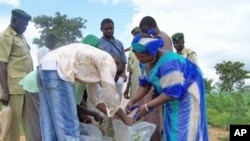
As Kenya suffers with another outbreak of deadly aflatoxin contamination, scientists say a harmless version of the fungus that produces the toxin could be a powerful ally in preventing future outbreaks.
Aflatoxin is a natural poison produced by a fungus that grows on maize, cassava, ground nuts, and other crops. The mold thrives in hot, humid conditions.
At high doses, aflatoxin causes liver damage that can be fatal. A 2004 outbreak in Kenya killed at least 125 people.
This month, the Kenyan government warned that at least one person had died and 2.3 million bags of maize were contaminated with the poison.
Aflatoxin is dangerous even at low doses. It can cause cancer, stunt children's growth, and weaken the immune system.
Giving the good guys a head start
Some of the strains found in Kenya produce especially high levels of aflatoxin. But Peter Cotty, a plant disease expert with the U.S. Department of Agriculture, says there also are naturally occurring strains of the fungus in Kenya that produce no aflatoxin at all.
"They occur already in the villages. They're just at low frequency," he says. "We can use techniques to find these fungi, and we can release them in a manner that allows them to out-compete these very high toxin-producers."
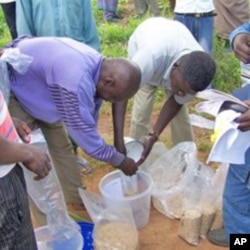
Cotty and his colleagues help the harmless fungi compete by giving them a head start over the bad guys. They grow the good guys on grains such as barley or sorghum that are sterilized so they don't sprout. When farmers spread these grains among their crops, the harmless mold proliferates, feeding on dead plants and insects. It will "multiply and spread throughout the field and displace the toxin producers," he says.
Fighting fungus with fungus
Cotty and colleagues at the Nigeria-based International Institute of Tropical Agriculture (IITA) have registered a product called Aflasafe with Nigerian regulators. In field tests last year, farmers who used the grains coated with harmless fungi reduced aflatoxin contamination by an average of 80 percent.
U.S. farmers are also fighting fungus with fungus. For example, cotton growers need to ward off aflatoxin contamination or they won't be able to sell the seeds for animal feed. Michael Braverman at Rutgers University manages a program helping scientists register new natural crop protection products with U.S. regulators. He says cotton growers in the southwestern state of Arizona use the same method being tested in Nigeria.
"It's effective enough that the growers in Arizona have built their own facility to manufacture this product," he says. "They are not only consumers of the product, they are the official body that owns the registration."
Peter Cotty and the IITA are now looking for a partner to bring the technology to farmers in Kenya, where aflatoxin contamination is taking a terrible toll on people and the economy.