


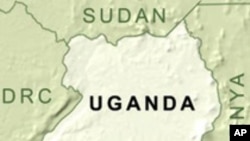
A prominent Ugandan physician and health researcher says a recently formed consortium has launched a transformational framework for training doctors.
Nelson Sewankambo, professor of medicine and principal at Makerere University College of Health Sciences, said the group is emphasizing the sustainable health workforce development in Uganda.
“The government’s reaction has been superb, which is unprecedented. The government has expressed a lot of interest in collaborating to bring training institutions into a much closer working relationship with both the ministry of education and the ministry of health,” said Sewankambo.
“We are having fairly regular meetings between our institutions as a group…and what has also happened is that they had formed an inter-ministerial committee that brings together people from the two ministries again to discuss and plan for issues around health professional education.”
Sewankambo outlined the goals of the consortium’s initiative.
“It’s creating an opportunity for the universities themselves and also government departments to think and pay great attention to [the] training of health workers…it is opening up more interest and more discussions about health workers in general,” said Sewankambo.
“The [expectation] is that government is going to pay great attention to building capacity in the country, how to retain these health workers in the country. [We expect] government is going to put more resources [or] funding into training of health workers.”
Sewankambo said the administration seems to recognize the financial needs and the challenges of universities training health care workers.
Analysts have often expressed concern about retaining them. They cite instances where doctors, nurses and other health professionals emigrate due to poor pay back home.
Sewankambo said policy makers should make judicious use of the country’s health care resources.
“It is true that we can increase the efficiency and the way we use available resources right now. Through our discussions with the government departments we are going to identify where the hemorrhage is, the wastage of resources [and] where we can improve to utilize the existing resources. Indeed there is a movement in that direction,” he said.
Sewankambo said the consortium’s initiative involves working closely with other health professional workers across Africa.
“There used to be a very active Association of Medical Schools in Africa… We have argued for a revitalization of that association with the intent that it will provide opportunity for collaboration across Africa…and indeed that association is being revamped.”
Professor Sewankambo’s comments followed his presentation called Developing A Sustainable Workforce In Sub-Saharan Africa: A Unique Inter-Africa Collaboration at the recent Council on Health Research and Development Group (COHRED) 2012 forum in Cape Town, South Africa.
It was the first global forum to bring together key actors who make research and innovation work for health, equity and development. Among those attending were senior government officials, academic institutions, civil societies, international organizations among others.
Nelson Sewankambo, professor of medicine and principal at Makerere University College of Health Sciences, said the group is emphasizing the sustainable health workforce development in Uganda.

“The government’s reaction has been superb, which is unprecedented. The government has expressed a lot of interest in collaborating to bring training institutions into a much closer working relationship with both the ministry of education and the ministry of health,” said Sewankambo.
“We are having fairly regular meetings between our institutions as a group…and what has also happened is that they had formed an inter-ministerial committee that brings together people from the two ministries again to discuss and plan for issues around health professional education.”
Sewankambo outlined the goals of the consortium’s initiative.
“It’s creating an opportunity for the universities themselves and also government departments to think and pay great attention to [the] training of health workers…it is opening up more interest and more discussions about health workers in general,” said Sewankambo.
“The [expectation] is that government is going to pay great attention to building capacity in the country, how to retain these health workers in the country. [We expect] government is going to put more resources [or] funding into training of health workers.”
Sewankambo said the administration seems to recognize the financial needs and the challenges of universities training health care workers.
Analysts have often expressed concern about retaining them. They cite instances where doctors, nurses and other health professionals emigrate due to poor pay back home.
Sewankambo said policy makers should make judicious use of the country’s health care resources.
“It is true that we can increase the efficiency and the way we use available resources right now. Through our discussions with the government departments we are going to identify where the hemorrhage is, the wastage of resources [and] where we can improve to utilize the existing resources. Indeed there is a movement in that direction,” he said.
Sewankambo said the consortium’s initiative involves working closely with other health professional workers across Africa.
“There used to be a very active Association of Medical Schools in Africa… We have argued for a revitalization of that association with the intent that it will provide opportunity for collaboration across Africa…and indeed that association is being revamped.”
Professor Sewankambo’s comments followed his presentation called Developing A Sustainable Workforce In Sub-Saharan Africa: A Unique Inter-Africa Collaboration at the recent Council on Health Research and Development Group (COHRED) 2012 forum in Cape Town, South Africa.
It was the first global forum to bring together key actors who make research and innovation work for health, equity and development. Among those attending were senior government officials, academic institutions, civil societies, international organizations among others.