



The World Health Organization (WHO) reports about half of all cases of hearing loss can be prevented. To mark International Ear Care Day, which falls on March 3, WHO says there is hope of improvement for many of the hundreds of millions of people worldwide who suffer from hearing loss.
New global WHO estimates indicate more than 360 million people, or more than five percent of the world's population have disabling hearing loss. The report says more people face losing their hearing as they age. It notes one in three people over the age of 65 years - a total of 165 million people worldwide - is hard of hearing.
But this disability is not restricted to the old. Dr. Shelly Chadha of WHO’s Department of Prevention of Blindness and Deafness, says around 32 million children under age 15 are affected by hearing loss.
“There are conditions which lead to this hard-of-hearing situation, including ear infections, which are very, very common in the low and middle-income countries, which often manifest [themselves] as a discharging ear…. Also, very importantly - noise, which is something which was traditionally limited to the occupational arena where people occupationally exposed were at risk of developing hearing loss. But, today, with environmental noise, with increasing technology - well, noise is a part of all our lives.”
WHO reports disabling hearing loss is highest in South Asia, the Asia Pacific region and Sub-Saharan Africa. It can be caused by hereditary and non-hereditary genetic factors or certain complications during pregnancy and childbirth.
While infectious diseases, such as meningitis, measles and mumps also can cause the loss of hearing, most of these diseases can be prevented through vaccination.
Preventive measures
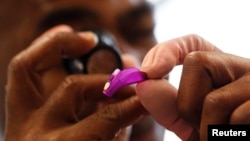
WHO says about half of all cases of hearing impairment are easily preventable. It says many can be treated through early diagnosis and interventions such as surgically implanted hearing devices.
Dr. Chadha says that unfortunately many people are discouraged from seeking help.
“The stigma attached to hearing loss and the use of hearing aids is one of the biggest challenges, one of the biggest barriers to providing services for hearing loss and improving access to hearing aids. Because even where we do try to improve access to hearing aids, very often people are resistant because they do not want to wear a hearing aid.”
WHO says people with hearing loss who are not able to communicate with others often feel isolated and lonely. In developing countries, the organization says children with this disability rarely receive any schooling. It says adults who do not hear well have difficulty finding jobs what, in turn, negatively impacts the economy.
WHO urges countries to develop programs for preventing hearing loss within their primary health care systems. It says other measures that can prevent people from losing their hearing include vaccinating children against measles, meningitis, mumps and rubella, as well as screening for and treating syphilis in pregnant women.
New global WHO estimates indicate more than 360 million people, or more than five percent of the world's population have disabling hearing loss. The report says more people face losing their hearing as they age. It notes one in three people over the age of 65 years - a total of 165 million people worldwide - is hard of hearing.
But this disability is not restricted to the old. Dr. Shelly Chadha of WHO’s Department of Prevention of Blindness and Deafness, says around 32 million children under age 15 are affected by hearing loss.
“There are conditions which lead to this hard-of-hearing situation, including ear infections, which are very, very common in the low and middle-income countries, which often manifest [themselves] as a discharging ear…. Also, very importantly - noise, which is something which was traditionally limited to the occupational arena where people occupationally exposed were at risk of developing hearing loss. But, today, with environmental noise, with increasing technology - well, noise is a part of all our lives.”
WHO reports disabling hearing loss is highest in South Asia, the Asia Pacific region and Sub-Saharan Africa. It can be caused by hereditary and non-hereditary genetic factors or certain complications during pregnancy and childbirth.
While infectious diseases, such as meningitis, measles and mumps also can cause the loss of hearing, most of these diseases can be prevented through vaccination.
Preventive measures
WHO says about half of all cases of hearing impairment are easily preventable. It says many can be treated through early diagnosis and interventions such as surgically implanted hearing devices.
Dr. Chadha says that unfortunately many people are discouraged from seeking help.
“The stigma attached to hearing loss and the use of hearing aids is one of the biggest challenges, one of the biggest barriers to providing services for hearing loss and improving access to hearing aids. Because even where we do try to improve access to hearing aids, very often people are resistant because they do not want to wear a hearing aid.”
WHO says people with hearing loss who are not able to communicate with others often feel isolated and lonely. In developing countries, the organization says children with this disability rarely receive any schooling. It says adults who do not hear well have difficulty finding jobs what, in turn, negatively impacts the economy.
WHO urges countries to develop programs for preventing hearing loss within their primary health care systems. It says other measures that can prevent people from losing their hearing include vaccinating children against measles, meningitis, mumps and rubella, as well as screening for and treating syphilis in pregnant women.