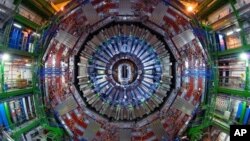
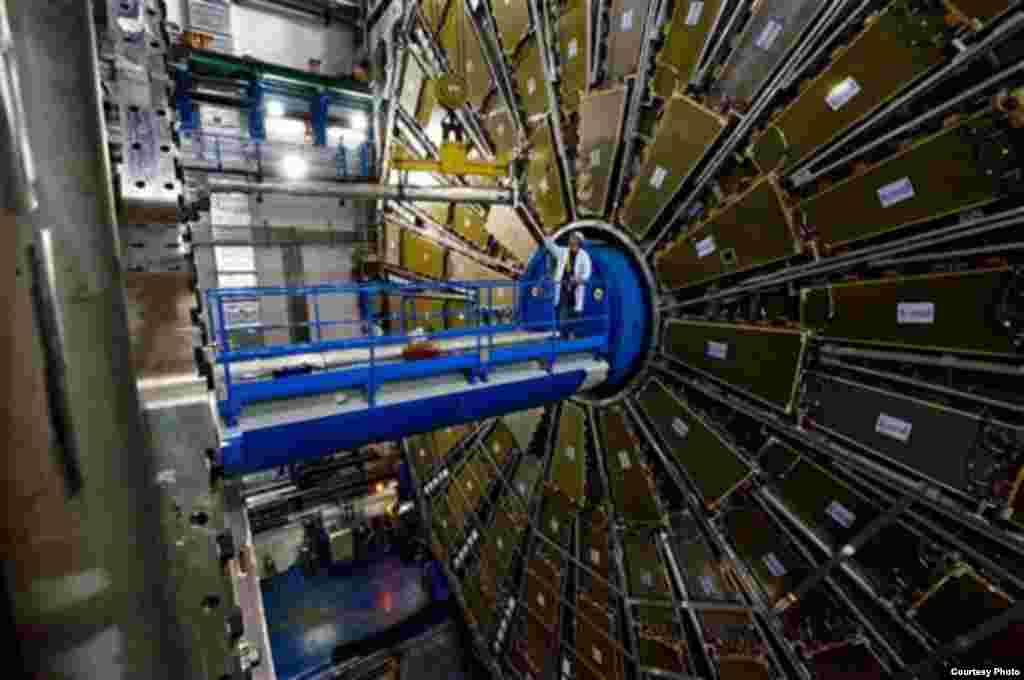
Researchers at the CERN physics lab near Geneva, used the $5.5 billion atom smasher, called the Large Hadron Collider, to confirm the existence of the Higgs boson particle.
Each year, editors at Science magazine compile a list of the year’s top achievements in science and technology.
For 2012, their top pick was the long-anticipated confirmation of the existence of the so-called "God particle," which is believed to be a building block of the universe.
Science breakthough of 2012
The confirmation of the existence of a sub-atomic particle known as the Higgs boson was named breakthrough of the year by the prestigious Science magazine.
The long-sought-after particle - believed to impart mass to all other matter in the universe - was made by researchers at the CERN particle physics lab near Geneva, using the $5.5 billion atom smasher called the Large Hadron Collider.
Science Breakthroughs 2012
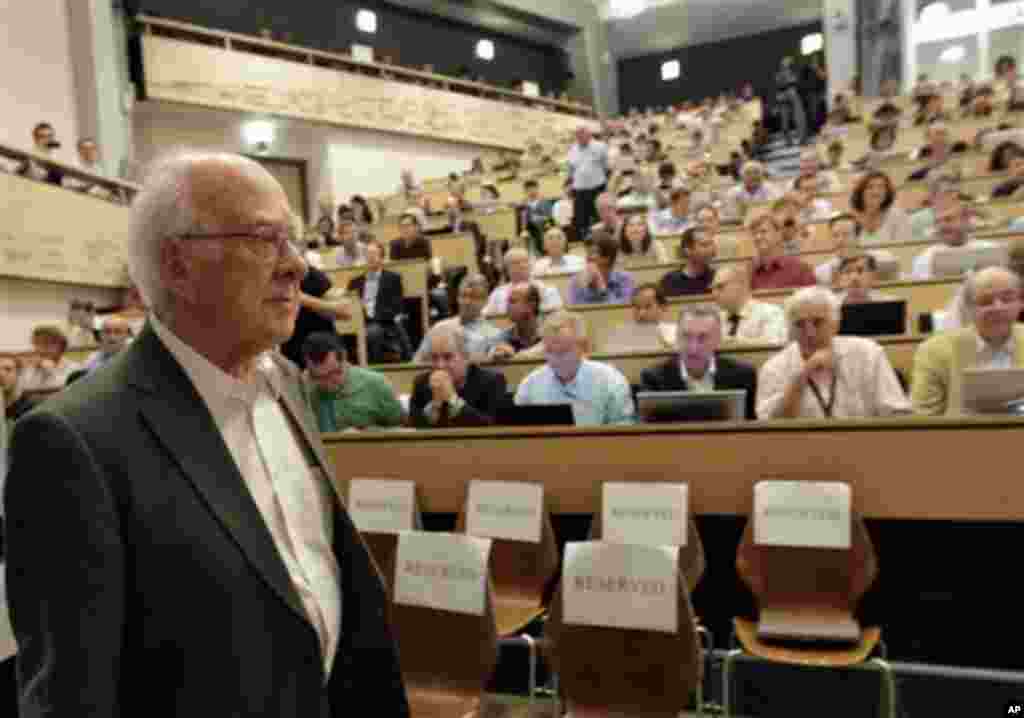
1/11British physicist Peter Higgs, who first theorized the existence of the boson 40 years ago, attends a scientific seminar near Geneva following the discovery of the subatomic particle on July 4, 2012.
2012 was an exciting year of scientific breakthroughs. Editors of the journal Science have put together a top-ten list, featured here courtesy of the American Association for the Advancement of Science.
Show moreShow less
2/11Researchers working with a $5.5 billion atom smasher at the CERN particle physics lab in Geneva observed the elusive Higgs boson particle, which holds the key to explaining how other elementary particles get their mass. (Maximilien Brice and Claudia Marce
2012 was an exciting year of scientific breakthroughs. Editors of the journal Science have put together a top-ten list, featured here courtesy of the American Association for the Advancement of Science.
Show moreShow less
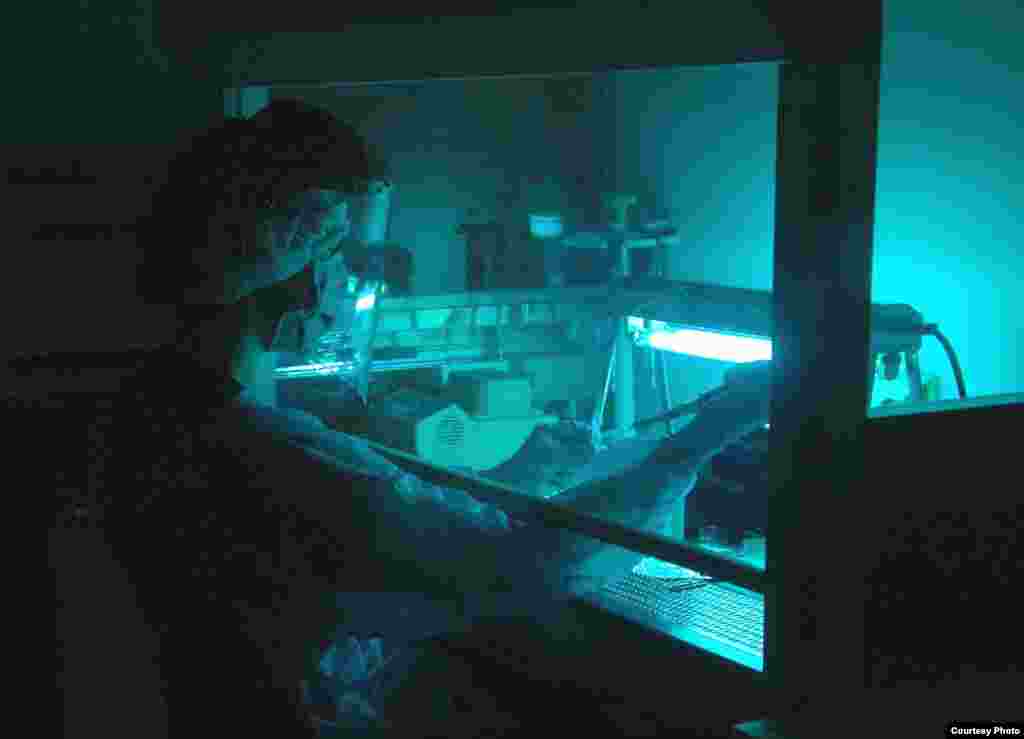
3/11A new technique that binds special molecules to single strands of DNA allowed researchers to sequence the complete Neanderthal-related Denisovan genome from a tiny fragment of ancient finger bone. (Max Planck Institute for Evolutionary Anthropology)
2012 was an exciting year of scientific breakthroughs. Editors of the journal Science have put together a top-ten list, featured here courtesy of the American Association for the Advancement of Science.
Show moreShow less
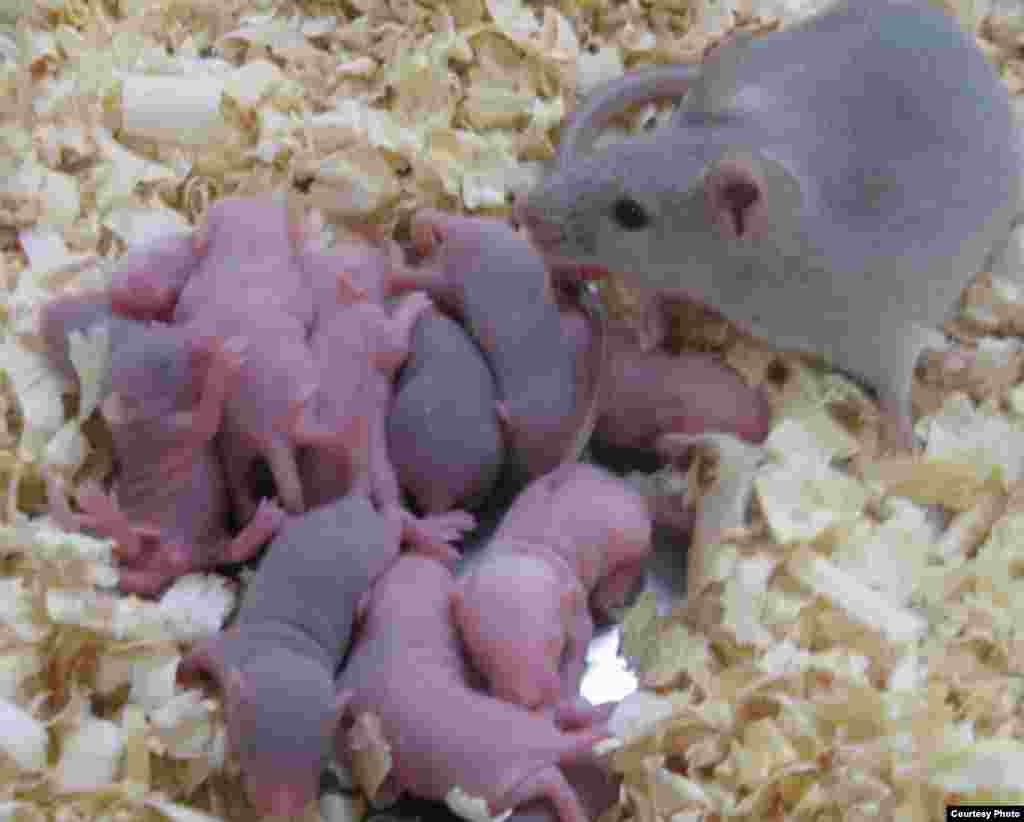
4/11Japanese researchers show that embryonic stem cells from mice could be coaxed into becoming viable egg cells. (Katsuhiko Hayashi)
2012 was an exciting year of scientific breakthroughs. Editors of the journal Science have put together a top-ten list, featured here courtesy of the American Association for the Advancement of Science.
Show moreShow less
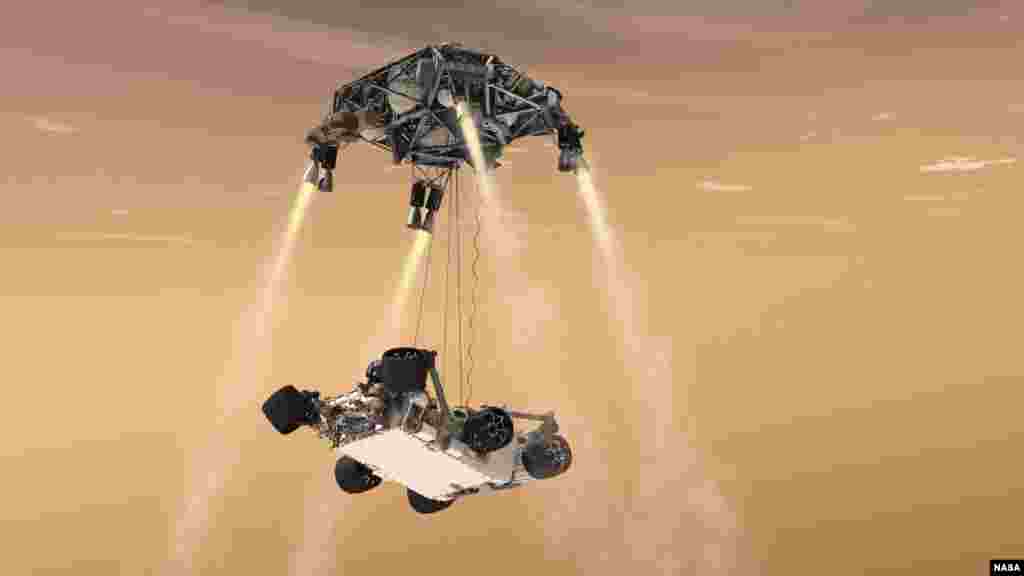
5/11Though unable to test their rover’s entire landing system under Martian conditions, mission engineers at NASA’s Jet Propulsion Laboratory safely and precisely placed the Curiosity rover on the surface of Mars. (NASA/JPL-Caltech)
2012 was an exciting year of scientific breakthroughs. Editors of the journal Science have put together a top-ten list, featured here courtesy of the American Association for the Advancement of Science.
Show moreShow less
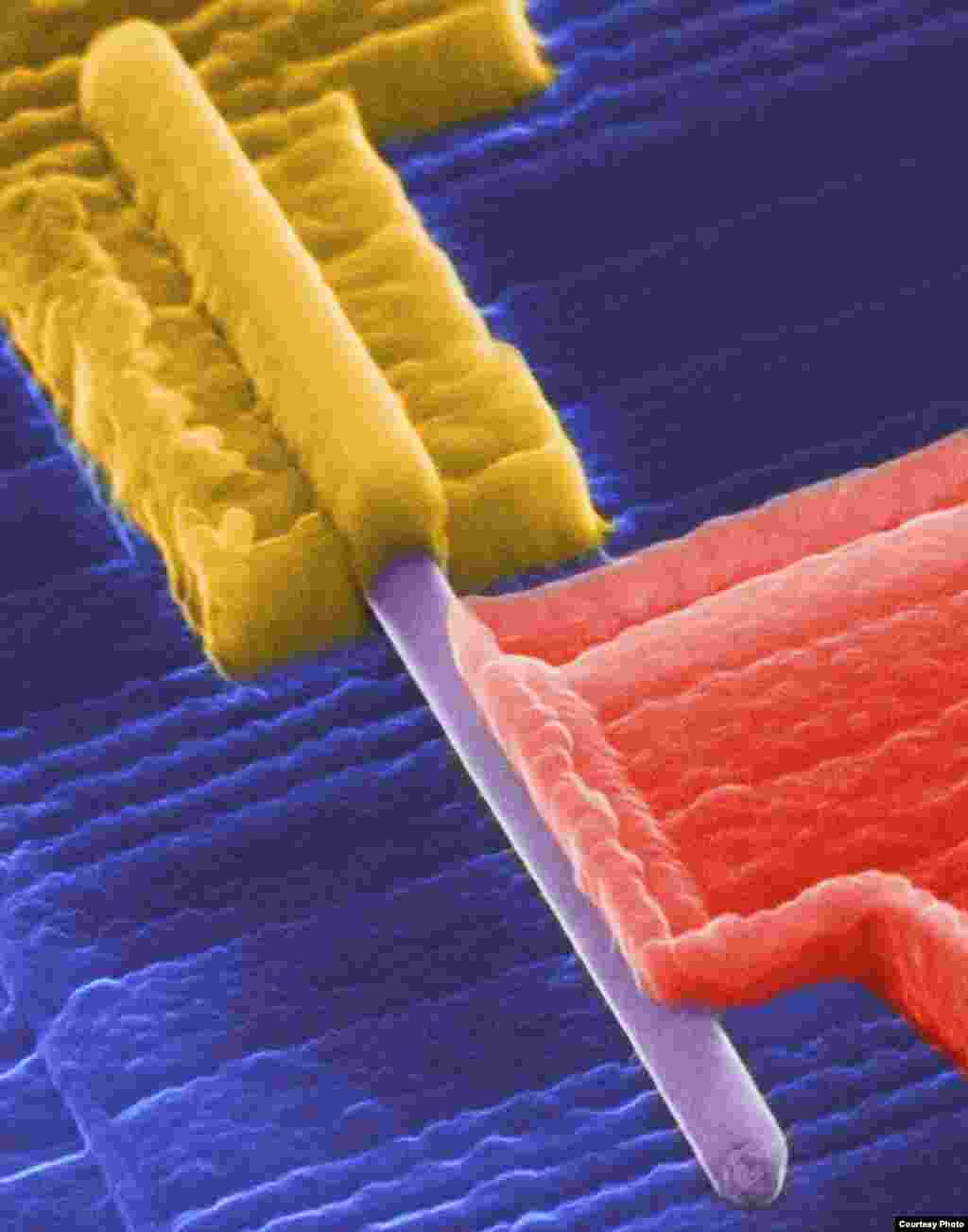
6/11A team of physicists and chemists in the Netherlands provided the first solid evidence of the existence of particles that act as antimatter and annihilate themselves. (Mourik, K. Zuo, S. M. Frolov, S. R. Plissard, E. P. A. M. Bakkers, L. P. Kouwenhoven)
2012 was an exciting year of scientific breakthroughs. Editors of the journal Science have put together a top-ten list, featured here courtesy of the American Association for the Advancement of Science.
Show moreShow less
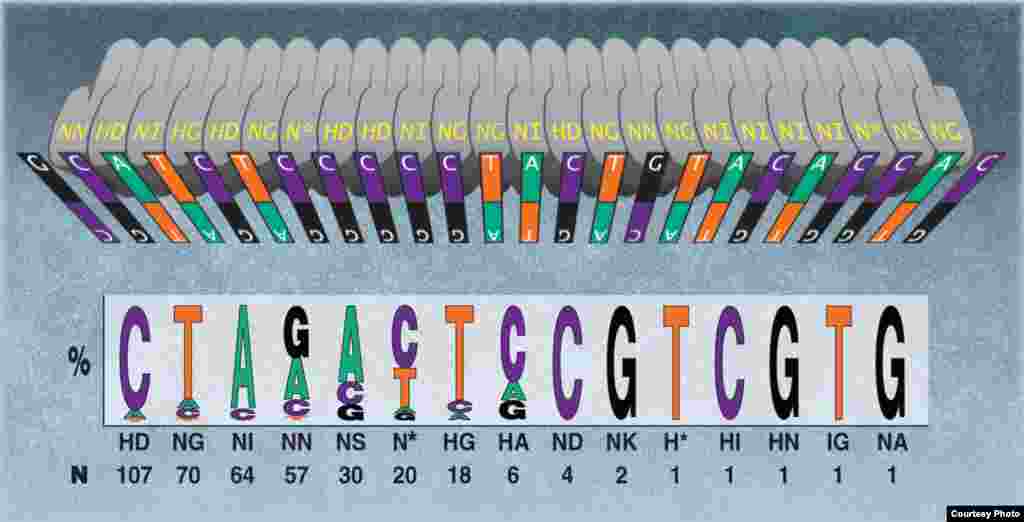
7/11A new scientific tool gave researchers the ability to activate or alter specific genes in Zebra fish, toads, livestock and other animals, even cells from patients with disease. (Science/AAAS)
2012 was an exciting year of scientific breakthroughs. Editors of the journal Science have put together a top-ten list, featured here courtesy of the American Association for the Advancement of Science.
Show moreShow less
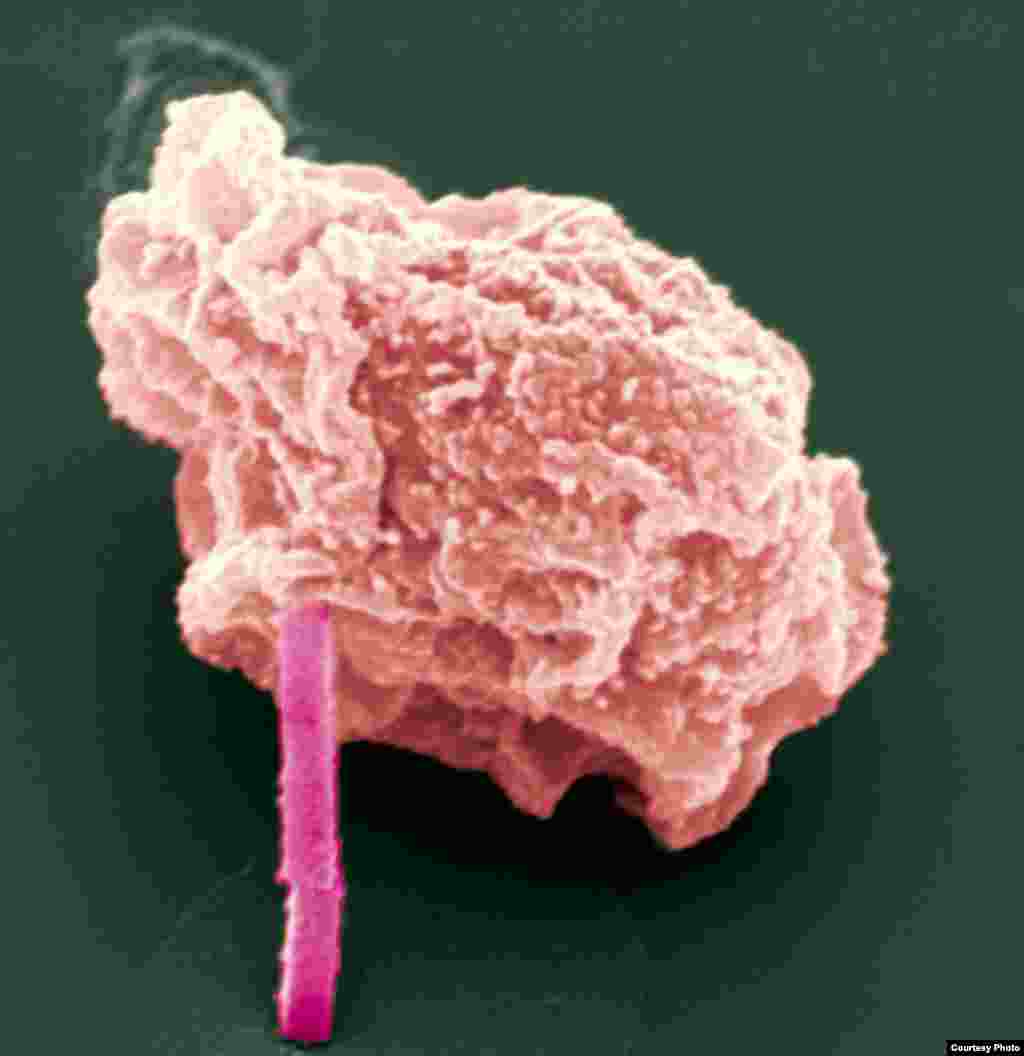
8/11Researchers used a laser one billion times brighter than conventional X-ray sources to determine the structure of an enzyme required by the parasite that causes African sleeping sickness. (Michael Duszenko, University of Tübingen)
2012 was an exciting year of scientific breakthroughs. Editors of the journal Science have put together a top-ten list, featured here courtesy of the American Association for the Advancement of Science.
Show moreShow less
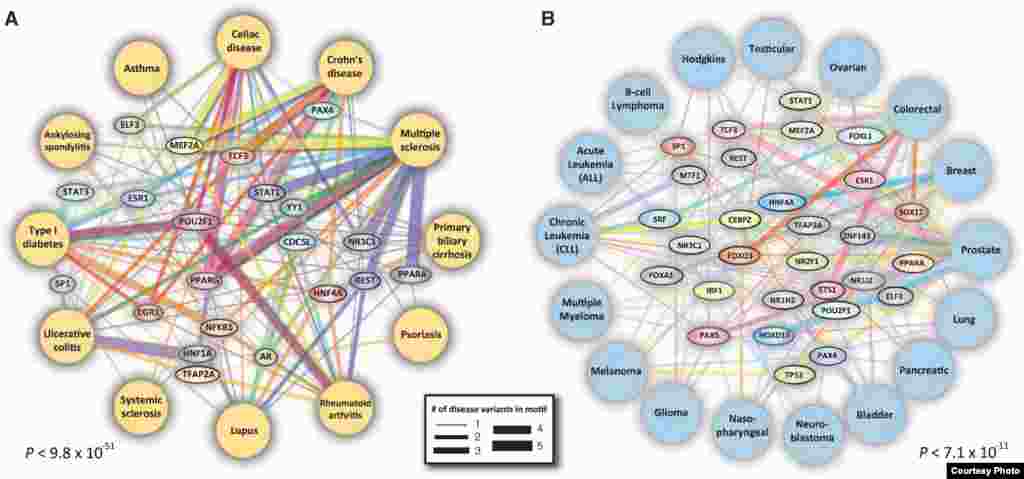
9/11A decade-long project found the human genome is more “functional” than believed and may help clarify genetic risk factors for disease in the future. (Sciece/AAAS)
2012 was an exciting year of scientific breakthroughs. Editors of the journal Science have put together a top-ten list, featured here courtesy of the American Association for the Advancement of Science.
Show moreShow less
10/11Survivors sit in front of their tents near the site of the landslide that killed hundreds of people. Authorities are trying to help the 700 families displaced by the torrent of mud that swept through their village, in Badakhshan province, northeastern Afghanistan, May 6, 2014.
2012 was an exciting year of scientific breakthroughs. Editors of the journal Science have put together a top-ten list, featured here courtesy of the American Association for the Advancement of Science.
Show moreShow less
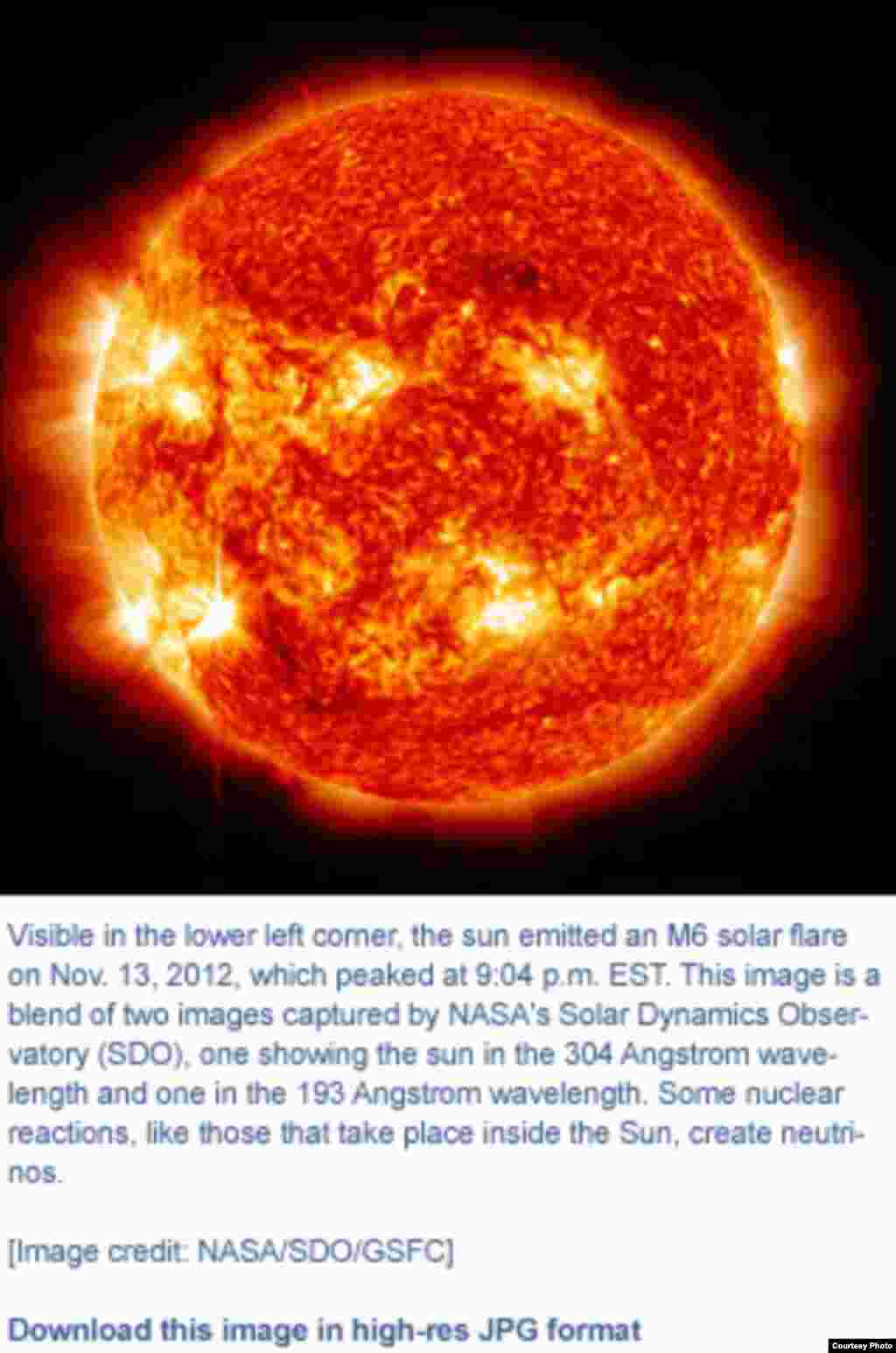
11/11Hundreds of researchers in China described how elusive particles called neutrinos, born in the sun’s nuclear furnace, morph as they travel to earth at near-light speed. (NASA/SDO/GSFC)
2012 was an exciting year of scientific breakthroughs. Editors of the journal Science have put together a top-ten list, featured here courtesy of the American Association for the Advancement of Science.
Show moreShow less
Previous slide
Next slide
In a podcast interview on the magazine’s website, Science deputy news editor Robert Coontz said the discovery fills an important gap in our understanding of the physical structure of the universe.
“The Higgs boson is a fundamental particle that completes physicists’ standard model, which describes all the fundamental particles and the forces with which they interact.”
Coontz said the discovery, first hypothesized by physicist Peter Higgs 40 years ago, may spark a new round of discoveries in particle physics.
“That’s what the scientists at CERN are going to be looking for," he said, "that beyond the standard model lies this theory; one of them is called ‘super symmetry’ in which every particle in the standard model has another particle that hasn’t been discovered yet.”
Matter and anti-matter
Another major breakthrough listed by Science was further proving the existence of so-called anti-matter particles which annihilate themselves.
These elusive, short-lived particles may have practical applications in information technology, and the development of the so-called quantum computer.
“Computers that are based on things called qubits instead of bits," Coontz said. "So, it could well be that these will turn out to be the key to these super-duper computers unlike anything else we have, and that will be a breakthrough of the year, if it happens. This year all they’ve got is quasi particles that have these properties.”
Quantum computers would be vastly more efficient at storing and processing data than today’s silicon-chip computers, according to Coontz.
Denisovan genome
An ancient finger bone found in a Siberian cave, believed to be from an extinct early human species known as Denisovan, made the Science list in 2011 and again this year.
Last year, DNA was extracted from the fossilized bone. This year, researchers managed to sequence the complete genome using a new technique that revealed as much genetic detail as could be obtained from a living person.
The genome allowed scientists to construct the profile of a three-year-old girl with brown hair, brown eyes and brown skin who lived about 80,000 years ago, who had a similar genetic makeup to people who today live in parts of Asia and the Pacific.
“They find out that some of them have Denisovan genes in them and that means that our ancestors interbred with some of them,” Coonz said.
Brain machine interface
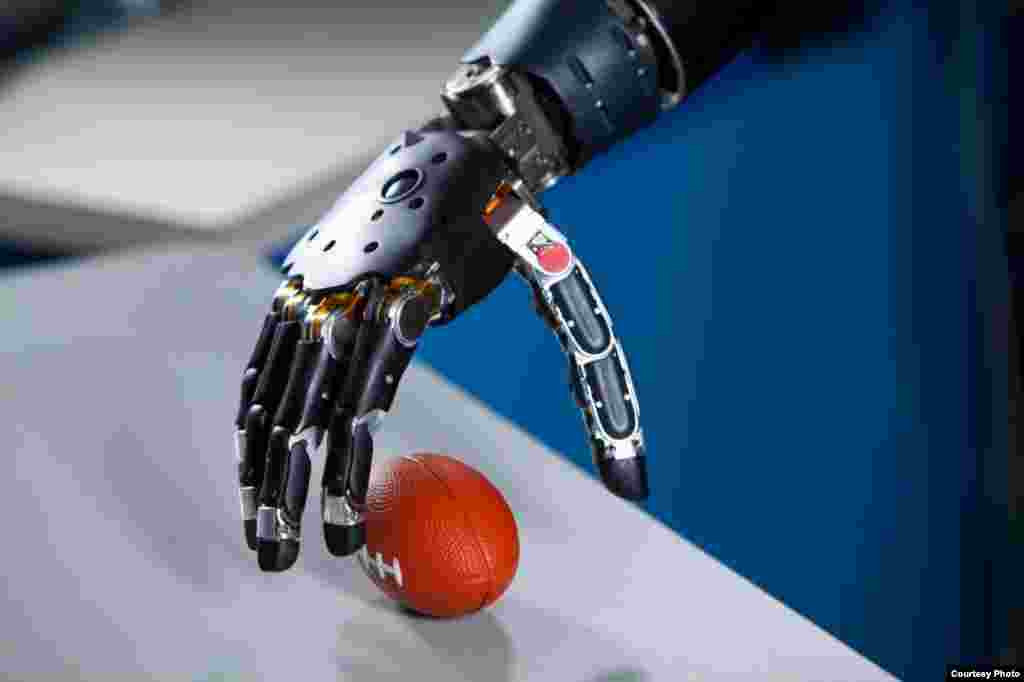
The research team that previously showed how the mind could be used to move a cursor on a computer screen demonstrated an even greater feat in 2012.
They showed that people paralyzed by injuries or disease could use their minds to move an electro-mechanical arm, with their thought-impulses conducted over wires surgically implanted in their brains.
“The progress that took place in 2012 is very hopeful, and I’m sure that we’ll see a lot more," Coonz said. "Now that they’ve managed to make this technology work, it will just get cheaper and better and more graceful and more useful as time goes by.”
Other achievements
Among the year’s other major advances recognized by the Science editors was the ingenious landing system that enabled NASA’s car-sized Curiosity rover to set down, flawlessly, on the surface of Mars.
Also, there's a new instrument which gives scientists the ability to alter genes in fish, toads and other animals.
Additionally, the list includes a laser that's one billion times brighter than conventional x-rays. The scanning technology was used to determine the structure of an enzyme required by the parasite that causes African sleeping sickness, raising hope for new treatments.