



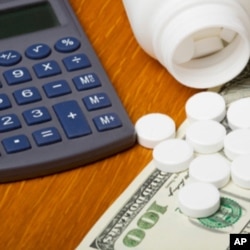
Medicines can be expensive and often make up a large portion of any family's health care budget. And the burden can be even greater for people in poor countries, where the cost of vital medicines can push them into poverty.
The problem is growing as more people around the world are diagnosed with chronic diseases such as high blood pressure and diabetes. Being diagnosed with a chronic disease usually compells patients to seek treatment for a prolonged period of time. That increases the eventual price tag for health, says health economist Laurens Niëns at Erasmus University in the Netherlands.
Niëns examined medication pricing data from the World Health Organization and also looked at data from the World Bank on household income in many countries. Using the data, he calculated how much people need to spend on necessities such as food, housing, education and medicines.
"The medicines we looked at are medicines for patients who suffer from asthma, diabetes, hypertension and we looked at an adult respiratory infection," Niëns says. "Three conditions are for chronic diseases, which basically means that people need to procure those medicines each and every day."
Niëns focused on the cost of medicine for those conditions. He found the essential drugs could be considered unaffordable for many people in poor countries - so much so that their cost often pushes people into abject poverty.
"The proportion of the population that is living below the poverty line, plus the people that are being pushed below the poverty line, can reach up to 80 percent in some countries for some medicines," Niëns says.
He points out that generic medicines - which are more affordable than brand-name medications - are often not available in the marketplace. And, according to Niëns, poor government policies can drive up the cost of medications.
"For instance, a lot of governments actually tax medicines when they come into the country," he says. "[They] have no standard for the markups on medicines through the distribution chain. So often, governments think they pay a good price for the medicines when they procure them from the producer. However, before such a medicine reaches a patient, markups are sometimes up to 1,000 percent."
Niëns believes governments and NGOs must work together to increase the affordability of medicines. And that pharmaceutical companies should create high-quality generic drugs that won't break a family's budget. He also says that establishing national health insurance systems can help keep families from falling into poverty as they buy the medications they need to stay alive.
His paper is published in the online journal PLoS Medicine.