Ethiopian young girls waiting to travel to Yemen in Bossaso, the commercial city of the semi-autonomous region of Puntland and the launching pad of the people trying to cross the Gulf of Aden to Yemen.
The number of refugees and migrants crossing from the Horn of Africa into Yemen continues at a record pace. Most of the arrivals are Ethiopian.
The U.N. refugee agency says so far this year, nearly 64,000 people crossed the Gulf of Aden or Red Sea to reach Yemen. That compares to about 49,000 during the same period last year, a 30 percent increase.
“What we are seeing over the first seven months of 2012 is a large increase of the number of refugees and migrants arriving from the Horn of Africa to Yemen. Most of these people are migrants who are leaving Ethiopia because they lack economic opportunities there. There was a situation of drought as well,” said UNHCR spokesman Andrej Mahecic.
About four or five years ago, Somalis made up the majority of new arrivals to Yemen. Their numbers have remained fairly stable in recent years, while the number of Ethiopians has steadily increased. If the pace continues, the number of refugees and migrants will surpass last year’s record level of 103,000.
The Ethiopians generally are not seeking asylum.
“Most of these people with the interest of reaching other states in the Gulf try to avoid contact with the authorities in Yemen. And this is where they become easy prey for the smugglers in Yemen. And we are aware of the frequent reports of these people being held hostage. Their families [are] being asked for ransom. There are all sorts of abuse, including violence and even sexual abuse. So it is really a hard situation for these people,” he said.
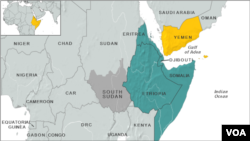
Most of those crossing to Yemen take the Red Sea route from Djibouti. That trip only lasts a few hours. It may take up to three days to cross the Gulf of Aden. Either way, the most common means of travel is to hire smugglers, who are becoming more organized.
“It has been organized in such a way that those deciding to make the dangerous trip, they are using already established money transfer systems to pay these smugglers, rather than to carry cash. Because often in the past many of these migrants were robbed by the bandits, either en route, or on departure points on the beaches,” he said.
The UNHCR says it expects to see another spike in arrivals in Yemen for August once this month’s figures are complied.