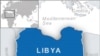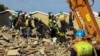



An international human rights group says Libyan security forces killed 24 protesters during Thursday's crackdown on anti-government demonstrations.
Human Rights Watch says witnesses say security forces shot and killed protesters in an effort to break up the demonstrations across Libya.
The New York-based group called on Libya to end the use of lethal force on the demonstrators unless "absolutely necessary" to protect lives. It also called on the government to investigate the deadly shootings in some of Libya's major cities.
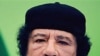
The clashes broke out across the nation Thursday after opponents of leader Moammar Gadhafi called for nationwide protests, known as a "Day of Rage," inspired by uprisings in other Arab states.
Videos circulating on the social media site Facebook showed demonstrators burning a security detention center late Wednesday and hundreds of protesters marching Thursday afternoon on a main road in the eastern city of Benghazi chanting anti-Gadhafi slogans. Protests were also reported in Zentan, Rijban, and Shahat.
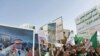
Meanwhile, state media showed hundreds of pro-government supporters who gathered Thursday in the capital, Tripoli, waving green flags and shouting in support of Mr. Gadhafi.
Benghazi, with a population of about one million, has long been a hotbed of anti-Gadhafi activism. It has been the site of several crackdowns on dissidents, including the public execution of a group of young Libyans accused of treason in 1987 and the violent suppression of a riot outside the Italian consulate in 2006 which resulted in 10 deaths.
Organizers said they wanted to commemorate the anniversary of those events in Thursday's demonstrations.
Mr. Gadhafi has sought to defuse the protests, doubling the salaries of state employees and releasing 110 accused Islamic militants. But some of the rallies drew on much older grievances. They were first set off Tuesday night when police arrested a human rights lawyer representing the families of 1,000 detainees massacred in 1996 at the notorious Abu Salim prison in Tripoli.
Mr. Gadhafi took power in a bloodless coup in 1969 and has built his rule on a cult of personality and a network of family and tribal alliances.
HRW Says 24 Killed in Libyan 'Day of Rage' Protests