Accessibility links

Breaking News

Hubble Telescope: 25 Years in Space

update
Hubble Telescope Celebrates 25 Years in Space
please wait

No media source currently available

0:00 0:02:56 0:00

The Hubble Space Telescope is an orbiting workhorse. Over the past quarter century, it has sent back thousands of images of nearby planets and the most remote galaxies, expanding our knowledge of the universe in ways previously unimagined.

Hubble’s story begins with the solution to a problem: Earth's atmosphere, which blocks or distorts light reaching land-based telescopes. It is that atmospheric distortion that makes stars appear to twinkle.

A telescope based in space would not have to "look" through the atmosphere. And its position in low Earth orbit would place it close enough to be serviced by shuttle astronauts.

Hubble Highlights
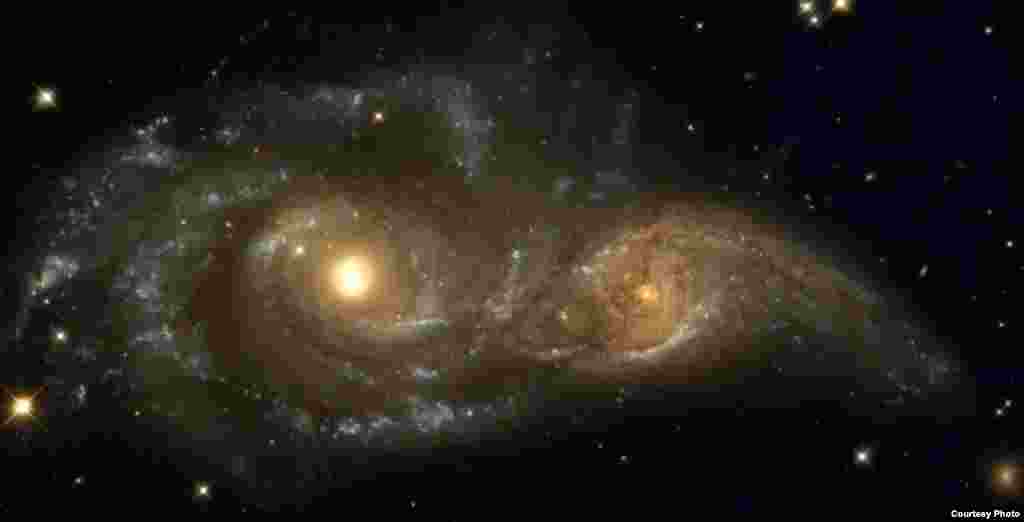
The near collision of two spiral galaxies taken by NASA's Hubble Space Telescope and its Wide Field Planetary Camera 2 on Nov. 4, 1999. (NASA)
1/12 The near collision of two spiral galaxies taken by NASA's Hubble Space Telescope and its Wide Field Planetary Camera 2 on Nov. 4, 1999. (NASA)
The Hubble Space Telescope has changed the way we see the universe. For a quarter of a century, it has sent vast amounts of data and images from space.
Almost immediately after the Hubble Space Telescope was launched in 1990, Hubble scientists saw fuzzy images (left), which were corrected (right) with new instruments by shuttle astronauts three years later. (NASA)
2/12 Almost immediately after the Hubble Space Telescope was launched in 1990, Hubble scientists saw fuzzy images (left), which were corrected (right) with new instruments by shuttle astronauts three years later. (NASA)
The Hubble Space Telescope has changed the way we see the universe. For a quarter of a century, it has sent vast amounts of data and images from space.
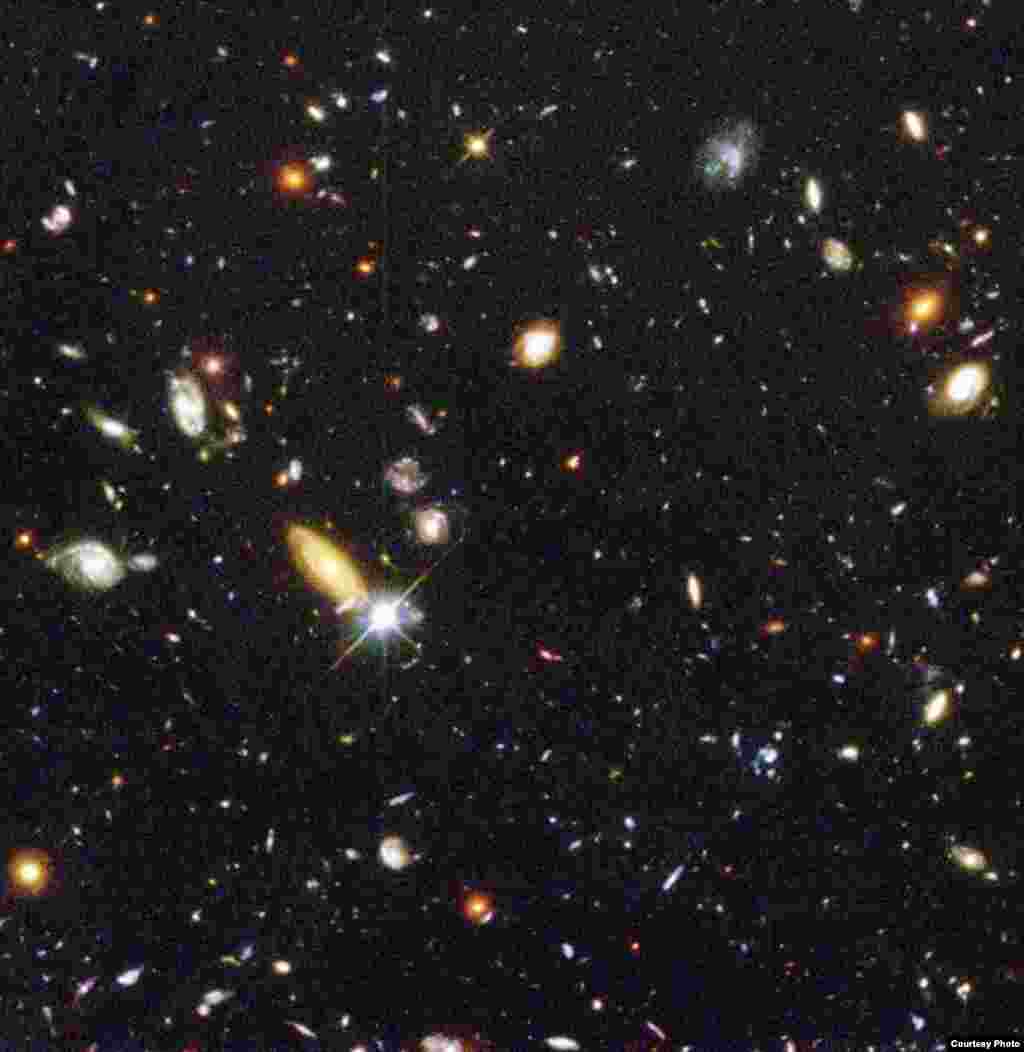
Among its remarkable discoveries is a deeper understanding of the evolution of the universe and capturing images of galaxies that may have formed less than one billion years after the Big Bang, Jan. 15, 1996. (NASA)
3/12 Among its remarkable discoveries is a deeper understanding of the evolution of the universe and capturing images of galaxies that may have formed less than one billion years after the Big Bang, Jan. 15, 1996. (NASA)
The Hubble Space Telescope has changed the way we see the universe. For a quarter of a century, it has sent vast amounts of data and images from space.
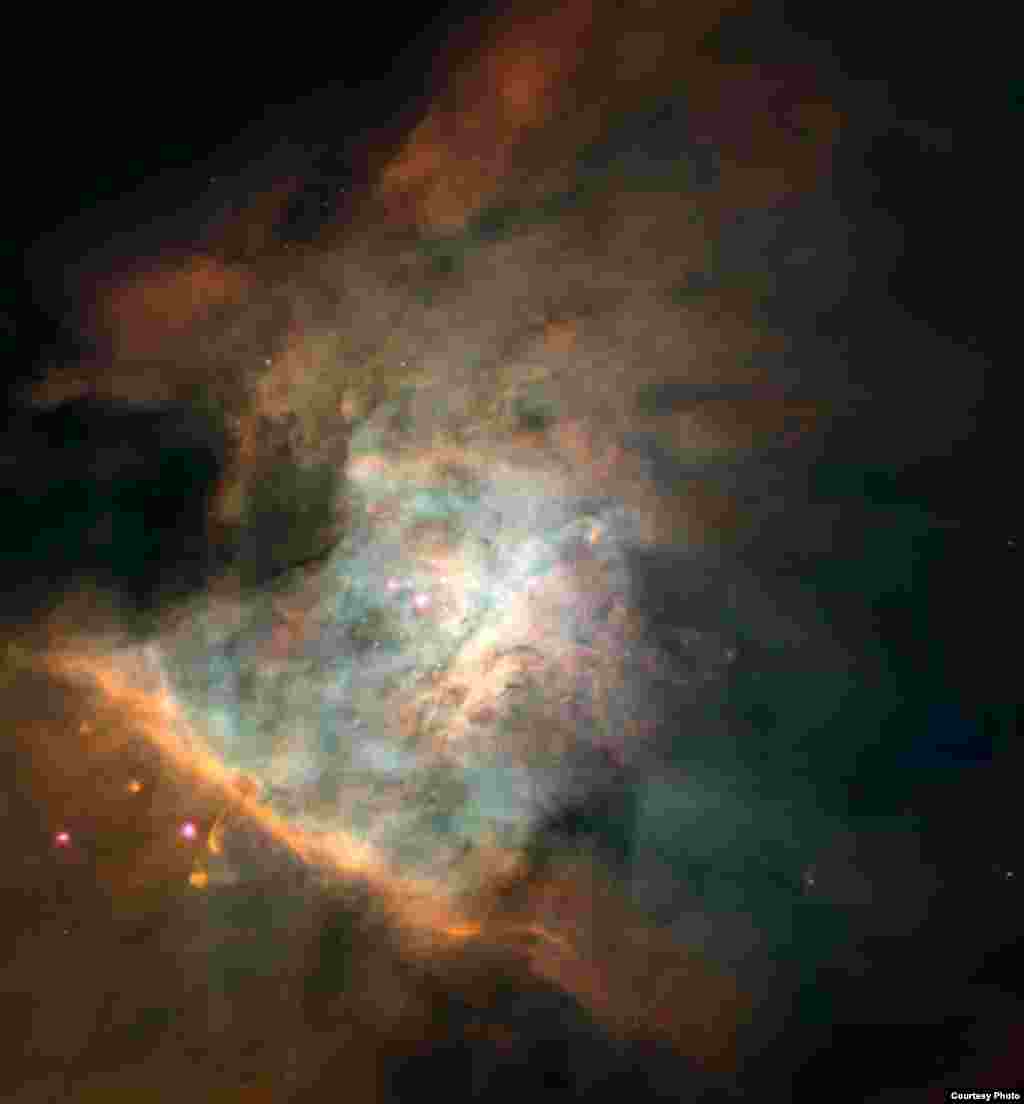
This image surveys star birth in the Great Orion Nebula, which is located 6,500 light-years from Earth and is the remnant of a star that began its life with about 10 times the mass of our own Sun. (NASA)
4/12 This image surveys star birth in the Great Orion Nebula, which is located 6,500 light-years from Earth and is the remnant of a star that began its life with about 10 times the mass of our own Sun. (NASA)
The Hubble Space Telescope has changed the way we see the universe. For a quarter of a century, it has sent vast amounts of data and images from space.
This image surveys star birth in the Great Orion Nebula, which is located 6,500 light-years from Earth and is the remnant of a star that began its life with about 10 times the mass of our own Sun. (NASA)
5/12 This image surveys star birth in the Great Orion Nebula, which is located 6,500 light-years from Earth and is the remnant of a star that began its life with about 10 times the mass of our own Sun. (NASA)
The Hubble Space Telescope has changed the way we see the universe. For a quarter of a century, it has sent vast amounts of data and images from space.
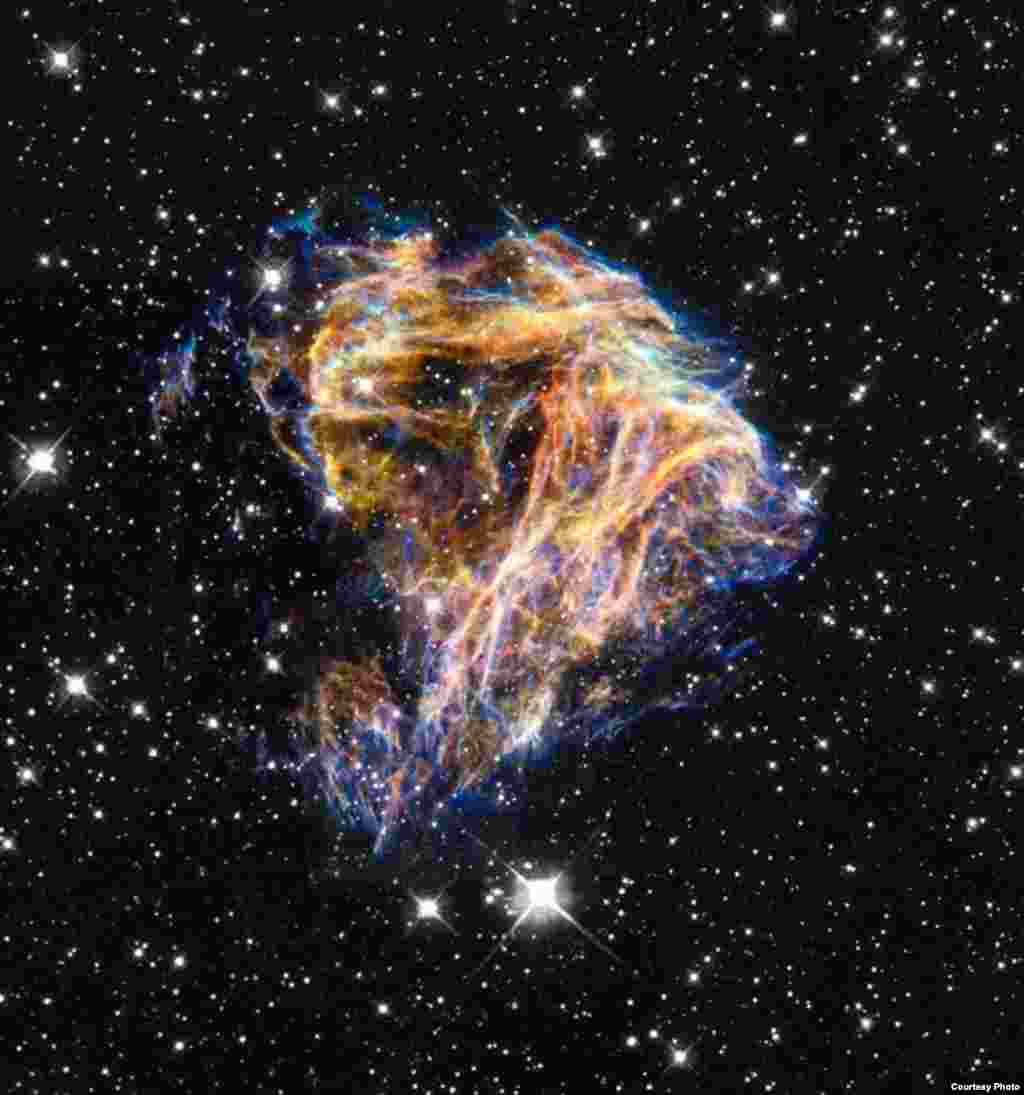
These delicate filaments are actually sheets of debris from a stellar explosion. (NASA)
6/12 These delicate filaments are actually sheets of debris from a stellar explosion. (NASA)
The Hubble Space Telescope has changed the way we see the universe. For a quarter of a century, it has sent vast amounts of data and images from space.
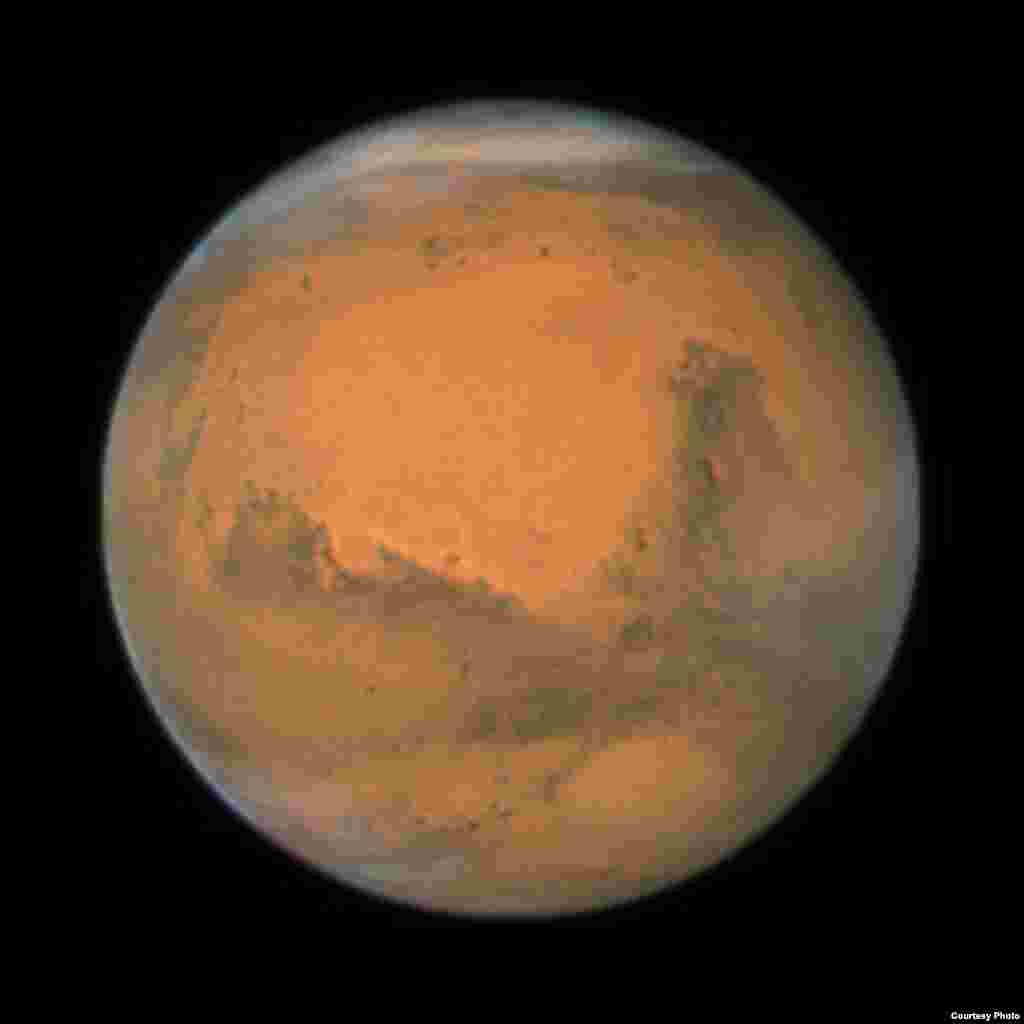
The Hubble Space Telescope took this close-up of Mars when it was just 88 million kilometers away. This image was assembled from a series of exposures taken over 36 hours. (NASA)
7/12 The Hubble Space Telescope took this close-up of Mars when it was just 88 million kilometers away. This image was assembled from a series of exposures taken over 36 hours. (NASA)
The Hubble Space Telescope has changed the way we see the universe. For a quarter of a century, it has sent vast amounts of data and images from space.
NASA's Hubble Space Telescope has trained its razor-sharp eye on one of the universe's most stately and photogenic galaxies, the Sombrero galaxy. (NASA)
8/12 NASA's Hubble Space Telescope has trained its razor-sharp eye on one of the universe's most stately and photogenic galaxies, the Sombrero galaxy. (NASA)
The Hubble Space Telescope has changed the way we see the universe. For a quarter of a century, it has sent vast amounts of data and images from space.
The two spiral galaxies started to interact a few hundred million years ago, making the Antennae galaxies one of the nearest and youngest examples of a pair of colliding galaxies. (NASA)
9/12 The two spiral galaxies started to interact a few hundred million years ago, making the Antennae galaxies one of the nearest and youngest examples of a pair of colliding galaxies. (NASA)
The Hubble Space Telescope has changed the way we see the universe. For a quarter of a century, it has sent vast amounts of data and images from space.
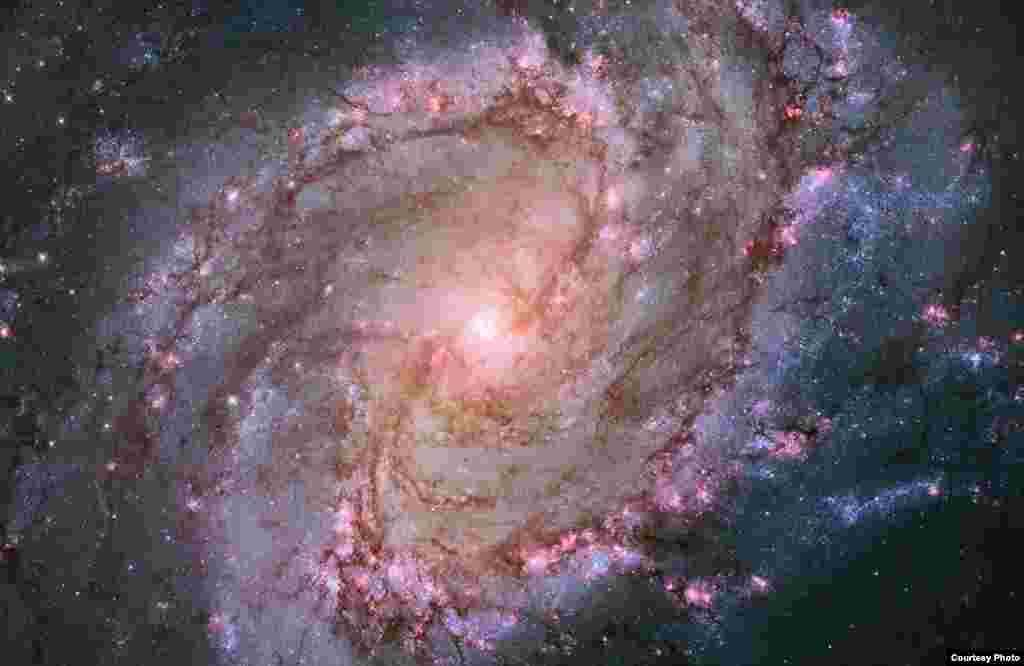
Vibrant magentas and blues reveal a galaxy ablaze with star formation. The galaxy, also known as the Southern Pinwheel, lies 15 million light-years away in the constellation Hydra. (NASA)
10/12 Vibrant magentas and blues reveal a galaxy ablaze with star formation. The galaxy, also known as the Southern Pinwheel, lies 15 million light-years away in the constellation Hydra. (NASA)
The Hubble Space Telescope has changed the way we see the universe. For a quarter of a century, it has sent vast amounts of data and images from space.
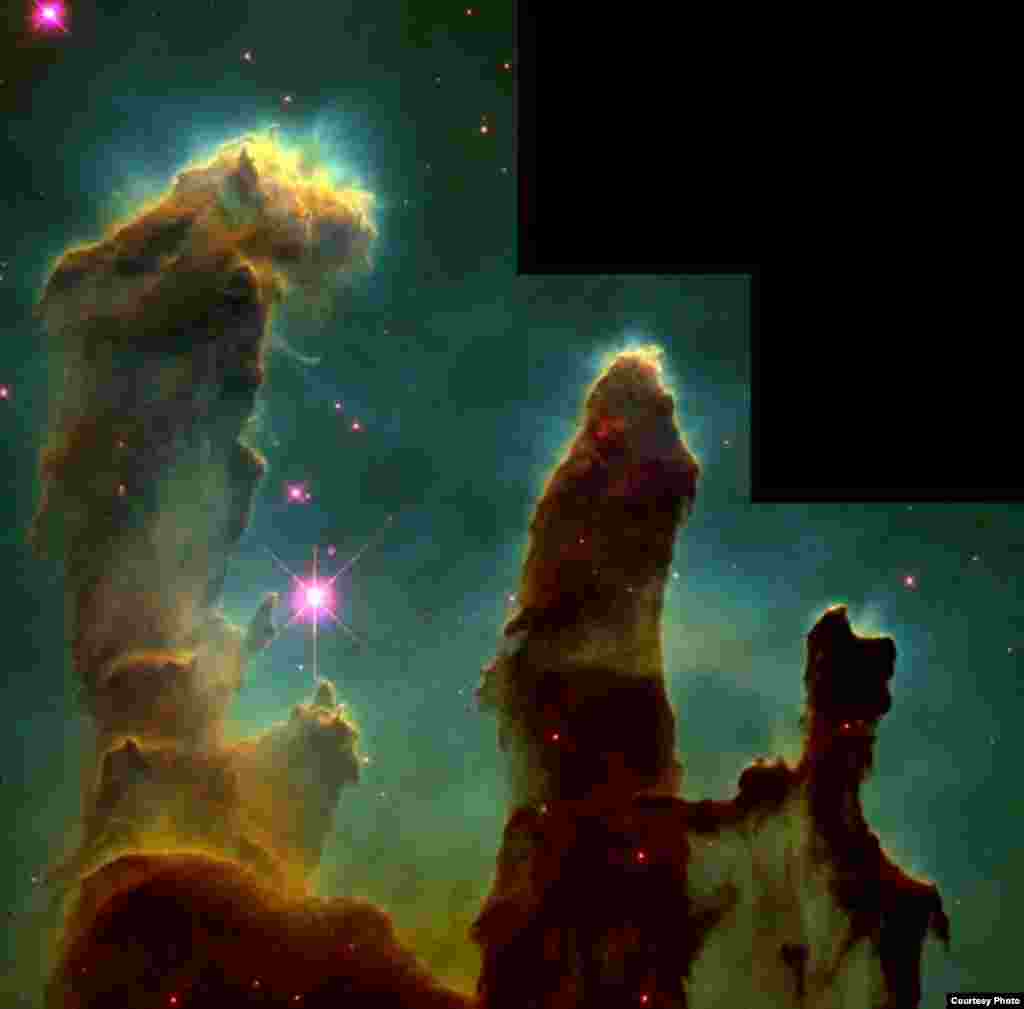
These eerie, dark pillar-like structures are actually columns of cool interstellar hydrogen gas and dust that are also incubators for new stars. (NASA)
11/12 These eerie, dark pillar-like structures are actually columns of cool interstellar hydrogen gas and dust that are also incubators for new stars. (NASA)
The Hubble Space Telescope has changed the way we see the universe. For a quarter of a century, it has sent vast amounts of data and images from space.
ውዕውዕ ኣቀባብላ ንኣባላት ሃገራዊት ጋንታ ቅድድም ብሽክለታ ኤርትራ
12/12 ውዕውዕ ኣቀባብላ ንኣባላት ሃገራዊት ጋንታ ቅድድም ብሽክለታ ኤርትራ
The Hubble Space Telescope has changed the way we see the universe. For a quarter of a century, it has sent vast amounts of data and images from space.
Previous slide
Next slide

Fuzzy first images

Hubble was launched on April 24, 1990, aboard the Space Shuttle Discovery. Almost immediately, NASA scientists were aware that something was wrong. The first images were fuzzy. The diagnosis: Hubble’s primary mirror had been ground too flat, its curvature off by roughly one-fiftieth the thickness of a human hair.

Space Shuttle Endeavor astronauts docked with the telescope in 1993 to install a corrective lens.

“Since then we’ve had perfect images and perfect data,” said Hubble Senior Project Scientist Jennifer Wiseman. “And, in fact, all the newer cameras and newer instruments that have been installed on Hubble in the years since it was launched have that corrective optics integrated inside.”

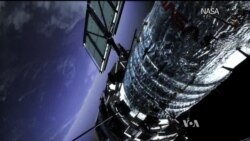
Hubble circles the earth every 97 minutes, traveling at 8 kilometers per second. Its 2.4-meter-wide mirror directs light from the universe to its science instruments, which allow the telescope to capture sharp images from our solar system and the immense space beyond.

“One of Hubble’s most famous images is of the Eagle Nebula,” said Wiseman. “We see these big pillars. And inside these gas pillars, we know there are young stars still forming and Hubble’s infrared capabilities can see into those clouds and see those baby stars forming."

Baby stars, black holes

Hubble is one of NASA’s longest and most successful space missions.

Its data has allowed astronomers to chart the birth and evolution of stars, confirm that the universe is expanding and calculate its age at 13.8 billion years. Wiseman said Hubble also proved the existence of black holes within galaxies.

“Hubble was capable of looking at the fast motions of gas around the center of another galaxy and to discern that that fast motion, that fast rotation of gas, could only be held in place if there were something very massive in the core. It had to be a super massive black hole,” said Wiseman.

Wiseman said newer discoveries continue to emerge as Hubble points its instruments at the most massive clusters of galaxies in the most remote part of the universe.

“They contain not only these galaxies and stars but a lot of what we call dark matter, and because they are so massive, they can actually distort light that is passing by. As light is passing by something very massive, its path can get changed and it can actually get magnified,” she said.

Astronomers use that gravitational lens in space to observe very distant galaxies that otherwise they would not be able to see.

No more service missions

U.S. space shuttles have docked with the Hubble five times over the past quarter-century, so astronauts could replace parts, make repairs and install new equipment.

With the end of the shuttle program in 2011, the telescope can no longer be serviced in space. It will remain in orbit as long as its batteries, navigation system and gyroscopes last. Wiseman said however long that is, Hubble's legacy is assured.

“I think that it causes at its best all of humanity to pause for a moment, look up and think about who we are and how we are all citizens of this one magnificent planet in a very magnificent universe,” she said.

Despite its age, Hubble is working at its peak, archiving data that scientists can use for many years to come.

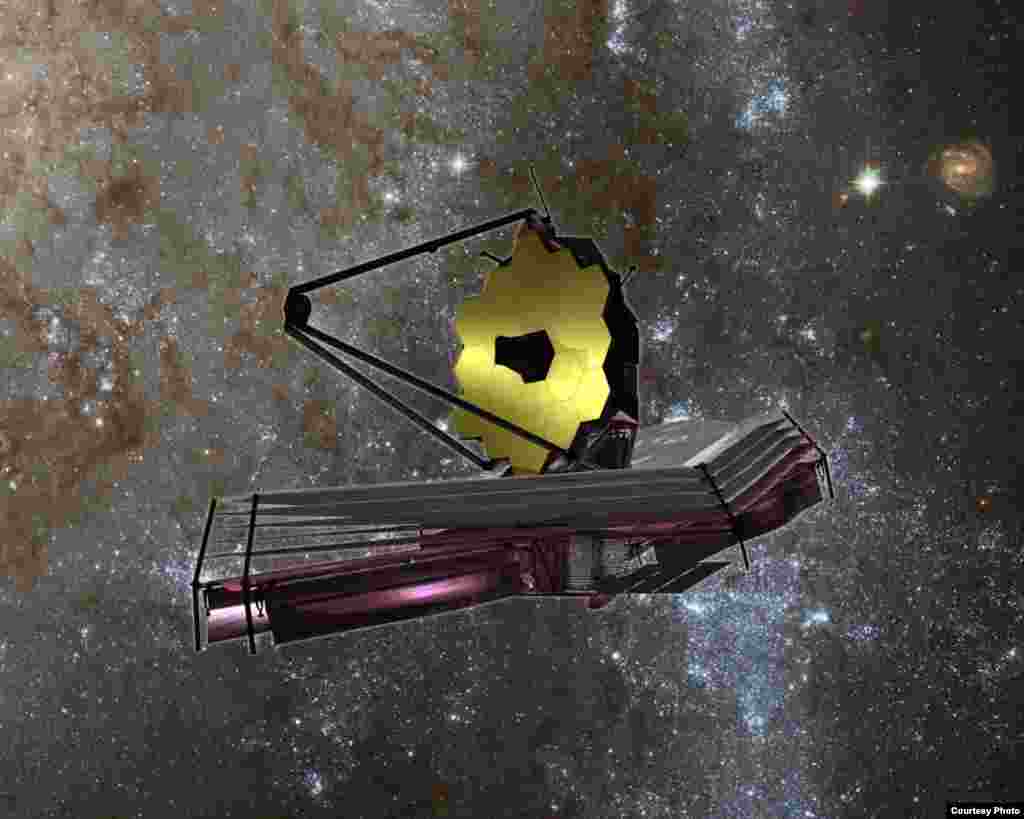
Wiseman said she hopes that Hubble remains in orbit long enough for its successor, the James Webb Space Telescope, to join it. That launch is scheduled for 2018.

This item is part of
XS
SM
MD
LG