NEW DELHI – In India, a popular yoga guru leading an anti-corruption campaign has called off a six-day hunger strike. The anti-corruption crusade began as a civil society movement last year, but is now taking on partisan political overtones.
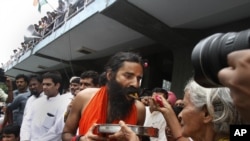
Baba Ramdev sipped lime juice Tuesday as he ended a hunger strike calling for the repatriation of illegal money he alleges is stashed by Indians overseas.
Cheered by thousands of followers, the saffron robed, bearded, yoga guru said he will renew his campaign before the 2014 general elections. Ramdev has vowed to throw out the governing Congress Party, which he holds responsible for widespread corruption.
As he attacked the ruling party, he was joined by top leaders of the opposition Bharatiya Janata Party during his six day protest.
Political commentators say the yoga guru’s targeting of the Congress Party and the presence of BJP leaders on his stage underlines his political agenda.
“Ramdev is clearly a politically-supported, politically-sponsored, politically-intended movement, that is what comes out very clearly. It is so obvious,” noted Bhaskara Rao, who heads the Center for Media Studies in New Delhi.
The yoga guru's protest was the second anti-corruption campaign in New Delhi recently. Earlier this month, another popular social activist, Anna Hazare, went on a hunger strike in a renewed push for a powerful anti-graft ombudsman. But he abandoned the protest within days, and announced that he would launch a political party to fight graft.
Civil society activists Anna Hazare and Baba Ramdev emerged on the public stage last year as a series of multi billion dollar scandals grabbed headlines and public anger against corruption boiled over. The movements evoked massive response as they promised a revolution to clean up governance.
But a year on, popular response has been much more muted. And what began as civil society movements are headed towards a political stage.
Kiran Bedi, one of the most prominent faces of the India Against Corruption Movement led by Anna Hazare, says the government’s continued inaction about their demand for an anti-corruption ombudsman prompted them to enter the political fray and fight the system from within.
“We realized that the government was being totally insensitive, it was not responding," she explained. "Some of the members were very keen that agitations are leading us nowhere, we need to step out.”
Political analysts say the civil society movements played an invaluable role in flagging corruption as an issue that needs urgent attention. But not everyone is convinced the move from social to political activism will help the cause of cleaning up India’s pervasive corruption.
Rao says the anti-corruption movement faces the risk of losing momentum in the rough and tumble debate among India’s political factions.
“We already have too many political parties, and all of them preach, there is too much rhetoric about corruption," Rao said. "This will add to the existing rhetoric. Actual curbing of corruption, how do you go about on that agenda, is not coming out.”
However, India Against Corruption activists are optimistic that they will widen the range of options to voters in a country that has become cynical about politics.
Bedi hopes the anti-corruption civil society activists will successfully make the transition from a grass roots movement to a grass roots political party.
“Maybe they could offer a new alternative, the right alternative," Bedi suggested. "Politics was never dirty pre-independence. It was considered an element of supreme sacrifice. I am being optimistic, that the new outfit may move toward finally giving an ethical outfit.”
Some of the thousands of ordinary men and women who joined the huge crowds at the protests last year are watching with trepidation. They welcome the entry of new faces in the political arena, but also fear their leaders may end up becoming a part of the system they criticize.
Baba Ramdev sipped lime juice Tuesday as he ended a hunger strike calling for the repatriation of illegal money he alleges is stashed by Indians overseas.
Cheered by thousands of followers, the saffron robed, bearded, yoga guru said he will renew his campaign before the 2014 general elections. Ramdev has vowed to throw out the governing Congress Party, which he holds responsible for widespread corruption.
As he attacked the ruling party, he was joined by top leaders of the opposition Bharatiya Janata Party during his six day protest.
Political commentators say the yoga guru’s targeting of the Congress Party and the presence of BJP leaders on his stage underlines his political agenda.
“Ramdev is clearly a politically-supported, politically-sponsored, politically-intended movement, that is what comes out very clearly. It is so obvious,” noted Bhaskara Rao, who heads the Center for Media Studies in New Delhi.
The yoga guru's protest was the second anti-corruption campaign in New Delhi recently. Earlier this month, another popular social activist, Anna Hazare, went on a hunger strike in a renewed push for a powerful anti-graft ombudsman. But he abandoned the protest within days, and announced that he would launch a political party to fight graft.
Civil society activists Anna Hazare and Baba Ramdev emerged on the public stage last year as a series of multi billion dollar scandals grabbed headlines and public anger against corruption boiled over. The movements evoked massive response as they promised a revolution to clean up governance.
But a year on, popular response has been much more muted. And what began as civil society movements are headed towards a political stage.
Kiran Bedi, one of the most prominent faces of the India Against Corruption Movement led by Anna Hazare, says the government’s continued inaction about their demand for an anti-corruption ombudsman prompted them to enter the political fray and fight the system from within.
“We realized that the government was being totally insensitive, it was not responding," she explained. "Some of the members were very keen that agitations are leading us nowhere, we need to step out.”
Political analysts say the civil society movements played an invaluable role in flagging corruption as an issue that needs urgent attention. But not everyone is convinced the move from social to political activism will help the cause of cleaning up India’s pervasive corruption.
Rao says the anti-corruption movement faces the risk of losing momentum in the rough and tumble debate among India’s political factions.
“We already have too many political parties, and all of them preach, there is too much rhetoric about corruption," Rao said. "This will add to the existing rhetoric. Actual curbing of corruption, how do you go about on that agenda, is not coming out.”
However, India Against Corruption activists are optimistic that they will widen the range of options to voters in a country that has become cynical about politics.
Bedi hopes the anti-corruption civil society activists will successfully make the transition from a grass roots movement to a grass roots political party.
“Maybe they could offer a new alternative, the right alternative," Bedi suggested. "Politics was never dirty pre-independence. It was considered an element of supreme sacrifice. I am being optimistic, that the new outfit may move toward finally giving an ethical outfit.”
Some of the thousands of ordinary men and women who joined the huge crowds at the protests last year are watching with trepidation. They welcome the entry of new faces in the political arena, but also fear their leaders may end up becoming a part of the system they criticize.