



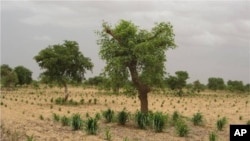
At a time when forests around the world are falling to make room for crops to feed more and more people, the opposite is happening in parts of Africa’s Sahel.
Farmers in this semi-arid region below the Sahara desert are growing more trees than they did three decades ago and they’re producing more crops and eating better because of it.
This transformation is taking place without much involvement from the usual international development agencies.
Going green
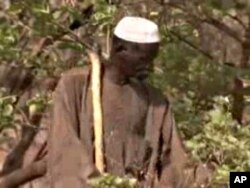
A recent documentary called "The Man Who Stopped the Desert" shows how Burkinabe farmer Yacouba Sawadogo has raised a forest where before there was nothing but barren land.
"Trees have a very important role to plays in nature," he says in the film. "They make rain fall and we can use them for other things as well."
By sharing what he has learned with neighboring farmers, the documentary shows how he and other innovative local farmers are helping to lead a remarkable environmental transformation in parts of the Sahel.
One of the early pioneers to promote this transformation was Tony Rinaudo, today with World Vision Australia, an anti-poverty non-governmental organization. However, Rinaudo says NGOs and international donors have not been the driving force.
"Much of the response has actually come from the farmers and the communities themselves, as opposed to NGOs and the government. Once the farmers have embraced and accepted this technology they’ve practiced it and they’ve shared it with their neighbors and it’s spread from farmer to farmer. So that’s been very exciting."

Transformation
The results have been most dramatic in Niger, where an estimated five million hectares are greener today than they were three decades ago. That’s an area about the size of Costa Rica.
But farmers are not doing it simply for the love of trees. Crops near trees tend to grow better in Niger's harsh, windswept environment. Trees block the wind. Their leaves fertilize the soil and protect the crop from drought by holding the moisture in the soil.
And that’s especially important in the Sahel, where drought and hunger are regular visitors. Just last year, drought left millions in Niger facing malnutrition.
During another drought in 2005, researchers compared villages where farmers tended trees to those that did not.
"The population of those villages really survive better than those who don’t have trees on their own farm because they can cut wood and take to the big city to sell and get some money to buy cereals," says Mahamane Larwanou of the African Forest Forum. "And also, they use the leaves and the fruits of those tree species just to survive."
Vested interest
If trees provide such clear benefits, then why have so many farmers been cutting them down? Experts say growing population has put pressure on farmers to plow up more land.
But part of the reason dates to French colonial policies which gave the state ownership of all trees and products derived from them. Larwanou says that was a strong disincentive for farmers to protect them.
"Even if you put all your effort into regenerating trees on your own farm, and then you don’t have the right to go and use it, what is the sense of doing that?"
Larwanou says a change in Niger’s forestry policy has helped drive the re-greening of this part of the Sahel.
Shared lessons
Now, some experts are working to bring these lessons to farmers across the continent. As climate change threatens to bury more of the Sahel under shifting sands, they hope to encourage more farmers to re-green their land.
Burkina Faso’s Yacouba Sawadogo is already convinced. "Nobody is looking after our forests. The population has grown, and the forests are suffering. If you cut down 10 trees in a day, and you don’t plant any in a year, then we are heading for destruction."