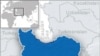



The head of Iran's Bushehr nuclear power plant has confirmed a computer worm infected some of the facility's software, but says the plant's main systems are all safe.
Bushehr Project Director Mahmoud Jahfari told state media an attack by the Stuxnet computer worm has had no impact on the operations of the nuclear power plant.
Jahfari said investigations showed that some private software belonging to Bushehr employees had been contaminated. He added that authorities are working to counter the attacks.
Iranian authorities had earlier acknowledged the worm has infected systems throughout the country, but said it had caused no serious damage.
Stuxnet, a self-replicating worm, has distinguished itself as the first known to be designed to take over industrial control systems. It is able to penetrate computer systems not connected to the internet.
The worm was detected earlier this year and has spread around the world. Iran is believed to be the most heavily affected, suffering an estimated 60 percent of the attacks.
The director of information technology at the Iranian Ministry of Industries and Mines, Mahmud Liai, told state media "an electronic war has been launched against Iran."
Several cyber experts point to the sophistication of the worm as an argument it might be the work of a state program, while political observers suggest the same, given that Iran has suffered disproportionately.
Political Science Professor Said Sadek of the American University in Cairo.
"It is very clear there was an attempt to send a strong message to Iran and its nuclear program by informing the Iranian authorities that their program is not immune and that someone can enter and penetrate and destroy and sabotage the whole process," Sadek said.
Sadek says because of the secrecy of the Iranian government and its tendency to downplay negative developments, it is difficult to tell what the full impact of Stuxnet may be.
The Bushehr plant is not believed to play any significant role in what many Western nations believe is Iran's desire to build a nuclear weapon, a goal Tehran denies.