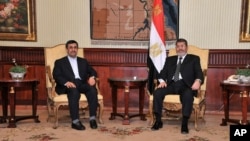
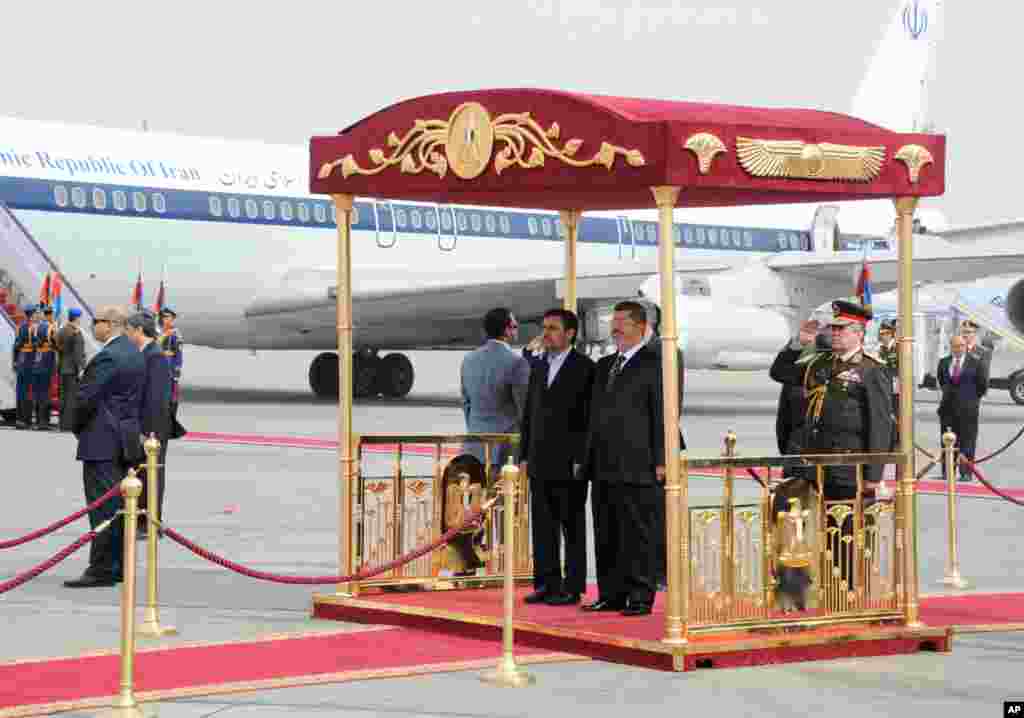
Iran's President Mahmoud Ahmadinejad and Egyptian President Mohamed Morsi pose for photographers in Cairo, Egypt, February 5, 2013. (Egyptian Presidency Handout)
CAIRO —
Iranian President Mahmoud Ahmadinejad is in Cairo, the first leader of the Islamic Republic to visit Egypt since the countries broke relations more than 30 years ago. Ahmadinejad embraced fellow Islamist, Egyptian President Mohamed Morsi, upon his arrival.
The Iranian leader is in the capital for a summit of the Organization of Islamic Cooperation, but warming relations between Egypt and Iran dominated the first day of the trip.
"I will try to pave the ground for developing cooperation between Iran and Egypt," Ahmadinejad was quoted as saying before the trip by Iranian state media.
Still, Sheikh Ahmed al-Tayeb told Ahmadinejad that his Shi'ite-led government must refrain from interfering in the affairs of Gulf Arab states and must give full rights to Sunnis living in Iran. He also urged Ahmadinejad to "respect Bahrain as a sisterly Arab state" and rejected "the spread of Shi'ism" in Sunni countries.
While Shi'ite-led Iran does not have full diplomatic ties with Egypt, broken in 1980 over Iran's revolution and Egypt's recognition of Israel, the visit pushes the nations closer in that direction.
The Organization of Islamic Cooperation Summit
1/10Shimoliy Iroqning Irbil shahri yaqinida qochoqlar uchun iftorlik dasturxoni tayyorlanmoqda, 29-iyun, 2014-yil.
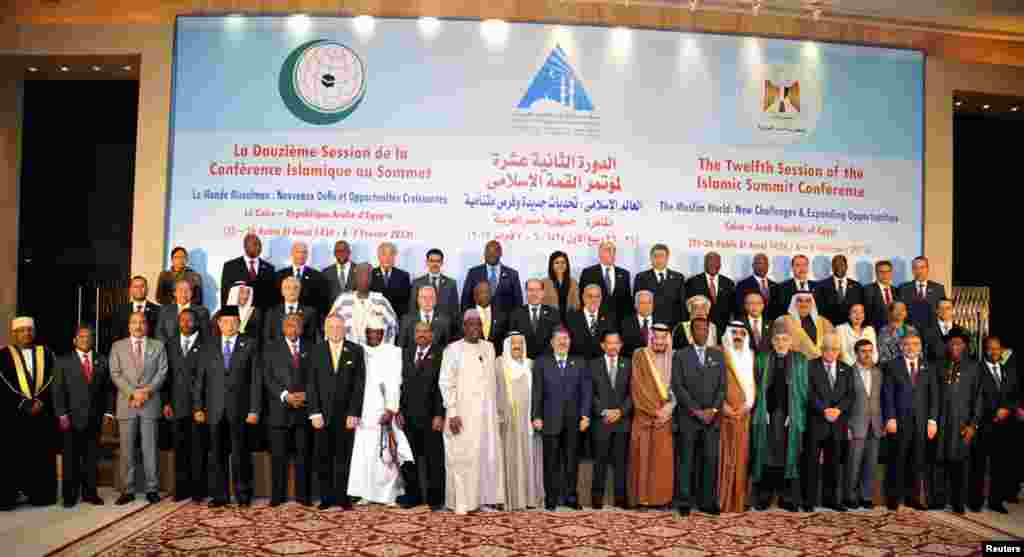
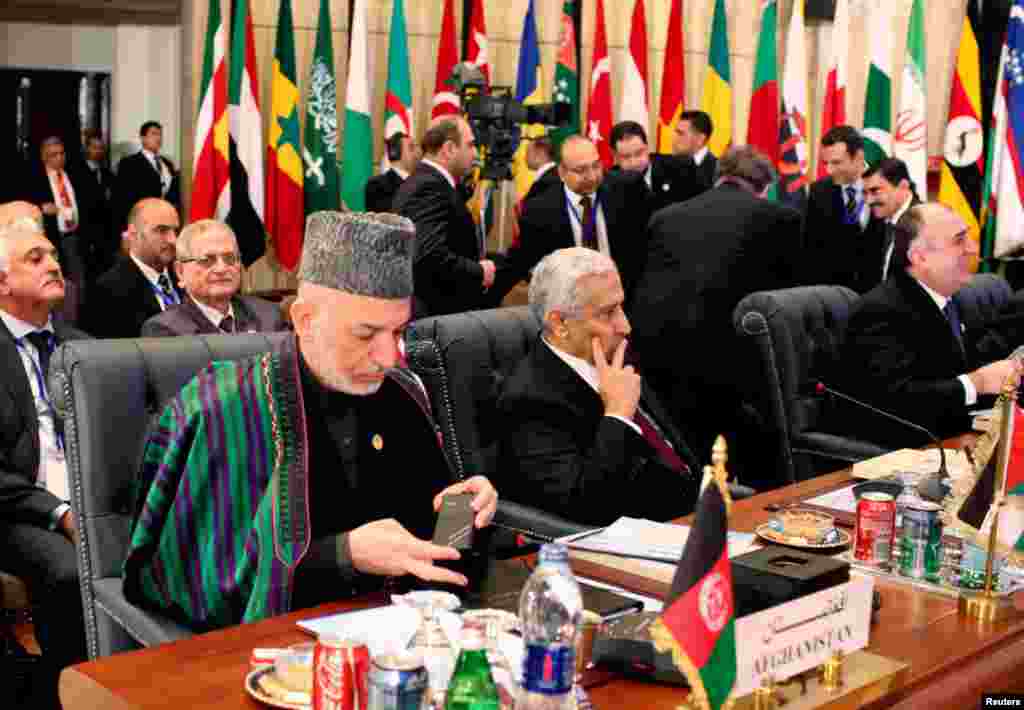
12th summit of the Organization of Islamic Cooperation began in Cairo, Egypt, February 6, 2013. The summit aims to address a range of issues including Palestinian statehood, the Syrian crisis, poverty in the Islamic world and conflicts in Afghanistan and Somalia.
12th summit of the Organization of Islamic Cooperation began in Cairo, Egypt, February 6, 2013. The summit aims to address a range of issues including Palestinian statehood, the Syrian crisis, poverty in the Islamic world and conflicts in Afghanistan and Somalia.
Show moreShow less
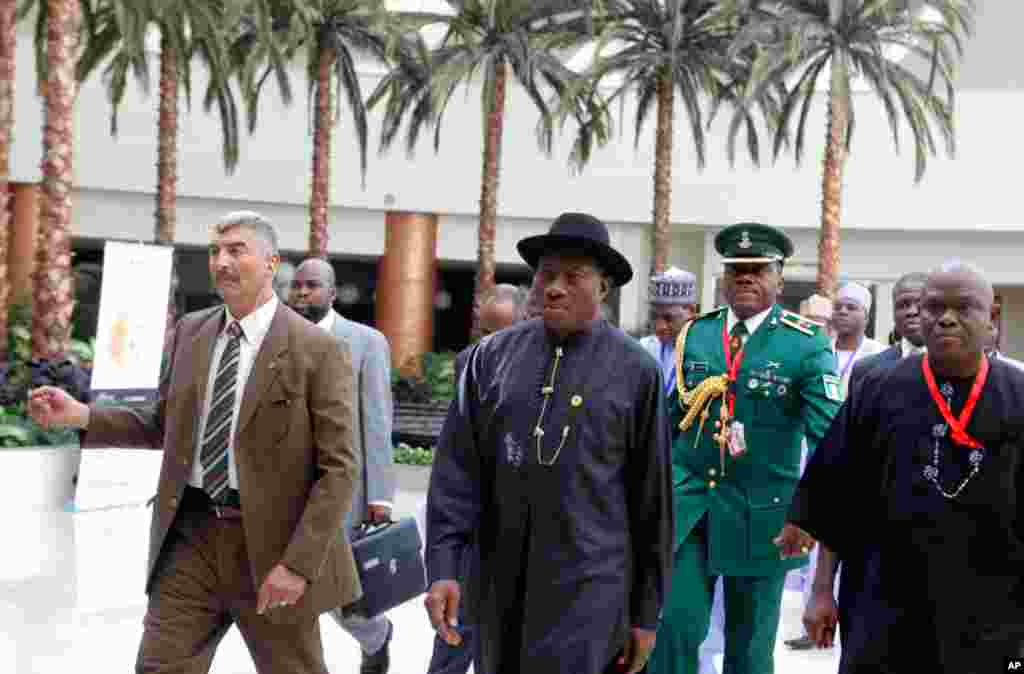
3/10Nigerian president Goodluck Jonathan, surrounded by security and members of his delegation at the 12th summit of the OIC, February 6, 2013.
12th summit of the Organization of Islamic Cooperation began in Cairo, Egypt, February 6, 2013. The summit aims to address a range of issues including Palestinian statehood, the Syrian crisis, poverty in the Islamic world and conflicts in Afghanistan and Somalia.
Show moreShow less
4/10Egyptian President Mohamed Morsi greets Iran's President Mahmoud Ahmadinejad before the opening OIC summit in Cairo, February 6, 2013.
12th summit of the Organization of Islamic Cooperation began in Cairo, Egypt, February 6, 2013. The summit aims to address a range of issues including Palestinian statehood, the Syrian crisis, poverty in the Islamic world and conflicts in Afghanistan and Somalia.
Show moreShow less
5/10香港学生预演占领中环 (美国之音海彦拍摄)
12th summit of the Organization of Islamic Cooperation began in Cairo, Egypt, February 6, 2013. The summit aims to address a range of issues including Palestinian statehood, the Syrian crisis, poverty in the Islamic world and conflicts in Afghanistan and Somalia.
Show moreShow less
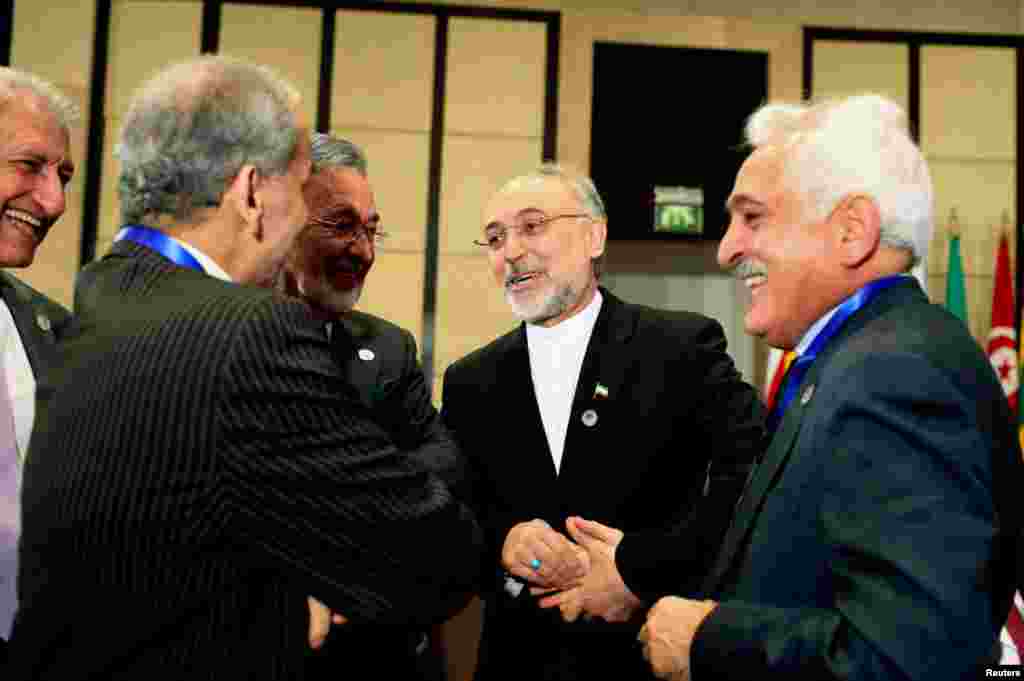
6/10Iran's Foreign Minister Ali Akbar Salehi (2nd R) talks with other attendees before the start of the OIC summit in Cairo February 6, 2013.
12th summit of the Organization of Islamic Cooperation began in Cairo, Egypt, February 6, 2013. The summit aims to address a range of issues including Palestinian statehood, the Syrian crisis, poverty in the Islamic world and conflicts in Afghanistan and Somalia.
Show moreShow less
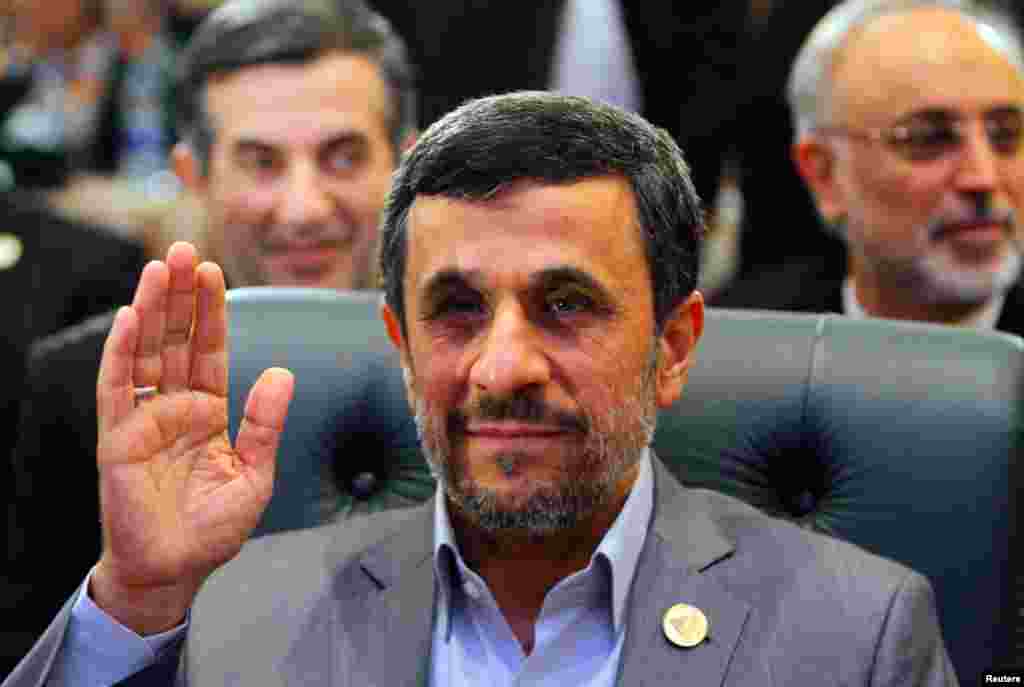
7/10Iran's President Mahmoud Ahmadinejad attends the OIC summit in Cairo, February 6, 2013.
12th summit of the Organization of Islamic Cooperation began in Cairo, Egypt, February 6, 2013. The summit aims to address a range of issues including Palestinian statehood, the Syrian crisis, poverty in the Islamic world and conflicts in Afghanistan and Somalia.
Show moreShow less
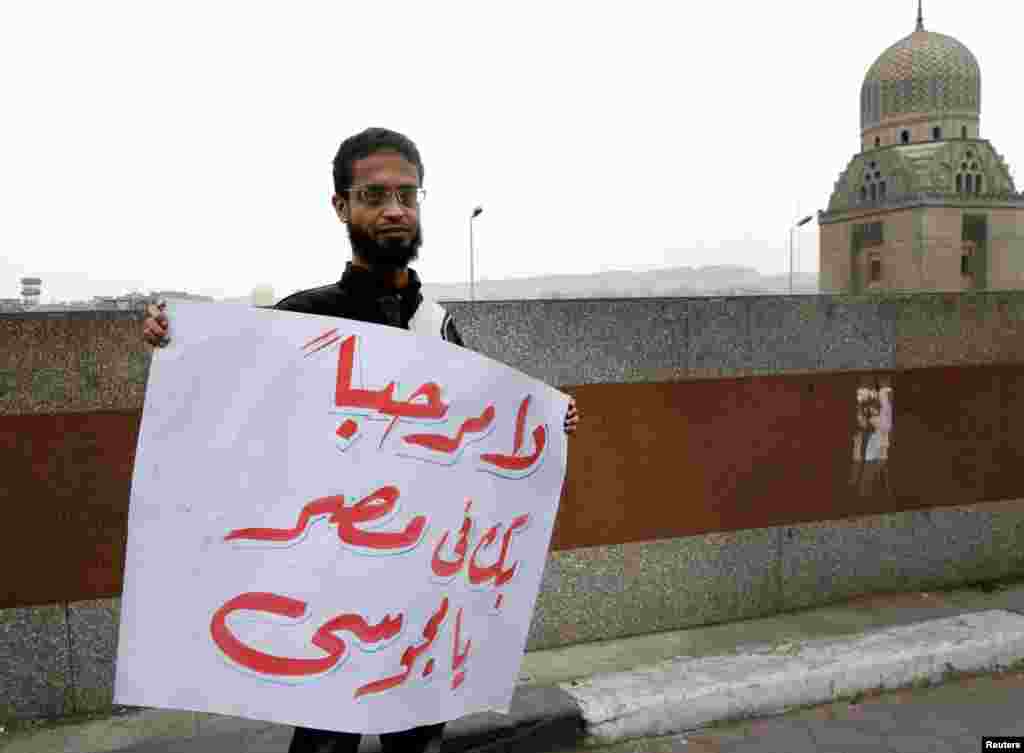
8/10A man holds a sign in Arabic reading, "(Ahmedinejad) You are not welcome in Egypt", in front of the al-Azhar mosque during Ahmedinejad's visit in Cairo, February 5, 2013.
12th summit of the Organization of Islamic Cooperation began in Cairo, Egypt, February 6, 2013. The summit aims to address a range of issues including Palestinian statehood, the Syrian crisis, poverty in the Islamic world and conflicts in Afghanistan and Somalia.
Show moreShow less
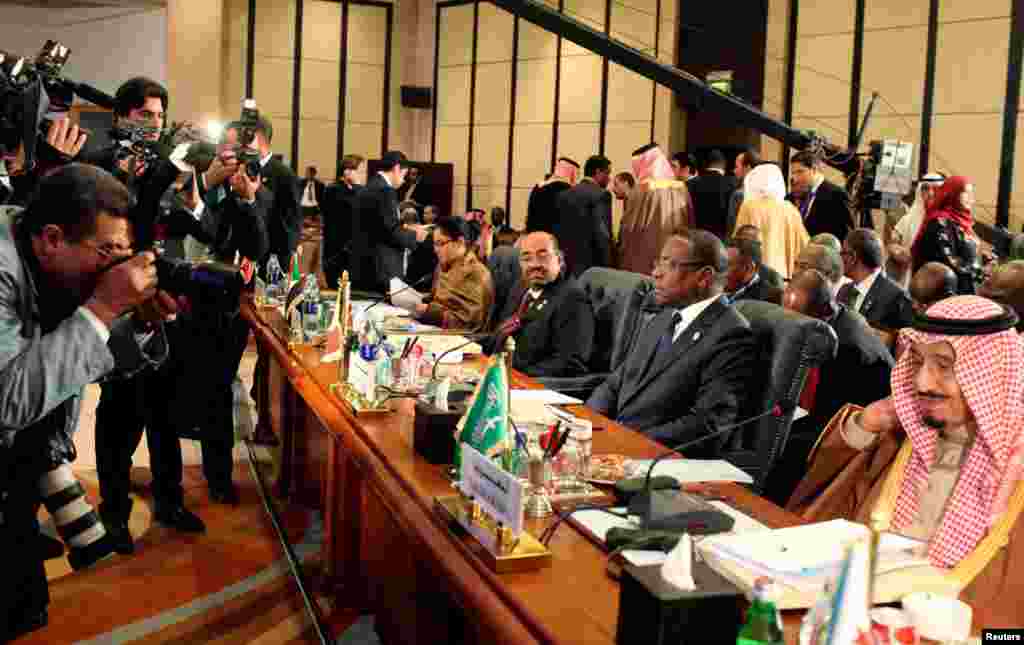
9/10Photographers take pictures of Saudi Crown Prince Salman bin Abdulaziz Al Saud (R) before the start of the Organization of Islamic Cooperation summit in Cairo, February 6, 2013.
12th summit of the Organization of Islamic Cooperation began in Cairo, Egypt, February 6, 2013. The summit aims to address a range of issues including Palestinian statehood, the Syrian crisis, poverty in the Islamic world and conflicts in Afghanistan and Somalia.
Show moreShow less
10/10Iran's President Mahmoud Ahmadinejad and Egyptian President Mohamed Morsi participate in an arrival ceremony at the airport in Cairo, Egypt, February 5, 2013. (Egyptian Presidency Handout)
12th summit of the Organization of Islamic Cooperation began in Cairo, Egypt, February 6, 2013. The summit aims to address a range of issues including Palestinian statehood, the Syrian crisis, poverty in the Islamic world and conflicts in Afghanistan and Somalia.
Show moreShow less
Previous slide
Next slide
Israel remains a factor in relations.
On the eve of his trip, Ahmadinejad told Lebanon's al- Mayadeen TV that “the political geography of the region will change” if Egypt and Iran take a unified stance on the Palestinian question.
Morsi's background as a leader of the Muslim Brotherhood has translated to close ties with the Iranian-backed Palestinian faction Hamas. But Egypt's new government says it will abide by its peace treaty with Israel.
Syria
More immediately divisive is the question of Syria. Morsi used a breakthrough visit to Tehran last year to castigate Iranian leaders for backing the Syrian government.
Iran has supported popular uprisings in Egypt, Libya and Bahrain, for example, but has come down strongly in favor of the Syrian status quo - a government led by Alawites, a Shi'ite offshoot.
Despite the differences, some political observers believe Iran is keen to nurture ties with Egyptian Islamists to act as a regional counterweight to Tehran's rivals in the Sunni-led Arab states of the Gulf.
"Iran has tried, by getting closer to Egypt, to eliminate the Gulf and to give a much more regional role to Egypt and, in this way, they supported the Muslim Brotherhood leadership,” said Abdulaziz Sager, the head of the Saudi-based Gulf Research Center.
Still, Egypt has practical concerns, including monetary support from the Gulf in the form of direct aid and emigrant workers' remittances.
It also is trying to keep relations on course with the United States, another source of aid and the driving force to isolate Iran over its nuclear program.
Political observers say such thorny issues mean that while cooperation between Egypt and Iran may be on the rise, full relations appear still a ways off.