Iraq Militia Issues Threat Against Turkish Interests
An Iraqi militia on Thursday issued a threat against Turkish interests in Iraq, responding to what it described as Turkey's ``blatant interference'' in the country's internal affairs.
Relations between Turkey and Iraq have been deteriorating over the past year, with the two countries trading accusations of inciting sectarian tensions, and summoning each other's ambassadors in tit-for-tat manoeuvres.
Ankara has angered Baghdad by cultivating close ties with Iraq's autonomous Kurdish region, which has defied the central government by signing contracts with foreign oil firms.
Turkish Prime Minister Tayyip Erdogan this week accused Iraqi premier Nuri al-Maliki's government of behaving in a sectarian manner and warned Iraq was in danger of being plunged into strife like that in neighbouring Syria.
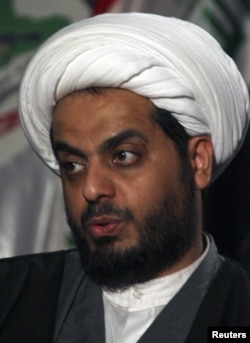
Iraq's Shi'ite militia leader Qais al-Khazali, the leader of Asaib al-Haq, speaks to Reuters during an interview in Baghdad, Iraq, January 4, 2012.
``We refute and denounce the recent comments of the Turkish prime minister and consider them a blatant interference in the internal affairs of Iraq,'' read a statement released by Asaib al-Haq, which carried out some of the most prominent attacks on foreigners during the Iraq war.
``Any attempt to rip apart [Iraq's national fabric] by playing on sectarianism and spreading the poison of division damages the interests of all, and whoever does this will not be safe from harm.''
Asaib al-Haq fighters broke away from anti-U.S Iraqi cleric Moqtada al-Sadr's Mehdi Army. The militia, one of several in Iraq, is well-organised but its numbers are unknown.
Another source of tension between Baghdad and Ankara is the presence in Turkey of fugitive Iraqi Vice President Tareq al-Hashemi, who has been sentenced to death in Baghdad on charges of running death squads.
Hashemi, a Sunni Muslim who fled to Turkey earlier this year when Shi'ite-led Iraqi authorities sought his arrest, has denied the charges against him and accused Maliki, a Shi'ite Muslim, of conducting a political witch-hunt against Sunni opponents.
Reuters is a news agency founded in 1851 and owned by the Thomson Reuters Corporation based in Toronto, Canada. One of the world's largest wire services, it provides financial news as well as international coverage in over 16 languages to more than 1000 newspapers and 750 broadcasters around the globe.