Mohamed Morsi, First Freely Elected Egyptian President
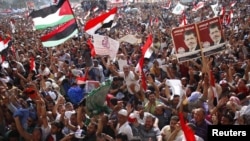
Supporters of Muslim Brotherhood's presidential candidate Mohamed Morsi celebrate his victory at Tahrir Square in Cairo, June 24, 2012.
CAIRO - The Muslim Brotherhood's Mohamed Morsi has been elected the next president of Egypt. The victory for the long-repressed Islamist group opens a new act in the central drama of the nation's politics over the past 60 years - the Brotherhood versus the military.
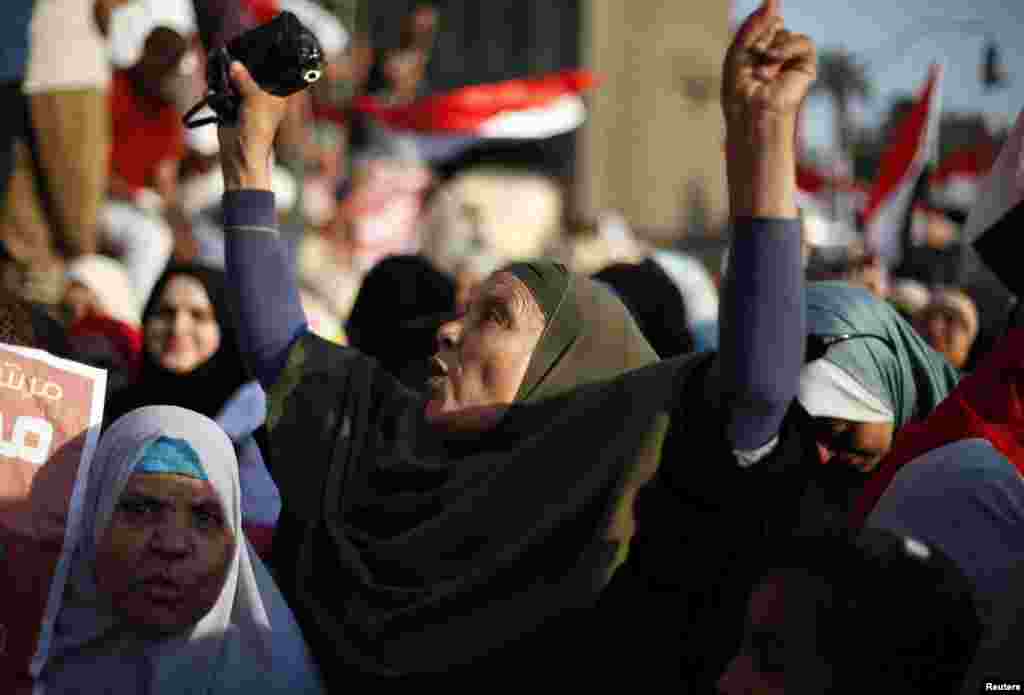
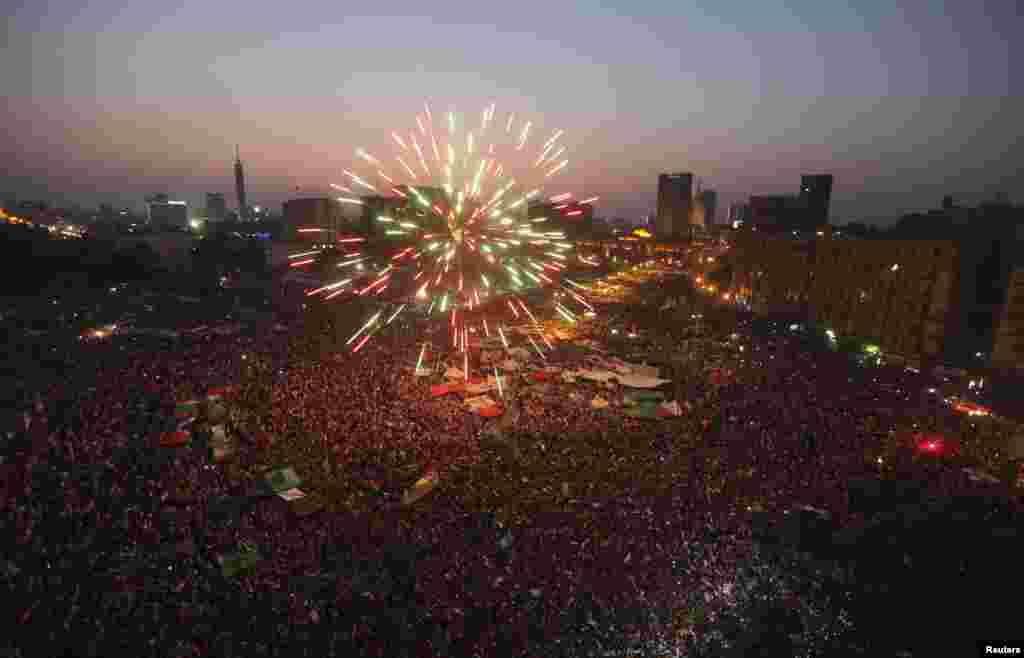
Morsi supporters gathered on Tahrir Square went wild with the news. Thousands roared their approval, waved flags and set off fireworks to celebrate the victory.
Egypt Interim Constitution Declaration
Egypt's Interim Constitution Declaration
Published by ruling Supreme Council of the Armed Forces on June 17
Amends the council's Constitutional Declaration of March 2011
Requires next president to take oath of office before the Supreme Constitutional Court because parliament is dissolved
Gives Supreme Council of the Armed Forces authority over all affairs of the military
Makes council chairman, Field Marshal Hussein Tantawi, armed forces commander, defense minister
Gives military leaders power to appoint panel to draft new constitution
Postpones new parliamentary elections until new constitution is approved
Grants military leaders powers to initiate legislation until new parliament elected
With the declaration by election commission head Farouk Sultan, Egypt has been launched on a path unthinkable to Morsi's predecessor, ousted President Hosni Mubarak. Once a political prisoner under Mubarak, the 60-year-old Morsi has become the man to replace him.
But it is a far hollower position than the one the president-elect ran for. Egypt's ruling military council has taken for itself key executive powers as well as legislative control after dissolving the Muslim Brotherhood-led parliament.
The announcement of the election winner ended a tense week in which results were delayed as the commission went over complaints from both sides of vote fraud. Both Morsi and his rival Ahmed Shafiq had claimed victory earlier in the week, and many saw the wait as a period of brinksmanship between the Brotherhood, which gave a credible account of its electoral success, and the ruling military council over the post-election balance of power.
The Supreme Council of the Armed Forces, which has headed Egypt since the downfall of Hosni Mubarak in an uprising last year, promised to hand over power to a civilian leadership by the end of this month.
Its actions over the past 10 days have cast deep doubt on that pledge, and have prompted Morsi to form a national unity front with secularists, liberals and other former rivals as a challenge to the possibility of continued military dominance.
Mohamed Morsi Becomes First Freely Elected Egyptian President
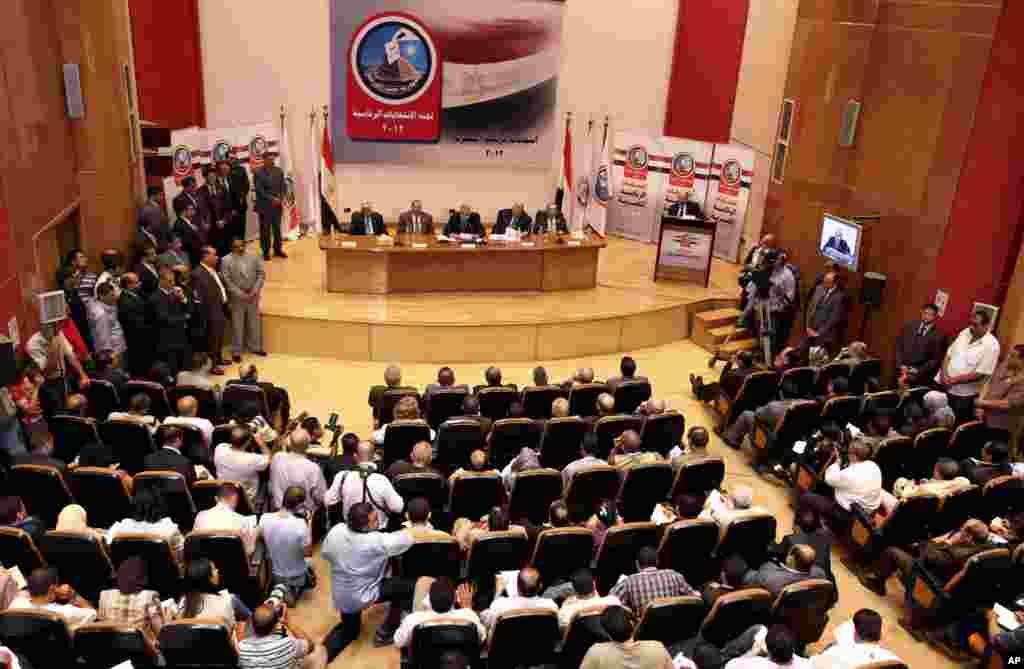
1/10Egypt's election committee announces the result of the presidential election at the State Information Service headquarters in Cairo, Egypt, June 24, 2012. (AP)
The Muslim Brotherhood's Mohamed Morsi has been elected the next president of Egypt. The victory for the long-repressed Islamist group opens a new act in the central drama of the nation's politics over the past 60 years - the Brotherhood versus the military.
Show moreShow less
2/10In this image taken from Egypt State TV, Supporters of Muslim Brotherhood President Mohammed Morsi react to the announcement of his victory in Tahrir Square in Cairo, Egypt, June 24, 2012. (Reuters)
The Muslim Brotherhood's Mohamed Morsi has been elected the next president of Egypt. The victory for the long-repressed Islamist group opens a new act in the central drama of the nation's politics over the past 60 years - the Brotherhood versus the military.
Show moreShow less
3/10Supporters of Muslim Brotherhood's presidential candidate Mohamed Morsi celebrate his victory at Tahrir Square in Cairo, June 24, 2012. (Reuters)
The Muslim Brotherhood's Mohamed Morsi has been elected the next president of Egypt. The victory for the long-repressed Islamist group opens a new act in the central drama of the nation's politics over the past 60 years - the Brotherhood versus the military.
Show moreShow less
4/10Supporters of the Muslim Brotherhood's presidential candidate Mohamed Morsi carry a poster for him as they celebrate his victory in the presidential elections in Cairo, June 24, 2012. (Reuters)
The Muslim Brotherhood's Mohamed Morsi has been elected the next president of Egypt. The victory for the long-repressed Islamist group opens a new act in the central drama of the nation's politics over the past 60 years - the Brotherhood versus the military.
Show moreShow less
5/10Supporters of Muslim Brotherhood's presidential candidate Mohamed Morsi celebrate his victory at the election at Tahrir Square in Cairo, June 24, 2012. (Reuters)
The Muslim Brotherhood's Mohamed Morsi has been elected the next president of Egypt. The victory for the long-repressed Islamist group opens a new act in the central drama of the nation's politics over the past 60 years - the Brotherhood versus the military.
Show moreShow less
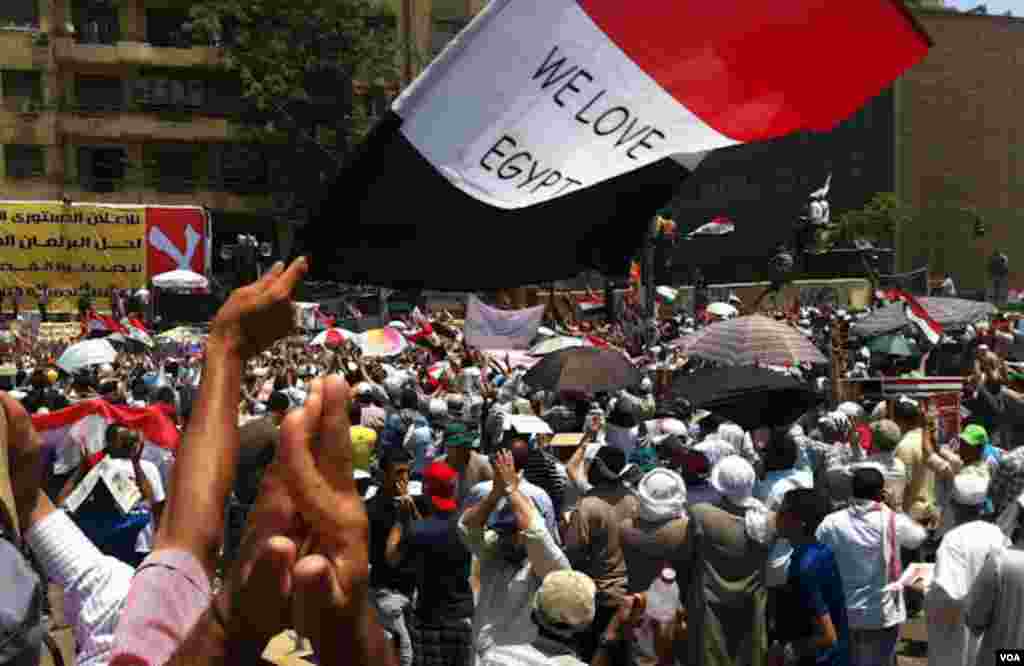
6/10A rally on behalf of the Muslim Brotherhood's Mohamed Morsi on Tahrir Square, Cairo, Egypt, June 24, 2012. (VOA/Elizabeth Arrott)
The Muslim Brotherhood's Mohamed Morsi has been elected the next president of Egypt. The victory for the long-repressed Islamist group opens a new act in the central drama of the nation's politics over the past 60 years - the Brotherhood versus the military.
Show moreShow less
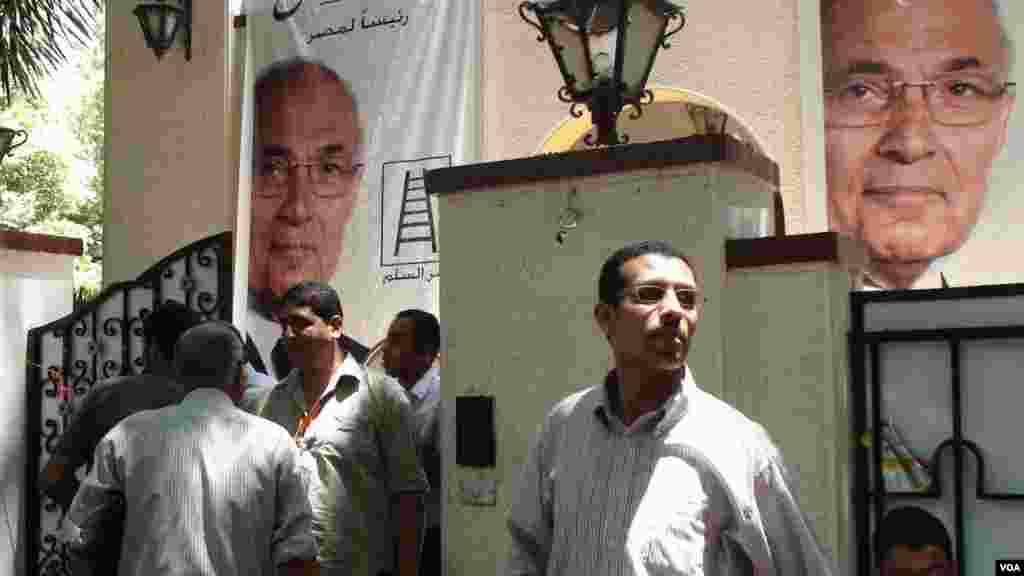
7/10Supporters of ex-prime minister Ahmed Shafiq outside campaign headquarters in Dokki, Cairo, June 24, 2012. (VOA/ E. Arrott)
The Muslim Brotherhood's Mohamed Morsi has been elected the next president of Egypt. The victory for the long-repressed Islamist group opens a new act in the central drama of the nation's politics over the past 60 years - the Brotherhood versus the military.
Show moreShow less
8/10Fireworks explode as supporters of Muslim Brotherhood's presidential candidate Mohamed Morsi celebrate his victory in the election at Tahrir Square in Cairo, June 24, 2012. (Reuters)
The Muslim Brotherhood's Mohamed Morsi has been elected the next president of Egypt. The victory for the long-repressed Islamist group opens a new act in the central drama of the nation's politics over the past 60 years - the Brotherhood versus the military.
Show moreShow less
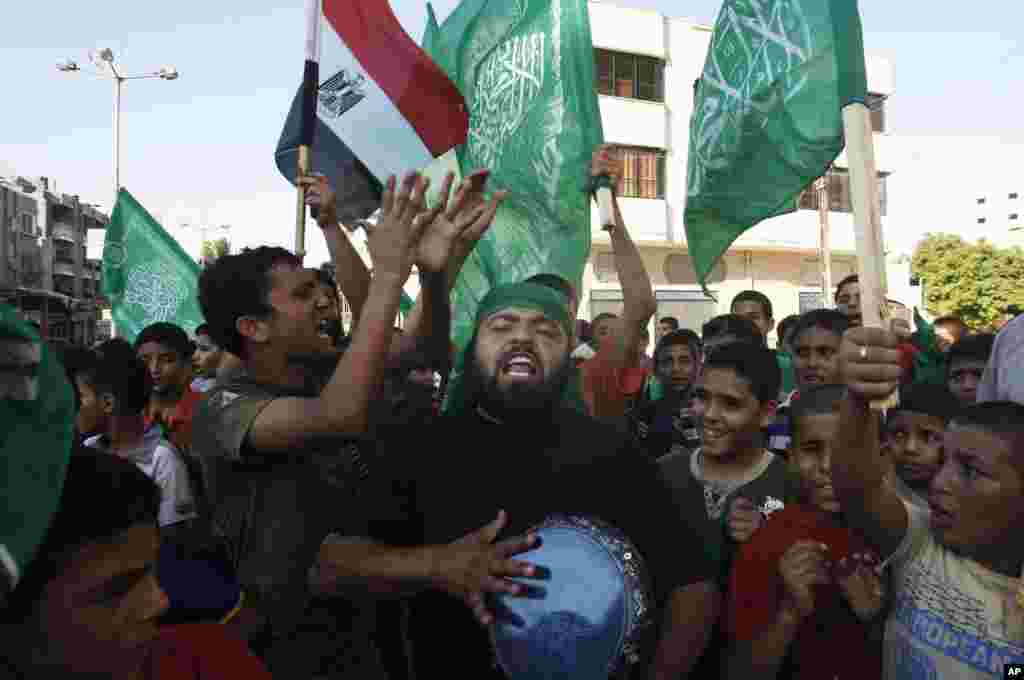
9/10Palestinians wave green Islamic flags that represent Hamas and the Egyptian national flag as they celebrate the victory of Mohammed Morsi in the Egyptian presidential elections, in Gaza City, June 24, 2012. (AP)
The Muslim Brotherhood's Mohamed Morsi has been elected the next president of Egypt. The victory for the long-repressed Islamist group opens a new act in the central drama of the nation's politics over the past 60 years - the Brotherhood versus the military.
Show moreShow less
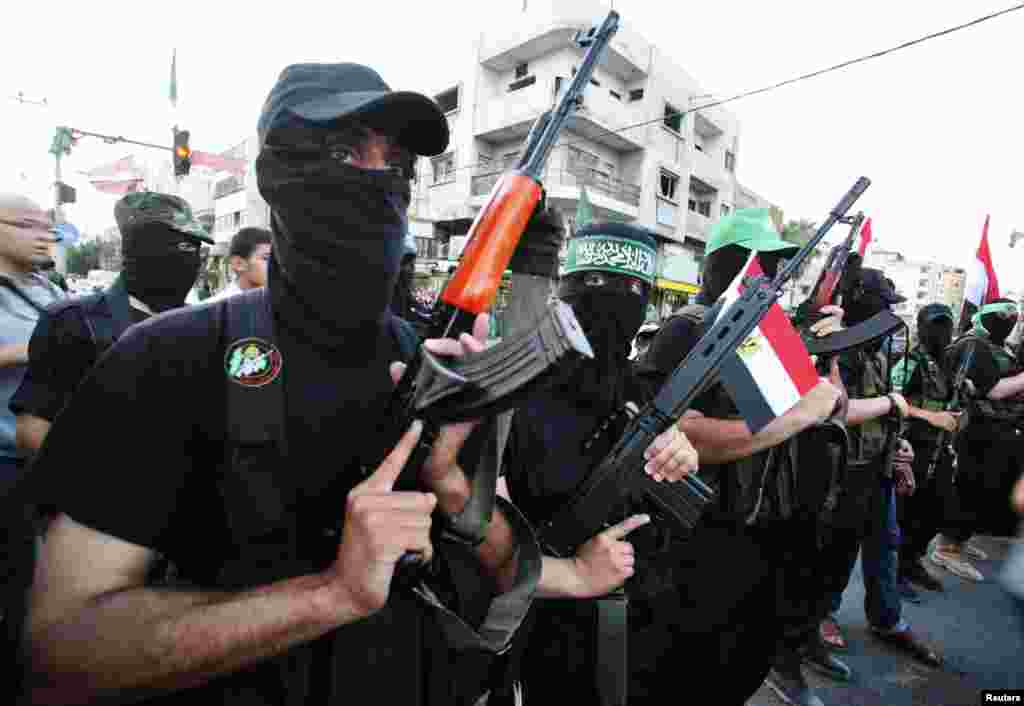
10/10Hamas militants celebrate in the streets in Gaza City after Islamist Mohamed Morsi of the Muslim Brotherhood was declared Egypt's first democratic president, June 24, 2012. (Reuters)
The Muslim Brotherhood's Mohamed Morsi has been elected the next president of Egypt. The victory for the long-repressed Islamist group opens a new act in the central drama of the nation's politics over the past 60 years - the Brotherhood versus the military.
Show moreShow less
Previous slide
Next slide
Earlier in the week, Shafiq had promised to accept the results, and to be the first to call Morsi should he win. But concerns remain over how his supporters will react.
That fear of violence no matter who won the polarizing race prompted stepped up security across Cairo and key points around the country.
Morsi has promised to make security and stability key issues under his leadership.