



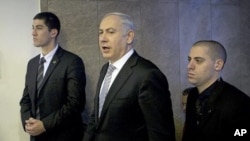
Growing tensions between Israel and Iran topped the agenda at the weekly Cabinet meeting in Jerusalem.
Israeli Prime Minister Benjamin Netanyahu opened the Cabinet meeting by referring to a statement last week by Iran’s supreme leader Ayatollah Ali Khamenei, who described Israel as “a cancerous tumor that must be cut off.”
Netanyahu said the only way to ensure Israel’s survival in a region where Iran’s ruler talks “about destroying Israel,” is to continue to develop the nation’s military might.
A strong army “is the only guarantee of peace,” he said, “and Israel's only defense if peace unravels.”
Iran says its nuclear program is for peaceful purposes, but Israel and the West believe Tehran is building nuclear weapons that could threaten the existence of the Jewish state. Israeli officials are warning publicly that Iran is close to “the point of no return”- the point where military action to stop Iran from acquiring the atom bomb would be too late.
Israel has said time and again that if international sanctions against Iran fail, it is prepared to take military action on its own. This has raised growing alarm in the West.
Last week, U.S. Defense Secretary Leon Panetta was quoted by The Washington Post as saying that he believes Israel might attack Iran this year, possibly as early as April.
Jerusalem Post defense analyst Yaakov Katz says time for a diplomatic solution is running out.
“The window is definitely closing,” he said.
Katz says Israel has the firepower to back up the threat.
“Israel has created over the years a viable military option, that is in place potentially, if it decides to take unilateral military action to stop Iran’s nuclear program,”
Many analysts question how effective an Israeli attack would be, considering that Iran is 1,200 kilometers from Israel and its nuclear facilities are spread out and fortified deep underground. But last week, Israel’s Deputy Premier Moshe Ya’alon, a former army chief, said that all of Iran’s nuclear sites are “vulnerable” to military strikes.
| Join the conversation on our social journalism site - Middle East Voices. Follow our Middle East reports on Twitter and discuss them on our Facebook page. |