\Members of the Ivory Coast diaspora say they feel anguished and powerless as the situation disintegrates in their divided home country. They say they are trying to help from abroad, but that their relatives increasingly are cut off from the rest of the world.
One of those grieving a relative recently killed in clashes in the Abidjan neighborhood of Abobo is Ivorian national Mamadou Toure who lives in the eastern U.S. state of Maryland.
He blames incumbent President Laurent Gbagbo, who has refused to leave office after elections last year that the United Nations and foreign governments say he lost. "I do not know how this regime keeps killing kids, adults and women. I do not know what we can do," Toure said.
Toure says his younger brother was sitting in a courtyard a few days ago when he was killed by an explosion.
Anti-Gbagbo armed insurgents have been trying to keep the army away from the Abobo neighborhood. Residents are calling the area from which tens of thousands of people are fleeing Baghdad.
On Thursday, witnesses say troops loyal to Mr. Gbagbo killed at least seven women who had gathered for a protest, supporting the United Nations recognized presidential winner, Alassane Ouattara.
Toure says he has tried to bring awareness in the United States to the rapidly deteriorating situation in Ivory Coast. But, he says, that there is not much more he can do.
"We already protested in front of the White House, also in the Congress, the Senate. We hope that President Obama will help us, and the United Nations. I am so mad with the United Nations, more than everything. The United Nations has been in Ivory Coast. They know what is happening in Ivory Coast. And the military of the United Nations, they are supposed to be protecting civilians," Toure said.
Another member of the Ivorian diaspora is Ma Diakite of Virginia. She recently called her brother who lives in the north of Ivory Coast, where water and electricity have been cut off. She says she feels powerless. "We do not know what to do. You are so far from back home. What can we do? Just pray for the people -- our parents and everybody in Ivory Coast," she said.
Rebels have occupied northern Ivory Coast since 2002, calling for free and fair elections. But in the last election, the country’s constitutional council threw out votes from the north, saying there was massive fraud, giving the victory to Mr. Gbagbo.
Diakite says it is urgent that all Ivorians come together, regardless of political, ethnic or regional differences, rather than tear the country apart even further.
"You know, everyone in Ivory Coast is mixed. You have a brother somewhere; you have a cousin by marriage and all this. It is a mess. They have to find a solution quickly, quickly. Killing is not a solution. When you start a war, you know when you start, but you do not know where the war is going to end," Diakite said.
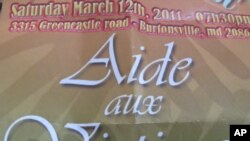
Another Ivorian living in the United States, Guy Kouamela, is organizing a fundraising event in Maryland after he heard about thousands of refugees at a Catholic mission in the western Ivory Coast town of Duekoue. Fighting between rebels and Mr. Gbagbo’s security forces have taken place in nearby villages in recent days, forcing aid workers to leave the area.
Kouamela says Ivory Coast is on the brink of a humanitarian disaster. "We are here in the United States, enjoying a good situation, enjoying democracy. But what is going on in Ivory Coast right now, it is very, very bad. We have people dying and starving. And according to the United Nations in Abidjan, the main city alone, there are 200,000 refugees," said Kouamela.
Kouamela says concerned people can come to his fundraising dinner or donate money online.
A complicating factor for Ivory Coast's diaspora community is that money transfer services in the country such as Western Union have run out of cash, forcing residents to cross borders to receive money.
Ivory Coast Diaspora Feels Powerless Against Violence in Homeland