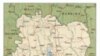



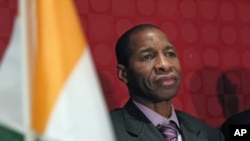
The Ivory Coast ambassador to the United Nations is calling for more international pressure to make incumbent President Laurent Gbagbo cede power. The Ivorian diplomat warned the situation could turn more violent if outside help is insufficient to force out Gbagbo.
Youssouf Bamba was the first appointee by internationally-recognized President Alassane Ouattara to take up a diplomatic posting following last year's disputed election between Ouattara and Gbagbo.
Economic sanctions by the European Union, the Economic Community of West African states, or ECOWAS, and the United States against Gbagbo and his government have since been applied, but Bamba would like to see all U.N. member states follow suit.
"As long as Mr. Gbagbo clings to power, it is not enough," said Bamba. "Pressure should still be mounting until he steps down. He has to understand he cannot wrestle himself against the whole world. His stubbornness is suicidal. And, unfortunately, he is doing so much harm to the Ivorian people. One other thing I have to mention since I have the opportunity to speak - there is the situation of human rights. Mr. Gbagbo has to stop killing his people."
While Bamba was in Washington, the United Nations reported that there have been 296 deaths in post-election violence in Ivory Coast since mid-December.
In some neighborhoods of the southern commercial capital, Abidjan, crude letter markings have been scrawled outside homes and businesses, identifying some of Ouattara’s supporters by their northern or central ethnic groups as potential targets.
Bamba said the climate of intimidation is one reason there have not been massive demonstrations like in Egypt or Tunisia.
"The military of Mr. Gbagbo, they are so cruel. If the demonstration is staged, the eve, the very night, they will go to the houses of people to try to kill them," said Bamba.
Gbagbo denies any responsibility in the recent violence and says he won a run-off presidential election in November, as ruled by the country’s constitutional council. That body threw out votes from the rebel-held north and overturned results announced by the national election commission that were certified by the United Nations.
The election was meant to reunite a country divided in two since 2002, but instead it has exacerbated tensions.
Gbagbo and his supporters say they are the victims of an international conspiracy against them.
ECOWAS officials have threatened to use force to remove Gbagbo, who remains in control of Ivory Coast's state media and the army.
Ambassador Bamba said he hopes that an international military buildup can avert further bloodshed and force Gbagbo to leave office.
"Ivorian people used to be rural people. As peasants they are very patient and they wait until they are convinced there is no other way and they will throw everything in this battle. But until then, we are still hoping that the mediation will bring an outcome, an outcome in the sense that Mr. Gbagbo will accept to go, to step down. But if the Ivorian people are convinced there is no other way than that, they will act, believe me," said Bamba.
In December, pro-Gbagbo security forces quickly crushed attempts by Ouattara's supporters to take over government buildings.
Ouattara’s prime minister, Guillaume Soro, also is the leader of the rebels who control the north of Ivory Coast, as well as the perimeter of the hotel where the U.N.-recognized president is staying. U.N. peacekeepers and a French rapid reaction force also are on the ground.
Bamba said a panel of African heads of state mandated by the African Union recently gave Gbagbo one month to leave office.
The U.N. ambassador says a power-sharing government, such as what came about through outside mediation in recent years following violent elections in Kenya and Zimbabwe, is not an option.