



News / Africa

Ivory Coast's Ouattara Seeks Close Ties with Senegal
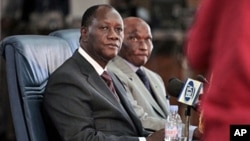
Ivorian President Alassane Ouattara (L) and Senegalese counterpart Abdoulaye Wade listen to a question during a joint press conference in Dakar, May 13, 2011
TEXT SIZE - +

Sworn in as president just last week, Mr. Ouattara now sits at the helm of a deeply divided country still reeling from waves of post-electoral violence that killed at least 3,000 people and displaced more than a million.

In the Senegalese capital Friday, Mr. Ouattara vowed to launch investigations into all war crimes reported since the disputed November election, including those committed by forces loyal to him.

Mr. Ouattara says his wish, his conviction, is to work to bring an end to impunity in Ivory Coast. No one is above the law, he says, and killers will be punished. The law is clear, he says, and there will be no exceptions.

Former president Laurent Gbagbo refused to cede power after losing a November presidential poll, according to U.N.-certified results.

In April, forces loyal to Mr. Ouattara swept through western Ivory Coast to the commercial capital, Abidjan, where they captured Mr. Gbagbo, who remains under house arrest in northern Ivory Coast.

Forces loyal to both men have been accused of atrocities and human rights abuses since the crisis began.

Mr. Ouattara has named a former prime minister to the head of a truth and reconciliation commission aimed at addressing abuses and healing divisions.

It is time, he said, for Ivorians to turn the page.

Mr. Ouattara says he is the elected president of all Ivorians, and his job is to work to reunite Ivorians and build this reconciliation. It is not an easy task after what we have all been through, he says, but there is a common will to emerge from this situation and not repeat past mistakes.

Mr. Ouattara spoke in Dakar after meetings with fellow economist and long-time friend, Senegalese president Abdoulaye Wade, whom he referred to as "a big brother."

Mr. Wade said the visit was one of "work and friendship" that marked the beginning of increased cooperation between the two nations.

You May Like

Experts Weigh In on Challenges of Closing Guantanamo Prison

Former chief military prosecutor at Guantanamo delivers petition to White House with more than 370,000 signatures, demanding facility be closed down immediately More

Karzai to Discuss Enhancing Defense Ties with India

Afghanistan looking for more military aid as it prepares for withdrawal of NATO forces by next year More

India, China Pledge to Overcome Border Tensions

Indian prime minister and Chinese premier attempt to move past tense standoff in the Himalayas during Delhi talks More

Burmese President Opens US Visit with VOA Town Hall Meeting

Ahead of his meeting with President Obama Monday, Thein Sein answered questions on human rights and economic development in his country More

This forum has been closed.
Comments
     
There are no comments in this forum. Be first and add one

Featured Videos

Your JavaScript is turned off or you have an old version of Adobe's Flash Player. Get the latest Flash player.
Video

Video US Oil Surge Could Impact Mideast Geopolitics

The United States will account for a third of new oil supplies over the next five years, and will become energy self-sufficient in 20 years, according to a new report by the Paris-based International Energy Agency (IEA). Although U.S. oil imports from Arab Gulf countries increased last year, analysts predict the U.S. will lose its dependence on Middle East imports, which is expected to have a huge impact on international relations and the balance of power. VOA's Henry Ridgewell reports.