



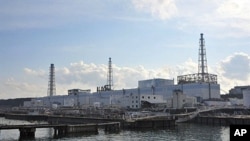
Japan has asked Russia to send a special radiation treatment vessel to help dispose of contaminated water from a Japanese nuclear power plant crippled by last month's massive earthquake and tsunami.
A spokesman for Russia's state-controlled nuclear agency, Rosatom, said Monday Russian officials are considering the request.
The Russian vessel treats radioactive liquids as part of the decommissioning of nuclear submarines. It was built in a joint venture between Russia and Japan.
Also Monday, operators of Japan's crippled Fukushima plant began releasing more than 10,000 tons of contaminated water into the ocean to make room in their storage tanks for water even more radioactive, marking the latest effort to bring overheating reactors at the plant under control.
Watch a related TV report by Mil Arcega
Chief Cabinet Secretary Yukio Edano said the step is "unavoidable" to ensure safety. He said the water to be released is much less radioactive than the water that will be pumped into the storage tanks, mainly from the Fukushima plant's number two reactor.
Officials have recorded levels of radioactivity thousands of times higher than the legal limit in waters near the Fukushima plant, where cooling systems for all six reactors were knocked out by a massive earthquake and tsunami on March 11. Repair crews have identified the probable cause for the leak as a crack in a storage pit near the number two reactor.
Repeated efforts have failed to stop the leak. The Tokyo Electric Power Company ((TEPCO)) tried Sunday to seal the crack in the pit with a mixture of sawdust, shredded newspaper and a plastic polymer that is supposed to expand to several times its size when it hardens. However, there was no noticeable reduction in the radiation level in the ocean.
On Monday, TEPCO began pouring a liquid dye into the water in hopes of tracing the leak. Officials said they will try again to cut off the flow once they determine its path.
The top U.N. atomic energy official said Monday the ongoing disaster at the Fukushima plant has led to global concerns about the safety of nuclear energy. Yukiya Amano said maintaining robust safety standards and transparency are crucial to restoring confidence in the sector.
General Electric's Chief Executive Officer Jeffrey Immelt, whose company designed the Fukushima plant, said Monday that 1,000 engineers from GE and its partner, Hitachi, are working to help mitigate the disaster.
The nuclear crisis has distracted attention from the enormous job of helping survivors from the March 11 quake and tsunami, which washed away whole towns and villages along Japan's northeastern coast. More than 12,100 people have been confirmed dead and more than 15,400 are reported as missing.
Almost 160,000 people are living in temporary shelters.