



News / Asia

Japan Claims Success in Cooling Damaged Nuclear Reactors

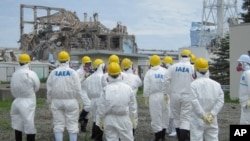
International Atomic Energy Agency (IAEA) inspection team members watch No.3 reactor at the crippled Tokyo Electric Power Co. Fukushima Daiichi nuclear power plant in Fukushima Prefecture, in this handout photo taken and released by TEPCO on May 27, 2011.
TEXT SIZE - +

Japan says it has succeeded in the first stage of a plan to stably cool damaged nuclear reactors at the Fukushima-Daiichi power plant and says it will stick to a previously declared January 2012 timetable for a cold shutdown of the reactors.

A government spokesman says authorities will also consider by January a schedule for allowing 80,000 residents evacuated from areas near the plant to return home.

The updated road map presented Tuesday in Tokyo came as Japanese officials announced a total ban on all shipments of beef cattle from Fukushima prefecture, to counter growing concerns that beef has already entered the food supply system from cattle that ate radioactive straw.

Chief Cabinet Secretary Yukio Edano said Tuesday the government will also inspect all farms in the prefecture for radiation. Agriculture Minister Michihiko Kano said earlier that authorities in all of Japan's 47 prefectures will be asked to check cattle feed for possible contamination.

Officials disclosed Monday that an additional 411 cows from seven farms in Fukushima had been shipped to market after eating rice straw contaminated with radioactive cesium released into the atmosphere by the devastating March 11 earthquake and tsunami. In some cases the contamination was more than 500 times the legal limit.

There is also evidence that cattle have been shipped after eating contaminated straw in two other prefectures. Altogether, more than 500 cows are now believed to have been shipped after eating the contaminated feed.

The cesium is believed to have been emitted into the air in the early days after Japan's March 11 earthquake and tsunami, which knocked out cooling systems at the Fukushima Daiichi plant, causing meltdowns in three reactors.

Some information for this report was provided by AP and AFP.

You May Like

Pakistan Reiterates Opposition to US Drone Strikes

Day earlier US President Barack Obama justified 'constrained' drone usage to save lives More

Study Identifies Risks of Human Spread of H7N9 Bird Flu

Study suggest that international measures to contain the H7N9 influenza, in the event of severe outbreak, will need to be targeted in Asia More

Violence Continues in Conakry Over Upcoming Elections

Opposition has called for boycott of elections More

Video Syria's Civil War Fuels Violence in Iraq

Analysts say al-Qaida-linked militants are flowing back and forth from both countries More

Video Star Trek Influence Lives Long and Prospers

As new movie thrills, many are once again discussing the iconic franchise's influence on society, science and technology More

OECD: Developing Green Cities Key to Sustainable Future

OECD suggests strategies to mitigate rapid growth, industrialization in urban centers, which produce about two-thirds of greenhouse gas emissions More

This forum has been closed.
Comments
     
There are no comments in this forum. Be first and add one

Featured Videos

Your JavaScript is turned off or you have an old version of Adobe's Flash Player. Get the latest Flash player.
Video

Video Volunteers Help Revive LA's Concrete River

The Los Angeles River is a concrete drainage channel through much of its 80-kilometer length. It channels waste-water from storm drains and has become a receptacle for much of the city's trash. But as Mike O'Sullivan reports, the river is slowly being restored with the help of volunteers, who take part in an annual clean-up.