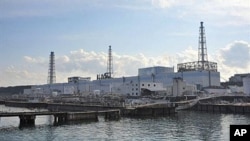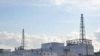



Japanese officials have decided to legally enforce an exclusion zone within 20 kilometers of the crippled Fukushima nuclear plant starting at midnight Thursday.
Japan's Kyodo news agency reports that Prime Minister Naoto Kan will announce the new restrictions during a visit to the region on Thursday.
More than 60,000 people were evacuated from the zone shortly after the March 11 earthquake and tsunami that knocked out cooling systems at the Fukushima plant. But Chief Cabinet Secretary Yukio Edano said Wednesday that some residents and others have been venturing back in spite of a government advisory to stay away.
Engineers at the plant have been working since Tuesday to pump more than 10,000 tons of highly radioactive water out of the basement and utility tunnel at one of the six reactors. Officials said water levels in the tunnel - which had been rising about two centimeters a day - were down about one centimeter as of Wednesday morning.
A French company, Areva, has contracted to build a facility at the plant capable of decontaminating 50 tons per hour of water so it can be recycled to keep the plant's nuclear fuel rods from overheating. Officials hope to have the facility in operation by the beginning of June.
Officials with the Tokyo Electric Power Company, the plant's operators, released the first photographs from inside two of the badly damaged reactor buildings on Wednesday. The pictures were taken by remote-controlled robots sent in to measure radiation levels to determine whether humans can safely go back inside.
The Kyodo news agency quoted a doctor who has examined some of the men struggling to stabilize the plant as saying the men are at risk of depression or death from overwork. The doctor said the workers, some of whom lost their own family members in the tsunami, are pushing themselves out of a sense of moral responsibility.
Despite the problems, an official at the International Atomic Energy Agency said Tuesday that radiation levels leaking from the plant are coming down steadily. IAEA expert Denis Flory said unless something unexpected happens, he does not expect total radiation leaking into the environment to increase much beyond current levels.
National police said late Tuesday the confirmed death toll from the earthquake and tsunami has topped 14,000, with more than 13,600 others missing. It said more than 90 percent of the victims recovered so far died from drowning, and that more than 65 percent of them were over age 60.
Japan to Enforce Exclusion Zone Near Nuclear Plant