



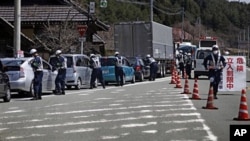
Almost six weeks after a devastating earthquake and tsunami sparked Japan's worst-ever nuclear crisis, the country's government is stepping up restrictions on the movement of people near the Fukushima Daiichi plant. From Friday, police will have the power to detain anyone within a 20-kilometer radius around the plant.
When the government first urged residents living near the plant to evacuate, a day after the March 11 disaster, few realized they would be gone for so long. Many fled unprepared for months away from home.
Rather than the anticipated sudden and large release of radiation, the Fukushima Daiichi plant has continued to emit harmful particles for weeks, albeit at lower levels.
The plant operator expects it will take up to nine months to bring the reactors under control, so the emissions could continue for some time.
Faced with the lower levels of radiation and a need to collect personal belongings, some residents have been making trips back.
Journalists have also been venturing into the area and their images of abandoned pets have sent some animal charities in.
The government has lacked the ability to enforce the evacuation order, but that is changing.
Chief Cabinet Secretary Yukio Edano announced the new policy.
Edano says the government is declaring the area off-limits under the Disaster Countermeasures Basic Law. It gives the police the power to detain anyone entering the zone for up to 30 days and imposes a fine of up $1,200.
In a concession to residents, the government will organize buses so that people can visit their houses. One family member will be allowed to travel in; they will have to wear a protective suit, and go through decontamination when they leave.
Each visit, of which several might be permitted, will last about two hours.
The new rules come as the government has said it may ask residents in towns more than 20 kilometers from the plant to begin evacuating.
Several nearby towns that were not subject to the first order have seen radiation levels rise as the crisis has dragged on and the government has told those residents they should prepare to leave. Edano says details may be announced Friday.