TOKYO - Japan's government has given consent for a pair of nuclear power reactors to go back online. It is the first such approval since the Fukushima disaster 15 months ago. At present, all reactors in the country, which has scant natural resources, are offline.
Prime Minister Yoshihiko Noda made the announcement for the restart of the reactors after getting consent Saturday from the pro-nuclear governor of the prefecture which hosts Kansai Electric's power plant in the town of Ohi.
Noda says having won local consent he met with three members of his Cabinet and they reached a decision to allow the restart of a pair of idled reactors at the Oi nuclear plant in Fukui prefecture.
The plant is a major source of electricity for the Osaka area, the country's second largest industrial region.
It is expected to take about six weeks to fully power up the two reactors, each capable of generating about 1,200 megawatts of electricity. They have been offline since last year amid safety concerns after the meltdowns at the Fukushima plant.
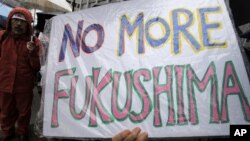
Protesters have poured into the street of Tokyo and elsewhere almost daily over the past week, holding anti-nuclear placards.
The nuclear accident, Japan's worst, occurred in wake of a magnitude 9.0 earthquake and massive tsunami on March 11, 2011.
Currently, all 50 of Japan's functioning reactors are offline for maintenance or safety checks.
Japan's government has been weighing the risks of further nuclear accidents against a critical need for energy to fuel the country's economy.
The world's third largest economy, which has been in a long period of stagnation, relied, until last March, on nuclear power for one-third of its energy needs.
A shift back to conventional plants since then has meant resource-poor Japan has had to significantly increase imports of coal and liquid natural gas for those facilities.
Some in Japan contend the country can make do without nuclear power by boosting energy conservation.
The Japan branch of the environmental group Greenpeace is blasting the government's decision, saying approval to restart the reactors "ignores expert safety advice and public outcry, and needlessly risks the health of Japan's environment, its people and its economy."
Others argue without some of the reactors coming back online this summer the country risks blackouts.
The prime minister last week declared Japanese society will not be able to function if nuclear power generation is permanently halted.
Although no one has died from radiation which spewed from the Tokyo Electric plant in Fukushima, the contamination has made some communities and farms off limits for the foreseeable future forcing tens of thousands of people to move elsewhere.
Prime Minister Yoshihiko Noda made the announcement for the restart of the reactors after getting consent Saturday from the pro-nuclear governor of the prefecture which hosts Kansai Electric's power plant in the town of Ohi.
Noda says having won local consent he met with three members of his Cabinet and they reached a decision to allow the restart of a pair of idled reactors at the Oi nuclear plant in Fukui prefecture.
The plant is a major source of electricity for the Osaka area, the country's second largest industrial region.
It is expected to take about six weeks to fully power up the two reactors, each capable of generating about 1,200 megawatts of electricity. They have been offline since last year amid safety concerns after the meltdowns at the Fukushima plant.
Protesters have poured into the street of Tokyo and elsewhere almost daily over the past week, holding anti-nuclear placards.
The nuclear accident, Japan's worst, occurred in wake of a magnitude 9.0 earthquake and massive tsunami on March 11, 2011.
Currently, all 50 of Japan's functioning reactors are offline for maintenance or safety checks.
Japan's government has been weighing the risks of further nuclear accidents against a critical need for energy to fuel the country's economy.
The world's third largest economy, which has been in a long period of stagnation, relied, until last March, on nuclear power for one-third of its energy needs.
A shift back to conventional plants since then has meant resource-poor Japan has had to significantly increase imports of coal and liquid natural gas for those facilities.
Some in Japan contend the country can make do without nuclear power by boosting energy conservation.
The Japan branch of the environmental group Greenpeace is blasting the government's decision, saying approval to restart the reactors "ignores expert safety advice and public outcry, and needlessly risks the health of Japan's environment, its people and its economy."
Others argue without some of the reactors coming back online this summer the country risks blackouts.
The prime minister last week declared Japanese society will not be able to function if nuclear power generation is permanently halted.
Although no one has died from radiation which spewed from the Tokyo Electric plant in Fukushima, the contamination has made some communities and farms off limits for the foreseeable future forcing tens of thousands of people to move elsewhere.