


Japan is readying an emergency tax hike to help pay for reconstructing the disaster-struck part of the country.
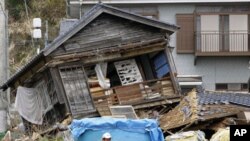
After a long delay amid political haggling, Japan's more powerful lower house of Parliament on Thursday approved legislation that will give the government authority to increase taxes. The proceeds are to be used to help finance additional government spending for rebuilding the region hard hit eight months ago when a magnitude 9.0 earthquake struck off the northeastern coast.
Passage of the reconstruction funding bill by the Upper House, which is controlled by the opposition, is expected as soon as next week. It will include a personal income tax hike for a 25-year period starting in 2013.
The parliament last week approved a third additional budget for the fiscal year, totaling $157 billion, to aid the reconstruction effort. The March 11 earthquake and tsunami also triggered the meltdown of three reactors at the Fukushima-1 nuclear power plant. That radiation release forced the evacuation of numerous towns and villages, further devastating industry and agriculture in Fukushima prefecture.
The additional spending and tax hikes will come as Japan struggles to emerge from a long period of economic stagnation.
The government, in its monthly economic forecast issued Thursday, stuck to a cautious assessment of a slow pickup while noting that capital corporate spending is leveling off.
A spokesman in the Prime Minister's office, Noriyuki Shikata, said there are a number of factors that could pose barriers to a Japanese economy recovery.
"Such as constraints of electric power supply, the consequences of the nuclear accident, a further slowing down of the overseas demands or volatile exchange rate fluctuations, as well as the financial situation in the eurozone and the flood disaster in Thailand," Shikata said.
Stock traders on Thursday expressed caution as well. Analysts say concerns, in particular, about Europe's economy helped drive the benchmark Nikkei to its lowest level since March of 2009.
Japan's economy, in the third quarter, bounced back from a recession triggered by the March 11 disaster. But private economists see Japan's growth again slowing in the current quarter because of a strong yen and the faltering global economy.
Japan's public debt is at twice the size of its five trillion dollar economy, which is the world's third largest behind the United States and China.
Japan Set to Impose Emergency Disaster Tax