


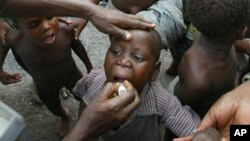
HARAE - Japan has provided funds to immunize about two million children in Zimbabwe against polio and measles as well as provide for Vitamin A supplements. The national immunization week is part of efforts by Zimbabwe, working with U.N. agencies, to reduce child mortality rates in the country.
The weeklong immunization program, which launched Monday, was funded by the Japanese government. However, the money went to the United Nations Children's Fund, UNICEF, instead of Zimbabwe's government because of fears of corruption.
Peter Salama, the head of United Nations children's agency in Harare, is hopeful all children in Zimbabwe will have access to life-saving vaccines.
"In partnership with the international donor community, the rate of children immunized will continue to rise. Through the support of (the) government of Japan and the ministry of health, UNICEF has managed to provide all the measles and polio vaccines and injection and safety materials," Salama said.
For more than a decade now, Zimbabwe has depended mainly on aid agencies and foreign donors in its health care sector. With official figures showing that 100 children die every day in Zimbabwe, the immunization program is seen as the most cost-effective way to reduce child illness and child mortality.
Henry Madzorera, Zimbabwe’s health minister, hopes Japan and the international community will continue to provide funding to Zimbabwe.
“Despite their own problems that emanated from natural disaster which we all know of -- the combined tsunami, the great earthquake and nuclear disaster at Fukushima -- they have continued to prioritize the welfare of our own children and have neither withdrawn or reduced support to the EPI program through UNICEF,” Madzorera said.
EPI stands for Expanded Program on Immunization.
Zimbabwe's health care sector fell into shambles several years ago, after years of political turmoil and the collapse of the economy.
Finance Minister Tendai Biti has complained on several occasions that proceeds from diamond sales are not reaching the treasury. He said he fears that President Robert Mugabe’s ZANU-PF party is keeping the money to fund future election campaigns, at the expense of ordinary Zimbabweans.
Until that changes, Zimbabweans will likely have to rely on the generosity of donors such as Japan to meet basic health care needs.
The weeklong immunization program, which launched Monday, was funded by the Japanese government. However, the money went to the United Nations Children's Fund, UNICEF, instead of Zimbabwe's government because of fears of corruption.
Peter Salama, the head of United Nations children's agency in Harare, is hopeful all children in Zimbabwe will have access to life-saving vaccines.
"In partnership with the international donor community, the rate of children immunized will continue to rise. Through the support of (the) government of Japan and the ministry of health, UNICEF has managed to provide all the measles and polio vaccines and injection and safety materials," Salama said.
For more than a decade now, Zimbabwe has depended mainly on aid agencies and foreign donors in its health care sector. With official figures showing that 100 children die every day in Zimbabwe, the immunization program is seen as the most cost-effective way to reduce child illness and child mortality.
Henry Madzorera, Zimbabwe’s health minister, hopes Japan and the international community will continue to provide funding to Zimbabwe.
“Despite their own problems that emanated from natural disaster which we all know of -- the combined tsunami, the great earthquake and nuclear disaster at Fukushima -- they have continued to prioritize the welfare of our own children and have neither withdrawn or reduced support to the EPI program through UNICEF,” Madzorera said.
EPI stands for Expanded Program on Immunization.
Zimbabwe's health care sector fell into shambles several years ago, after years of political turmoil and the collapse of the economy.
Finance Minister Tendai Biti has complained on several occasions that proceeds from diamond sales are not reaching the treasury. He said he fears that President Robert Mugabe’s ZANU-PF party is keeping the money to fund future election campaigns, at the expense of ordinary Zimbabweans.
Until that changes, Zimbabweans will likely have to rely on the generosity of donors such as Japan to meet basic health care needs.