


News / Asia

Japanese Quake Survivors Long For News

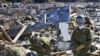
Japan's Emperor Akihito (R) talks to evacuees at a shelter for people who fled their houses because of radiation fear by the March 11 tsunami-crippled Fukushima Daiichi nuclear power plant in Fukushima, northeastern Japan, May 11, 2011
TEXT SIZE - +

A new survey finds privacy and hygiene issues among the top concerns of Japanese earthquake survivors two months after the March 11 disaster that smashed the nation's northeastern coast. They say lack of information is also a problem.

National NHK television marked the two-month anniversary of the earthquake and tsunami on Wednesday by reporting the findings from interviews with more than 400 survivors at temporary shelters and other locations.

About 120,000 people are still housed in temporary shelters. Asked what bothers them most, 38 percent of those interviewed cited a lack of privacy.

Among those still in their homes, 32 percent said they were most bothered by a lack of utilities and an inability to bathe regularly. Among those living with relatives or in apartments, the biggest problem - cited by 34 percent - is a lack of information from their home communities.

National police said the death toll two months after the earthquake stands just short of 15,000. Almost 10,000 others still are unaccounted for, down from more than 17,000 shortly after the quake.

Japanese news agencies say Prime Minister Naoto Kan is considering a cabinet reshuffle as early as next month that would create special ministries to oversee reconstruction efforts. One new portfolio would deal with rebuilding of infrastructure while another would address the crisis at the Fukushima nuclear plant.

The government has been negotiating terms with Tokyo Electric Power Company, the operators of the plant, under which it would receive public assistance with the massive cost of compensating those who have suffered financial loss because of radiation leaking from the plant.

TEPCO has been asked in return to undergo a major restructuring and is expected to sell off assets valued at more than $6 billion.

Some information for this report was provided by Reuters.

You May Like

India, China Pledge to Overcome Border Tensions

Indian prime minister and Chinese premier attempt to move past tense standoff in the Himalayas during Delhi talks More

Burmese President Opens US Visit with VOA Town Hall Meeting

Ahead of his meeting with President Obama Monday, Thein Sein answered questions on human rights and economic development in his country More

Video Washington Week: Focus on Burma, US Government Scandals

President Thein Sein visits the White House on Monday, Congressional probes of multiple scandals are continuing More

This forum has been closed.
Comments
     
There are no comments in this forum. Be first and add one

Featured Videos

Your JavaScript is turned off or you have an old version of Adobe's Flash Player. Get the latest Flash player.
Video

Video Boston Bomber Spent 6 Months in Russia’s Most Violent Republic

The news of the Boston Marathon bombings circled the globe, and resonated here in Dagestan, a majority Muslim republic in Russia, on the shores of the Caspian Sea. Last year, Tamerlan Tsarnaev, the older of two brothers suspected of the bombings and a long-time Boston resident, returned to Dagestan, where he had lived for a year during his youth. Dagestan was the land of his maternal ancestors. But in the last two years, this republic of 3 million people has gained notoriety as the region with the highest level of political and religious violence in all of Russia. VOA's James Brooke reports from Makhachkala, Russia.