


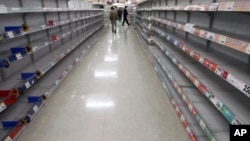
Fuel shortages, power outages and freezing weather have hobbled relief efforts in Japan, as hope fades for finding any more survivors in the wreckage of last week's earthquake and tsunami.
The death count is rising as rescuers gradually make their way into other communities that have been cut off since the quake because of heavy damage to roads, ports and other infrastructure. By midday Thursday, the national police put the toll at more than 5,300 dead and more than 9,300 missing. Japanese media said more than 20,000 others are known to be trapped and awaiting rescue.
But the delays have already been costly. Members of a U.S. rescue team working in one coastal city said Thursday they have not found anyone alive.
Conditions are also deteriorating in shelters across the country's northeast, where nearly half a million people are taking refuge. Agriculture ministry officials said they are unable to get ample supplies to the shelters because of gasoline shortages and damage to infrastructure.
The officials said one and a quarter million meals and almost three-quarters of a million beverage bottles were sent out to five affected provinces between Saturday and Tuesday, but that was far short of the needs.
U.S. naval forces operating off of Japan's east coast said snow and poor visibility limited helicopter operations to deliver food and water to relief sites. Members of the military have also been ordered to stay away from areas within 80 kilometers of the damaged Fukushima nuclear plant, due to highest radiation levels.
Thousands of people have been evacuated from the area near the crippled nuclear facility, but those in shelters nearby say they have not received supplies because relief workers refuse to come to the area for fear of radiation. Local media report 14 patients at a hospital in Fukushima died after being moved to a shelter.
Supplies of heating fuel are also low at many of the shelters, where earthquake victims have had to cope with several nights of sub-freezing temperatures. Tens of thousands of homes have been damaged and whole communities have been washed away, leaving many with nowhere else to go.
In the coastal city of Ofunato, where several international rescue teams have been searching for survivors, the head of a U.S. team reported that the temperature Wednesday evening was minus-5 Celsius and more than eight centimeters of snow had fallen.
He said U.S., British and Japanese teams working in the city had divided the area into grids to facilitate a more systematic search, but that no survivors have been found. The chances of finding live survivors drop dramatically a week after a disaster like last week's earthquake.
Death toll
Traffic jams
Chilly weather
Some information for this report was provided by AFP..